China's space rise and India's strategic challenge in the Indo-Pacific
Synopsis
China's Long March 7A failure on 10 August 2026 exposed a crack in an otherwise formidable space build-up — one that spans a permanent space station, lunar ambitions and a growing network of diplomatic space partnerships. For India, the real challenge isn't matching China launch for launch; it's building a resilient, dual-use space ecosystem before the strategic gap in the Indo-Pacific becomes irreversible.
Key Takeaways
China's space programme now encompasses Tiangong space station, lunar and Mars probes, and a goal of landing astronauts on the Moon by 2030 .
A Long March 7A rocket carrying ChinaSat-4B failed on 10 August 2026 at Wenchang , confirmed by Xinhua ; cause under investigation.
China and Russia are reportedly considering a joint lunar research station near the Moon's South Pole , potentially with nuclear power infrastructure.
India became the fourth country to achieve in-orbit satellite docking in January 2025 , following Chandrayaan-3 's south polar landing.
China's bilateral space partnerships in Africa and across the developing world pose a diplomatic challenge for India's influence in the Global South .
Analysts argue India's priority should be space resilience — redundancy, cybersecurity, private-sector investment — rather than symbolic parity with China.
China's expanding space programme has moved well beyond scientific exploration or national prestige — it is now a direct source of economic leverage, technological power and potential military advantage that demands a calibrated response from New Delhi. For India, the question is not simply matching Beijing launch for launch, but ensuring that ISRO, the armed forces and a growing private sector can protect critical space services and preserve the country's strategic autonomy across the Indo-Pacific, where satellites increasingly shape border surveillance and military decision-making.
China's Lunar and Orbital Ambitions
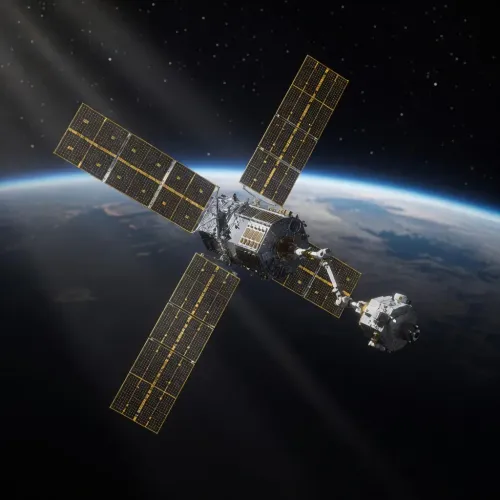
Beijing has built a formidable record in space. It operates the Tiangong space station — described as China's 'new permanent space station' — demonstrating an independent human-spaceflight capability that only a handful of nations possess. China has also sent probes to both the Moon and Mars, and aims to land astronauts on the lunar surface by 2030. Reports indicate that China and Russia are jointly considering a lunar research station near the Moon's South Pole, with plans that could include nuclear power infrastructure — an ambition with both scientific and strategic implications.
Long March 7A Failure: A Reality Check
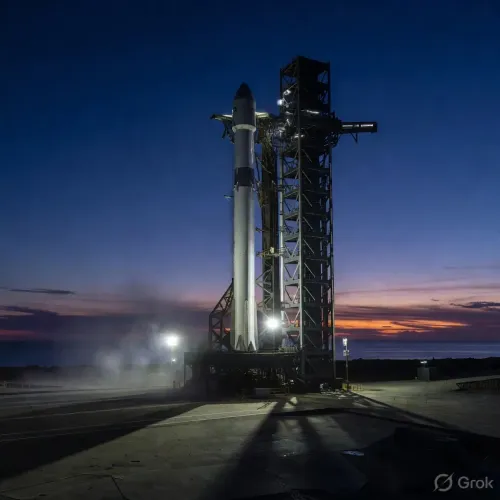
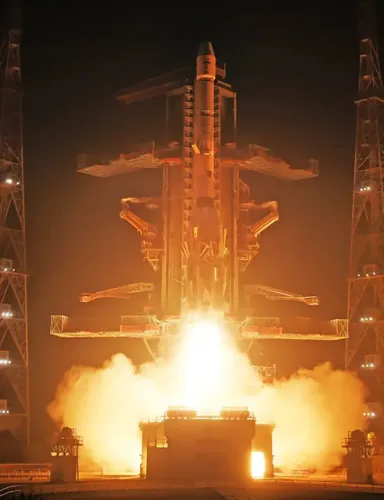
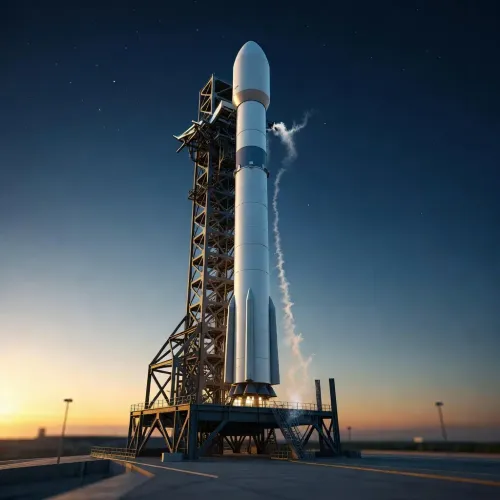
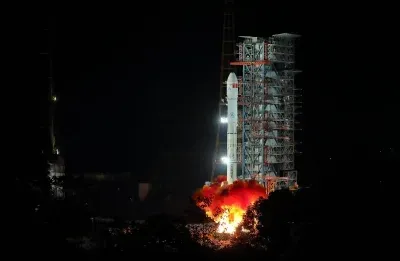
China's rapid expansion, however, is not without setbacks. On 10 August 2026, a Long March 7A rocket carrying the ChinaSat-4B communications satellite failed shortly after liftoff from the Wenchang Spacecraft Launch Site in Hainan. The rocket suffered an in-flight anomaly during early ascent and was destroyed before the payload could reach orbit. Footage circulating after the incident showed a fireball following the failure. China's state news agency Xinhua confirmed the mission was unsuccessful; the cause remains under investigation. The incident is a reminder that technological ambition must be matched by launch reliability, redundancy and the capacity to recover quickly from failure — lessons India's own programme is internalising.
Dual-Use Potential and India's Security Exposure
The strategic significance of China's achievements lies in their dual-use potential. The same launch vehicles, remote-sensing satellites, communications networks and navigation systems that support scientific missions can also enhance intelligence gathering, precision targeting and secure military communications. Such continuity gives Beijing experience in operating complex systems over extended periods — an advantage in both peacetime and crisis. For India, the most direct concern is dependence on space-based services. Indian satellites support weather forecasting, telecommunications, navigation, agriculture, banking, maritime awareness and defence operations. During a border confrontation or conflict in the Indian Ocean, disruption of these assets could slow command and control, degrade surveillance and weaken early warning. China's larger satellite architecture may provide broader and more frequent coverage of strategically sensitive regions, widening a gap that New Delhi cannot afford to ignore.
China's Space Diplomacy and the Developing World
Beyond hardware, Beijing is using space cooperation as a diplomatic tool. It has established bilateral space partnerships across Africa involving satellites and ground stations, while several countries have agreed to cooperate on a China-backed lunar initiative. Offers of launch services, satellite data and navigation support are expanding China's influence over standards, data networks and trusted partnerships across the developing world — a contest in which India is a direct stakeholder given its own ties across the Global South.
India's Strengths and the Road Ahead
India is not starting from zero. Chandrayaan-3's successful landing near the Moon's south polar region demonstrated cost-effective engineering and strengthened India's global credibility. In January 2025, India became the fourth country to achieve in-orbit satellite docking — a technology relevant to future space stations, satellite servicing and complex missions. India's planned space station and long-term lunar goals signal ambition, but the challenge lies in converting individual milestones into sustained national capability. Analysts argue that India should respond through resilience rather than a costly race for symbolic superiority: more Earth-observation and communication satellites, stronger space-domain awareness, protected ground stations, cybersecurity investment and rapid replacement capacity. Greater investment in Indian private companies can accelerate innovation in launch services, imaging, communications and manufacturing. Deepening space partnerships with like-minded nations and supporting norms against irresponsible behaviour in orbit would further reinforce India's position. China's space rise is both a warning and an opportunity — the Long March 7A failure demonstrates that even the most ambitious programmes remain vulnerable to technical setbacks. India's most effective response is not imitation, but the construction of a secure, innovative and internationally trusted space ecosystem capable of protecting national interests in peace and in crisis.
Point of View
Not a turning point — China's programme is large enough to absorb individual losses and accelerate regardless. What the failure does reveal is that India's window to build genuine space resilience, rather than chase symbolic parity, remains open but is narrowing. India's private space sector and ISRO's milestone record are real assets, but milestones do not automatically translate into the redundant, hardened architecture that national security demands. The deeper risk is diplomatic: China's space partnerships across Africa and the Global South are quietly reshaping data dependencies and standard-setting in ways that a single successful lunar landing cannot counter.
NationPress
28 Sept 2026
Frequently Asked Questions
What happened to China's Long March 7A rocket on 10 August 2026?
A Long March 7A rocket carrying the ChinaSat-4B communications satellite failed shortly after liftoff from the Wenchang Spacecraft Launch Site in Hainan on 10 August 2026. The rocket suffered an in-flight anomaly during early ascent and was destroyed before reaching orbit; China's state agency Xinhua confirmed the failure and the cause remains under investigation.
Why does China's space programme matter for India's security?
China's satellites and launch capabilities have significant dual-use potential, supporting intelligence gathering, precision targeting and secure military communications alongside civilian functions. Indian satellites underpin defence operations, border surveillance and early warning systems, meaning any disruption — especially during a crisis in the Indian Ocean or along the border — could seriously degrade India's military decision-making.
What space milestones has India achieved recently?
India achieved two significant milestones: Chandrayaan-3 successfully landed near the Moon's south polar region, making India the first country to do so, and in January 2025 India became the fourth country globally to demonstrate in-orbit satellite docking. Both achievements have strengthened India's international credibility and its foundation for future space missions.
How is China using space for diplomatic influence?
China has established bilateral space partnerships across Africa involving satellites and ground stations, and has invited multiple countries to cooperate on a China-backed lunar initiative. By offering launch services, satellite data and navigation support, Beijing is expanding its influence over data networks, technical standards and diplomatic relationships — particularly across the developing world.
What should India do to respond to China's growing space power?
Analysts argue India should prioritise space resilience over symbolic competition — expanding its Earth-observation and communications satellite fleet, investing in space-domain awareness, hardening ground stations and cybersecurity, and building rapid satellite replacement capacity. Greater investment in Indian private space companies and deeper partnerships with like-minded nations would further strengthen India's position.