Pakistan's SUPARCO grows dangerously dependent on China, report warns

Synopsis
Pakistan has launched five satellites in 16 months and is eyeing a 2028 lunar rover — but every milestone is built on Chinese infrastructure, Chinese facilities, and Chinese training. The Diplomat's report argues this isn't a space programme; it's a dependency dressed up as ambition.
Key Takeaways
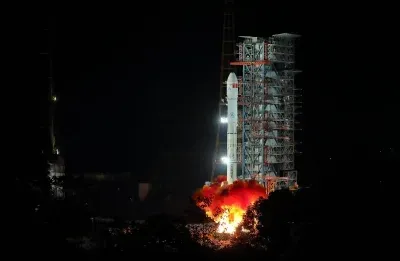
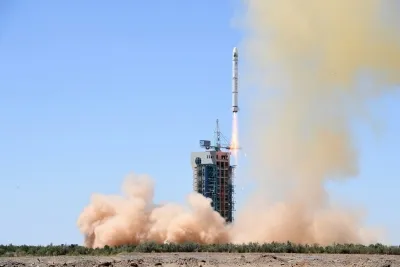
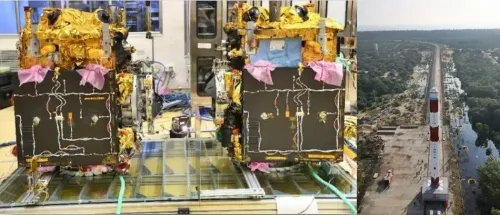
SUPARCO has launched five satellites in the past 16 months , all from Chinese facilities .
Pakistan's first astronaut is being trained by China for a mission to the Tiangong space station .
The 2028 lunar rover — SUPARCO's most ambitious project — will rely on Chinese technological assistance .
SUPARCO was largely underfunded and stagnant for over two decades , overshadowed by ISRO .
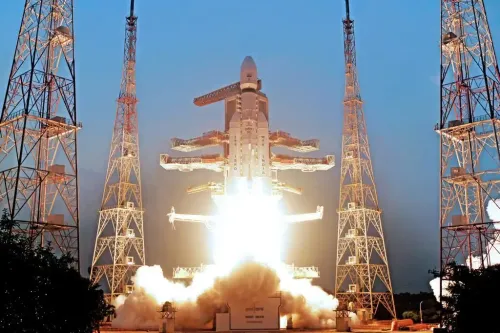
India operates over 50 satellites and achieved a Lunar South Pole landing in 2023 ; Pakistan's programme is still far behind.
Pakistan's 2022 floods submerged one-third of the country, underscoring its urgent need for independent space-based disaster monitoring.
Pakistan's national space agency, the Space & Upper Atmosphere Research Commission (SUPARCO), is becoming increasingly reliant on China — leaning on proven Chinese designs rather than pursuing independent research — according to a report by The Diplomat. The findings raise questions about whether Pakistan can ever achieve genuine technological self-sufficiency in space.
Accelerating Programme, Deepening Dependence
Despite grappling with soaring inflation, chronic energy shortages, and active insurgencies, Pakistan has quietly accelerated its space programme with Chinese backing. The country has launched five indigenous satellites in the past 16 months and is preparing to send its first astronaut to China's Tiangong space station. All recent satellite launches have taken place from Chinese facilities, and Pakistani astronaut candidates are being trained by China for the mission.
The Diplomat report noted that this progress, while notable, comes with a structural cost.
Point of View
Training astronauts at Chinese facilities, and outsourcing the hardest engineering on the lunar rover to Beijing means SUPARCO is accumulating milestones without accumulating capability. That distinction matters enormously in the long run: a programme built on borrowed technology cannot pivot quickly when geopolitical winds shift, as Pakistan knows from its experience with American military hardware. The security rationale — keeping pace with ISRO — is also strategically hollow if the answer to India's self-reliance is China's patronage.
NationPress
22 Sept 2026
Frequently Asked Questions
Why is Pakistan's space agency SUPARCO considered dependent on China?
SUPARCO has launched all recent satellites from Chinese facilities, is training its astronaut candidates in China for a mission to the Chinese Tiangong space station, and will rely on Chinese technological assistance for its 2028 lunar rover. The Diplomat report argues this structurally embeds Pakistan's space ambitions into China's own programme rather than building independent capability.
What is Pakistan's lunar rover programme and when is it planned?
Pakistan's lunar rover programme is SUPARCO's most technologically challenging mission, planned for a landing in 2028. It will depend heavily on Chinese technical and technological assistance, raising questions about genuine Pakistani ownership of the mission.
How does Pakistan's space programme compare to India's ISRO?
India's ISRO operates over 50 satellites, landed a spacecraft near the Lunar South Pole in 2023, has conducted anti-satellite missile tests, and has a fifth lunar mission planned with Japan. SUPARCO remained largely underfunded for over two decades and is still far behind ISRO in scale and capability.
Why has Pakistan accelerated its space programme despite economic difficulties?
Pakistan has accelerated its space programme with Chinese backing despite soaring inflation, energy shortages, and insurgencies. The programmes target disaster monitoring, agricultural surveillance, glacier tracking, and urban planning — needs made urgent by the 2022 floods that submerged one-third of the country.
Does Pakistan's space programme have a military or security dimension?
Yes. The report notes that Pakistan's space efforts are partly framed as a strategic response to India's growing space capabilities. However, SUPARCO remains far behind ISRO, and relying on Chinese infrastructure does not meaningfully close that gap, analysts argue.