Pakistan's EO-3 satellite launch marred by archival photo passed off as 'live' image

Synopsis
Pakistan's EO-3 satellite did reach orbit successfully, but the circulation of an archival photo as a 'live' first transmission has exposed deeper questions about how Islamabad packages space achievements. The incident mirrors a documented pattern: from Operation Sindoor's fabricated imagery to Paksat-1's rebranded third-hand acquisition. Real capability, questionable narrative.
Key Takeaways
Pakistan's SUPARCO successfully launched the EO-3 satellite from Taiyuan, China on 25 April aboard a Long March-6 rocket.
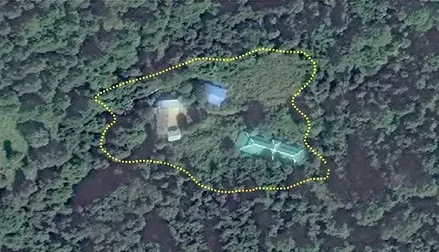
An archival photograph was widely shared on Pakistani social media as the satellite's first post-launch transmission, later confirmed to be months-old.
The image generated national pride before official reports disputed its authenticity, creating confusion in the public domain.
Eurasia Review report documents a pattern: Pakistan's Paksat-1 (2002) was a third-hand satellite originally launched for Indonesia in 1996.
Following Operation Sindoor , fabricated videos and images were circulated; one was traced to an army simulation video game.
Pakistan's successful launch of the Electro-Optical Satellite (EO-3) by the Space and Upper Atmosphere Research Commission (SUPARCO) from the Taiyuan Satellite Launch Centre in China on 25 April initially sparked national celebrations. However, the circulation of an archival photograph presented as the satellite's first post-launch transmission has raised questions about the authenticity of official communications surrounding the achievement.
The image controversy
According to a report in Eurasia Review, a photograph linked to the PRSC-EO3 satellite was widely shared on Pakistani social media following the launch and was presented as the satellite's inaugural orbital transmission. The image generated significant public sentiment and national pride. However, official reports later disputed the image's originality, revealing it was an archival photograph posted on SUPARCO's website months before the launch in 2025.
Pattern of information management
The report highlights what it describes as structural issues in Pakistan's information environment, particularly around moments of genuine achievement. It notes: "The juxtaposition — real satellite, fake photo — is not accidental. It reflects something structural about how Pakistan's information environment operates, particularly around moments of genuine achievement that are not considered sufficient on their own terms."
Historical precedent
The EO-3 incident is not isolated. Following Operation Sindoor, Pakistan's communications apparatus circulated videos, fabricated images, and false advisories purporting to show destroyed Indian air defence systems, damaged airfields, and burning weapons facilities — claims that remained unverified. In one documented case, footage circulated as evidence of destruction on the Indian side was traced to an army simulation video game.
The report also references Paksat-1, acquired by Pakistan in 2002 but originally launched in 1996 as Palapa-C1 for Indonesia. When former President General Pervez Musharraf promoted it as evidence that Pakistan had surpassed India in space technology, the indigenous capability claim was false. The satellite was third-hand — originally purchased by Indonesia, later sold to Turkey, and then acquired by Pakistan to occupy its remaining orbital slot.
Current status and forward outlook
The EO-3 satellite is now in orbit and performing its specified functions. However, the image controversy has exposed questions about the credibility of official narratives surrounding Pakistan's space programme achievements. The incident underscores broader concerns about information authenticity in the region's competitive space domain.
Point of View
Operation Sindoor's fabricated imagery. The issue is not space capability but information credibility. When governments feel compelled to embellish genuine milestones, it erodes trust and invites scrutiny of future claims.
NationPress
30 Sept 2026
Frequently Asked Questions
What is the EO-3 satellite and when was it launched?
The EO-3 (PRSC-EO3) is a Pakistani satellite with high-resolution imaging capability, launched by SUPARCO on 25 April from the Taiyuan Satellite Launch Centre in China aboard a Long March-6 rocket. The satellite is now in orbit.
What image controversy surrounded the EO-3 launch?
An archival photograph was widely shared on Pakistani social media after the launch and presented as the satellite's first post-launch transmission. Official reports later confirmed it was an archival image posted on SUPARCO's website months before the launch, not a live orbital image.
Why does the report link EO-3 to Pakistan's Paksat-1?
The Eurasia Review report documents a pattern of information management in Pakistan's space programme. Paksat-1, acquired in 2002, was originally launched in 1996 as Palapa-C1 for Indonesia and later sold to Turkey before Pakistan's purchase. Former President Musharraf promoted it as evidence of indigenous capability, which was inaccurate.
What happened during Operation Sindoor that the report references?
Following Operation Sindoor, Pakistan's communications apparatus circulated fabricated videos, fake images, and false advisories claiming destroyed Indian air defence systems and damaged airfields. In one documented case, footage presented as evidence of destruction was traced to an army simulation video game.
Does the EO-3 satellite function as intended?
Yes, the EO-3 satellite is in orbit and performing its specified high-resolution imaging functions. The controversy centres on the authenticity of the photograph shared as its first transmission, not on the satellite's operational capability.