Operation Sindoor: India's air defence crushed Pakistan's saturation strikes

Synopsis
Three waves of Pakistani drones, cruise missiles, rockets, and ballistic missiles between May 7–9, 2025 failed to breach India's air defence — not a single S-400 battery, major airbase, or combat squadron was lost. A Swiss military research body's findings reveal how the indigenously integrated Akashteer system structurally outmanoeuvred Pakistan's saturation strategy.
Key Takeaways
Operation Sindoor followed the Pahalgam terror attack , triggering 72 hours of aerial operations from May 7–10, 2025 .
Three successive Pakistani strike waves — drones, cruise missiles, rockets, and ballistic missiles — failed to penetrate India's air-defence bubble.
Indian anti-aircraft guns downed more than half of Pakistani drones; jamming and spoofing neutralised most of the rest.
The Akashteer system , inducted in 2024 , fused radar, optical, electromagnetic, and civilian-observer data into a single air picture.
India did not lose a single S-400 battery , major airbase, or combat squadron's operational readiness.
Pakistani military authorities requested a ceasefire by the morning of May 10, 2025 .
India's Operation Sindoor, launched in the aftermath of the Pahalgam terror attack, was followed by 72 hours of intense aerial operations between May 7 and 10, 2025, that demonstrated a defining milestone — India's integrated air defence system had reached a level of operational maturity capable of decisively defeating a multi-wave Pakistani saturation offensive, according to a report by the Switzerland-based Centre d'Histoire et de Prospective Militaires (CPHM), cited in the European Times.
Three Waves, Zero Penetrations
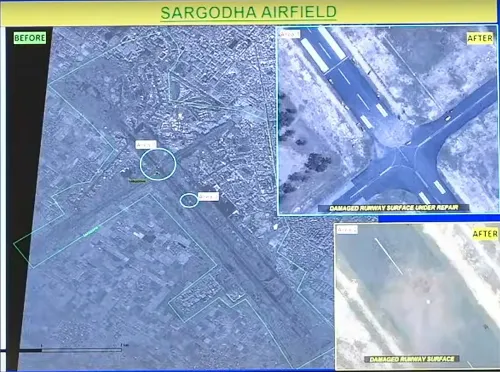
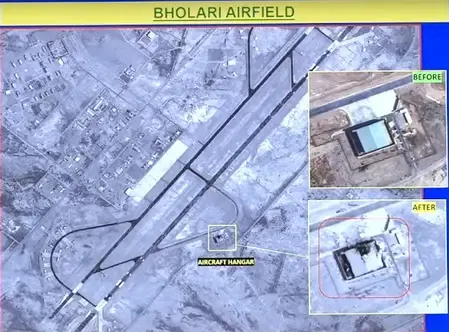
According to the CPHM findings, three successive waves of Pakistani drone, cruise-missile, rocket, and ballistic-missile attacks between May 7 and 9, 2025 failed to penetrate India's integrated air-defence bubble. Crucially, the strikes failed to map India's electronic order of battle and produced no satellite-verifiable damage to any key Indian military asset.
Indian anti-aircraft guns alone shot down more than half of the Pakistani drones during the four-day conflict, while jamming and spoofing systems handled much of the remaining neutralisation, the CPHM documented.
The Akashteer Advantage
Central to India's defensive success was the Bharat Electronics-DRDO Akashteer system, formally inducted into the Indian Army only in 2024. The system operated in tandem with the Indian Air Force's Integrated Air Command, Control and Communication System and the Navy's Trigun, fusing optical, electromagnetic, radar, and civilian-observer inputs into a single recognised air picture.
According to the report, Indian missile-battery radars were activated only for very brief windows and only when targets were already inside their firing envelopes. This approach structurally defeated Pakistan's core assumption — that drone saturation would force Indian radars into sustained emission, thereby exposing surface-to-air missile (SAM) positions to electronic intelligence gathering.
Point of View
Yet it has received a fraction of the strategic attention it warrants. The deeper question for India's defence establishment is whether this success accelerates indigenous air-defence export diplomacy, particularly with Gulf and Southeast Asian partners watching the conflict closely.
NationPress
21 Sept 2026
Frequently Asked Questions
What was Operation Sindoor?
Operation Sindoor was India's military response to the Pahalgam terror attack, involving aerial operations between May 7 and 10, 2025. It demonstrated the combat effectiveness of India's integrated indigenous air defence systems against a multi-wave Pakistani offensive.
How did India's air defence defeat Pakistan's saturation strikes?
India's integrated air defence — anchored by the Akashteer system, the IAF's Integrated Air Command and Control System, and the Navy's Trigun — fused multiple sensor inputs into a single air picture. Missile-battery radars were activated only within firing envelopes, preventing Pakistan from mapping India's electronic order of battle.
What is the Akashteer system?
Akashteer is a Bharat Electronics-DRDO developed air defence command-and-control system formally inducted into the Indian Army in 2024. During Operation Sindoor, it fused optical, electromagnetic, radar, and civilian-observer data to provide real-time air situational awareness.
Did Pakistan's strikes cause any damage to Indian military assets?
According to the CPHM report cited in the European Times, three waves of Pakistani strikes produced no satellite-verifiable damage to key Indian assets. India did not lose a single S-400 battery, major airbase, or combat squadron's operational readiness.
Why did Pakistan request a ceasefire?
Pakistani military authorities requested a ceasefire by the morning of May 10, 2025, after three successive strike waves failed to penetrate India's air-defence bubble or achieve any verifiable military objective, according to the CPHM findings.