Operation Sindoor at 1 year: How India ended 35 years of terror impunity
Synopsis
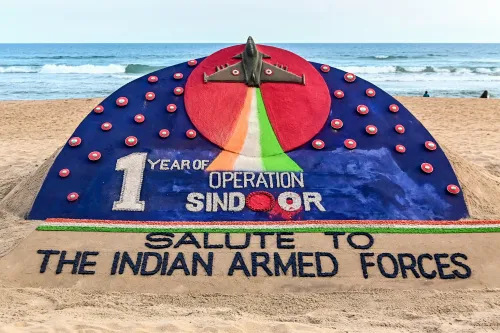
One year after Operation Sindoor, the debate is no longer just about what India struck — nine terror camps, eleven airbases — but what it permanently changed. For the first time in 35 years, Pakistan's state-sponsored terrorism model faced direct military cost rather than diplomatic pressure. Whether the world consolidates that shift or reverts to false equivalence will define South Asia's next chapter.
Key Takeaways
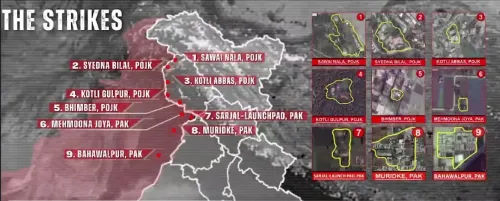
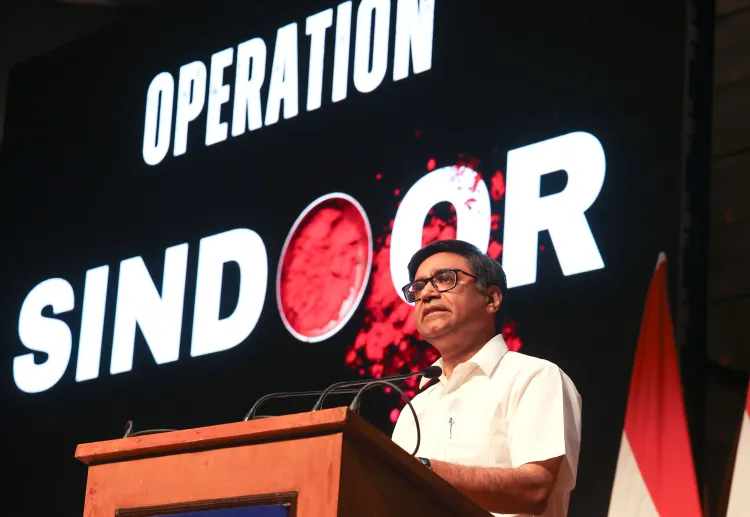
Operation Sindoor was launched in May 2025 in response to the Pahalgam attack , targeting nine terrorist camps and striking eleven Pakistani airbases , including Sargodha , Nur Khan , and Bhola .
Over 100 terrorists were reportedly killed, including high-value targets; Pakistan's DGMO called India's DGMO to request de-escalation — reversing the historical pattern.
India articulated a new doctrine: terrorism will be treated as an act of war, with no distinction between state sponsors and proscribed groups.
The operation ended a 35-year cycle in which Pakistan's terror infrastructure survived every India-Pakistan crisis intact.
India's strikes targeted terrorist infrastructure; Pakistan's retaliatory actions were reportedly directed at civilian and religious sites, including temples and gurdwaras.
The post-Sindoor period will test whether the international community sustains or reverts to false equivalence between India and Pakistan.
Operation Sindoor, launched in May 2025 in response to the Pahalgam attack, marked a decisive shift in India's counter-terrorism doctrine — one that analysts argue ended over three decades of state-sponsored impunity enjoyed by Pakistan's military establishment. One year on, the operation's political and strategic legacy continues to reshape South Asian security calculus.
The Cycle That Ran for Three Decades
Pakistan's strategic calculation, sustained across multiple governments and military regimes, was built on a cynical architecture. The Inter-Services Intelligence (ISI) directorate would sponsor terrorist groups to conduct attacks against Indian targets. When India responded with conventional force, Pakistan would invoke nuclear escalation. The international community, fearing catastrophic war between two nuclear-armed states, would intervene. The crisis would be paused. The terrorist infrastructure would survive intact. And the cycle would begin again.
This pattern ran in recognisable form for over three decades — from the 1989–90 escalation in Kashmir militancy, to the 1999 Kargil war, the 2001 Parliament attack, the 2008 Mumbai attacks, the 2016 Uri attack, and the 2019 Pulwama bombing. Each time, India exercised restraint or limited force. Each time, the terrorist infrastructure that produced the next attack was left intact, often in the same Pakistani cities where it had operated before. The architects of this strategy understood its economics: sponsoring terrorism was relatively cheap, and the international community's tolerance for false equivalence between the two states was the strategic asset that made the entire system work.
Why May 2025 Was Different
Several factors converged to break this cycle. The first was the nature of the Pahalgam attack itself — the systematic religious targeting of civilians, the ninety-minute duration of the killings, and the involvement of Lashkar-e-Taiba's offshoot The Resistance Front. International condemnation was strong and uniform, and Pakistan's usual deniability could not gain traction.
The second factor was India's significantly enhanced conventional military capability. Over the preceding decade, India had invested heavily in precision strike systems, integrated air defence, electronic warfare, and joint operations doctrine. The Rafale acquisition, the S-400 deployment, the development of the Akashteer command-and-control system, and the maturation of the BrahMos missile programme had collectively produced an Indian military demonstrably superior to Pakistan's at the conventional level. The nuclear umbrella that had previously shielded Pakistan's terror infrastructure now sat over a conventional gap that India could exploit at relatively contained risk.
The third factor was political groundwork. The Bharatiya Janata Party (BJP) government under Prime Minister Narendra Modi had repeatedly signalled since 2016, and especially after 2019, that India's response doctrine had changed. The 2016 surgical strikes and the 2019 Balakot strike were precursors — each demonstrating that India could respond to terrorism with cross-border force without triggering nuclear escalation. By May 2025, the political and military groundwork for a more substantial response had been laid. The Pahalgam attack provided the triggering event.
What Operation Sindoor Achieved
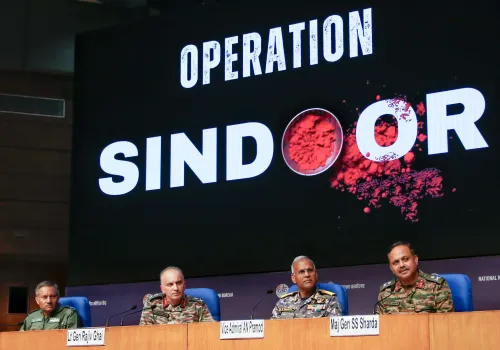
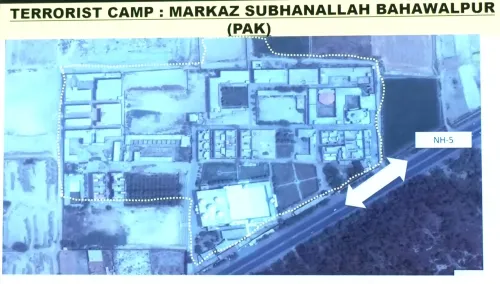
The military results were significant. According to official accounts, nine terrorist camps were destroyed in the initial phase. Eleven Pakistani airbases were struck during the escalation phase, including Sargodha, Nur Khan, and Bhola. More than 100 terrorists were reportedly killed, including high-value targets. The damage to Pakistan's air defence and command-and-control infrastructure is assessed to require years to repair.
Notably, the ceasefire that ended the immediate crisis came after Pakistan's Director General of Military Operations (DGMO) called India's DGMO to request de-escalation — an unusual reversal of the historical pattern in which India typically sought an off-ramp first.
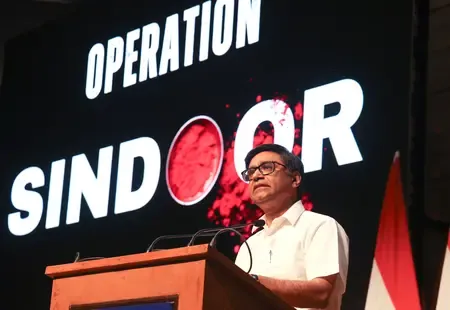
The political results, however, are assessed as more consequential than the military ones. Prime Minister Modi, in his address to the Lok Sabha and in subsequent statements, articulated a new doctrine: terrorism on Indian soil will be treated as an act of war, with no distinction drawn between state sponsors and proscribed outfits; the conventional space below the nuclear threshold remains usable regardless of Pakistani brinkmanship; and there will be no separation in Indian responses between terrorist groups and the governments that harbour them.
The Doctrine Shift and Its Implications
Taken together, these principles represent a structural change in the cost calculus of state-sponsored terrorism. Pakistan can continue to host Jaish-e-Mohammed in Bahawalpur and Lashkar-e-Taiba in Muridke if it chooses. But it must now do so with the understanding that any major attack traceable to those infrastructures will be answered with the kind of direct military force that Operation Sindoor demonstrated. The cost of sponsoring terrorism has shifted from external — sanctions, diplomatic pressure — to direct: military destruction of the infrastructure itself.
Analysts also point to a stark asymmetry in how both states conducted themselves during the crisis. India's strikes were targeted at terrorist infrastructure; Pakistan's retaliatory actions, according to Indian officials and independent observers, were directed at religious and civilian sites, including temples and gurdwaras. India released satellite imagery and documentary evidence of its strikes. Pakistan, critics argue, circulated fabrications. India accepted the ceasefire when Pakistan requested it; Pakistan reportedly continued drone incursions for hours after the ceasefire took effect.
What Comes Next
The broader question one year on is whether the international community will consolidate the shift that Operation Sindoor forced, or revert to the comfortable framing of false equivalence between the two states. For decades, external actors treated each India-Pakistan crisis as a bilateral dispute requiring mutual restraint — a framing that, critics argue, structurally benefited the state using terrorism as a tool of foreign policy.
The post-Sindoor period will test whether that framing has been permanently discredited or merely suspended. India's position, as articulated by its government, is that the management approach to state-sponsored terrorism has demonstrably failed. Whether the world draws the same conclusion — and acts on it — will determine whether South Asia moves toward a post-impunity order, or whether the cycle resumes after a brief pause.
Point of View
Pakistan's terror-sponsorship model was insulated by nuclear deterrence and international false equivalence — both of which India's May 2025 response structurally challenged. The harder question one year on is whether New Delhi can sustain the doctrine without the international legitimacy that would make it durable: targeted strikes alone do not end impunity if the world continues to treat both sides as morally equivalent claimants. India's documentary transparency during the crisis was notable, but the absence of a binding multilateral reckoning with Pakistan's ISI infrastructure means the cycle could resume under a different government or a different provocation threshold. The real test of Sindoor's legacy is institutional, not military.
NationPress
21 Sept 2026
Frequently Asked Questions
What was Operation Sindoor and when did it happen?
Operation Sindoor was a military operation launched by India in May 2025 in response to the Pahalgam terror attack. It involved strikes on nine terrorist camps and eleven Pakistani airbases, including Sargodha, Nur Khan, and Bhola, and resulted in the reported killing of over 100 terrorists.
What triggered Operation Sindoor?
The immediate trigger was the Pahalgam attack, which involved the systematic religious targeting of civilians over a ninety-minute period, with links traced to Lashkar-e-Taiba's offshoot The Resistance Front. The attack drew strong and uniform international condemnation, leaving Pakistan's standard deniability without traction.
What new doctrine did India establish through Operation Sindoor?
Prime Minister Narendra Modi articulated a three-part doctrine: terrorism on Indian soil will be treated as an act of war; the conventional military space below the nuclear threshold remains usable regardless of Pakistani brinkmanship; and India will not separate its response between terrorist groups and the states that harbour them.
How did the ceasefire come about after Operation Sindoor?
The ceasefire was requested by Pakistan's Director General of Military Operations, who called India's DGMO to seek de-escalation — a reversal of the historical pattern in which India typically initiated de-escalation requests. India accepted the ceasefire, though drone incursions reportedly continued from Pakistan's side for hours afterwards.
Why does Operation Sindoor matter one year later?
One year on, Operation Sindoor matters because it represents the first time in over 35 years that Pakistan's state-sponsored terrorism model faced direct military cost rather than diplomatic pressure or sanctions. Whether the international community consolidates or reverts from this shift will determine whether South Asia moves toward a post-impunity security order.