Operation Sindoor: How India rewrote its security doctrine after Pahalgam
Synopsis
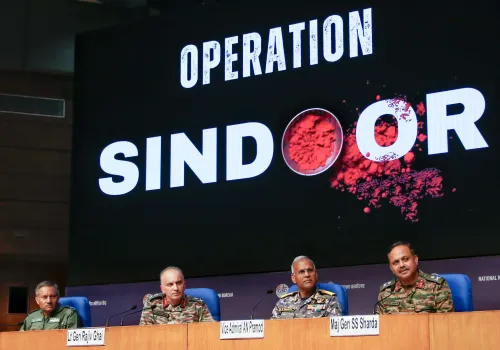
Operation Sindoor wasn't just a military strike — it was a doctrine shift. By hitting 11 Pakistani air bases, destroying LeT and JeM headquarters, and forcing Pakistan's DGMO to call for a ceasefire, India publicly retired its policy of restrained retaliation and replaced it with a blunt new calculus: terror equals war.
Key Takeaways
Operation Sindoor was launched on 7 May in response to the 22 April Pahalgam attack that killed 26 people .
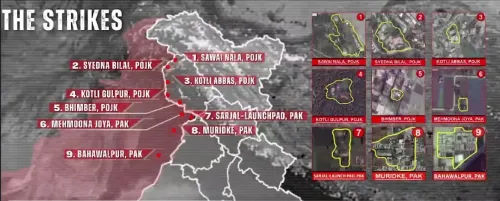
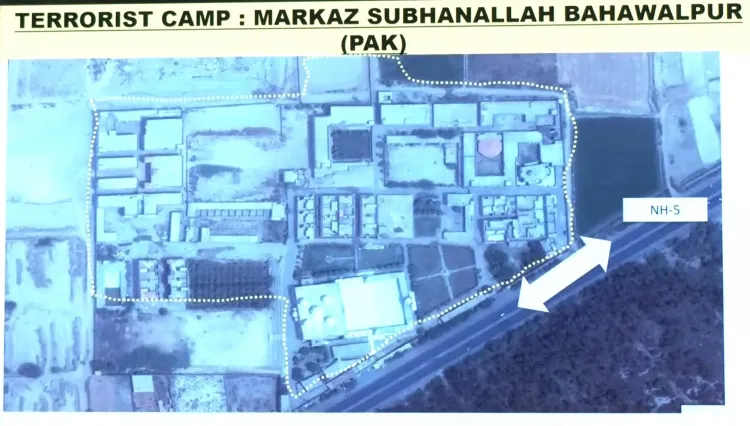
Lashkar-e-Taiba's Muridke facility and Jaish-e-Mohammad's Bahawalpur headquarters were among the primary targets destroyed.
India deployed BrahMos , SCALP , Crystal Maze , Harop , Harpy , Warmate , and PALM 200/400 munitions during the operation.
On 10 May at 1:30 am , BrahMos strikes on Chakala/Noor Khan air base in Rawalpindi crippled Pakistan's Northern Air Command .
11 Pakistani air bases were crippled and 7 Pakistani aircraft were lost during the operation.
Pakistan's DGMO reached out to India, leading to a ceasefire; India chose to honour it despite reported violations.
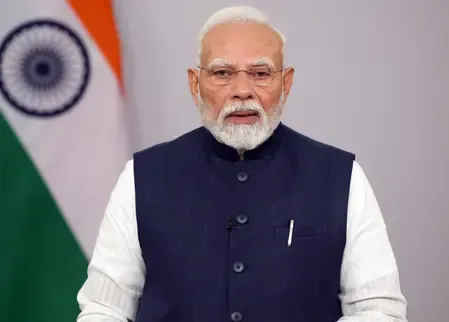
In the wake of the 22 April Pahalgam terror attack, Prime Minister Narendra Modi authorised Operation Sindoor — a precisely calibrated military campaign that struck Pakistan-backed terror infrastructure across Pakistan and Pakistan-occupied Kashmir (PoK), fundamentally rewriting India's counter-terror doctrine. The operation, launched on 7 May, sent an unambiguous message: a bullet would be answered with a bomb.
The Pahalgam Attack That Changed Everything
The 22 April attack in Pahalgam, Jammu and Kashmir, was among the most brazen terror strikes in recent memory. Militants belonging to Lashkar-e-Taiba (LeT) segregated victims by religion before killing 26 innocent people, a deliberate act designed not merely to disrupt the region's tourism industry but to inflame communal tensions across India. The scale and intent of the massacre left New Delhi with little political or strategic room for a muted response.
Calling Pakistan's Nuclear Bluff
As multiple security experts have noted, Islamabad had long calculated that India's response to cross-border terror would remain restrained, partly because Pakistan is a declared nuclear state. India's national security planners, advising the Prime Minister, determined it was time to dismantle that assumption. Officials say Pakistan had exploited India's earlier posture — treating terror strikes as criminal cross-border incidents rather than acts of war — for decades. Operation Sindoor formally changed that calculus: a terror attack on Indian soil would henceforth be treated as an act of war, regardless of the nuclear dimension.
Going into the operation, the Government of India was fully aware that international pressure would follow, with most nations citing the nuclear overhang and urging restraint. The Prime Minister's stated position to the international community was direct — a bullet would be answered with a bomb.
Targets Hit and Weapons Used
The Indian armed forces were given a free hand by PM Modi. On 7 May, a BrahMos cruise missile struck the Jaish-e-Mohammad (JeM) headquarters in Bahawalpur, fired from a Su-30 MKI, while a paired French SCALP air-launched cruise missile was deployed from a Rafale.
The next target was the Lashkar-e-Taiba's main training facility at Muridke — a camp used to train operatives for multiple attacks on Indian soil, including the Mumbai 26/11 attacks. Forces used SCALP and Israeli Crystal Maze missiles to neutralise it. Other terror camps were struck using loitering munitions including the Harop, Harpy, Polish Warmate, and Israeli PALM 200/400 systems.
The Strategic Blow: Rawalpindi and Beyond
The most consequential strike came in the early hours of 10 May at 1:30 am IST, when India launched scores of BrahMos missiles at the Chakala/Noor Khan air base in Rawalpindi, crippling Pakistan's Northern Air Command and its broader command-and-control network. Further BrahMos strikes followed at Jacobabad and Bhanot.
The pressure was so intense that the Pakistan Army reportedly pulled back 10 kilometres in several forward areas of PoK. By the operation's conclusion, 11 Pakistani air bases had been crippled and 7 Pakistani aircraft had been lost. Officials noted that even as strikes continued, Pakistan's military-linked accounts on social media spread disinformation claiming victory — a claim, officials said, that bore no relation to ground reality.
Ceasefire and What Comes Next
Facing the scale of damage, Pakistan's Director General of Military Operations (DGMO) reached out to his Indian counterpart, leading to a ceasefire announcement. India chose to honour the agreement even as Pakistan reportedly continued to violate it, signalling strategic confidence rather than weakness. The broader message from New Delhi was unmistakable — India's security doctrine has shifted, and the era of asymmetric impunity for Pakistan-backed terror groups is over. How Islamabad recalibrates in response will define the next chapter of this relationship.
Point of View
India struck deep inside Pakistan's Punjab province, hit command-and-control infrastructure, and forced a DGMO-level ceasefire call from Islamabad. What mainstream coverage underplays is the nuclear dimension: India's willingness to absorb international pressure and proceed anyway is a direct challenge to the strategic logic that has shielded Pakistan for three decades. The harder question is what comes after the ceasefire — whether New Delhi has a diplomatic architecture to consolidate these gains, or whether the doctrine shift remains a one-time demonstration rather than a sustained strategic posture.
NationPress
20 Sept 2026
Frequently Asked Questions
What was Operation Sindoor?
Operation Sindoor was a military campaign launched by India on 7 May in response to the 22 April Pahalgam terror attack that killed 26 people. It targeted Pakistan-backed terror infrastructure across Pakistan and Pakistan-occupied Kashmir, including LeT and JeM facilities, and crippled 11 Pakistani air bases.
What triggered Operation Sindoor?
The immediate trigger was the 22 April Pahalgam attack, in which Lashkar-e-Taiba militants segregated victims by religion and killed 26 people. The attack was seen as aimed at disrupting both Jammu and Kashmir's tourism sector and communal harmony across India.
Which weapons did India use in Operation Sindoor?
India used BrahMos cruise missiles (fired from Su-30 MKI jets), French SCALP air-launched cruise missiles (from Rafale jets), Israeli Crystal Maze missiles, and loitering munitions including Harop, Harpy, Polish Warmate, and Israeli PALM 200/400 systems.
How did Operation Sindoor change India's security doctrine?
Operation Sindoor formally established that a terror attack on Indian soil would be treated as an act of war, not merely a cross-border criminal incident. It also called out Pakistan's nuclear deterrence bluff by demonstrating that India would strike deep inside Pakistani territory despite international pressure.
How did the operation end?
Pakistan's Director General of Military Operations (DGMO) reached out to his Indian counterpart after 11 air bases were crippled and 7 aircraft were lost, leading to a ceasefire announcement. India chose to honour the ceasefire even as Pakistan reportedly continued to violate it.