Operation Sindoor at one year: How it reshaped India's security doctrine
Synopsis
Operation Sindoor wasn't just a retaliatory strike — it was a doctrine reset. One year on, India has formally moved from strategic restraint to a posture where every terror attack invites a military response. From the IACCS neutralising Pakistani drones in real time to emergency S-400 replenishments, the operation has redefined how India fights — and signals — its security calculus.
Key Takeaways
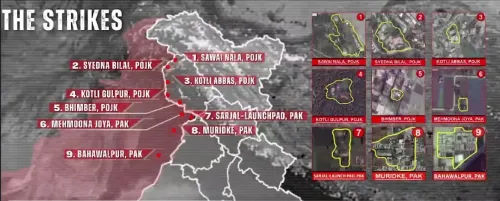
Operation Sindoor was launched on the intervening night of 6–7 May in response to the Pahalgam attack , targeting terror infrastructure in Pakistan and PoK .
Key targets destroyed include Jaish-e-Mohammad's headquarters in Bahawalpur and Lashkar-e-Taiba's training facility in Muridke .
The Indian Air Force's IACCS intercepted and neutralised every Pakistani drone, including those aimed at civilian areas .
India's security doctrine has shifted: terror attacks will now be treated as acts of war , with military retaliation as a credible response.
Post-operation emergency procurements include S-400 missile stock replenishment, counter-drone systems, Javelin missiles, and loitering munitions.
India suspended trade ties, downgraded diplomatic relations, and placed the Indus Waters Treaty in abeyance in the operation's aftermath.
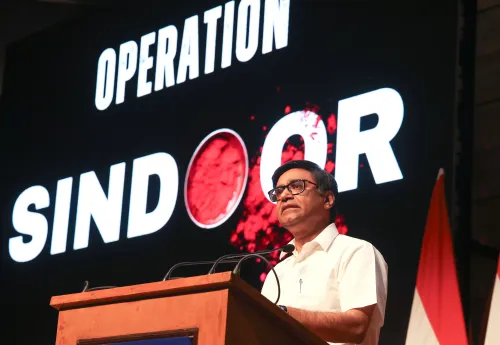
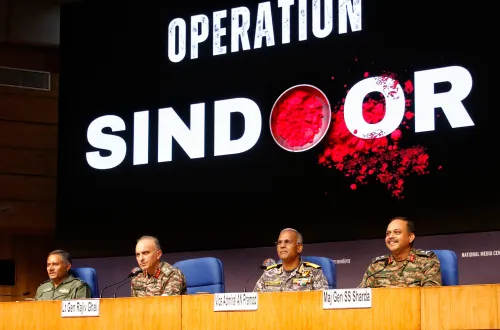
One year after the Indian Armed Forces launched Operation Sindoor on the intervening night of 6–7 May, the strike continues to redefine India's national security doctrine — shifting the country's posture from strategic restraint to a clear policy of military retaliation against Pakistan-sponsored terrorism. The operation, carried out in response to the Pahalgam attack that claimed innocent lives, targeted terror infrastructure deep inside Pakistan and Pakistan-occupied Kashmir (PoK) with surgical precision.
What Operation Sindoor Struck
Among the most significant targets destroyed were the Jaish-e-Mohammad (JeM) headquarters in Bahawalpur and the Lashkar-e-Taiba (LeT) primary training facility in Muridke — both long-established nodes in Pakistan's cross-border terror network. Defence experts say the strikes were executed across multiple fronts simultaneously, underscoring a level of inter-service coordination rarely seen in previous Indian military operations.
Notably, even as the strikes were underway, Pakistani forces launched waves of drones toward Indian territory. According to officials, the initial sorties involved smaller, ostensibly harmless drones intended to distract and probe India's air defence grid. These were followed by larger, more capable unmanned aerial vehicles. Every drone was intercepted and neutralised, officials confirmed.
The IACCS: India's Air Defence Shield
A defining feature of Operation Sindoor was the performance of the Indian Air Force's Integrated Air Command and Control System (IACCS), which proved instrumental in coordinating the air defence response. The system tracked, identified, and neutralised dozens of Pakistani drones — including those directed not at military installations but at civilian territory, according to officials. The IACCS demonstrated real-time networked command capability under active threat conditions, a milestone for India's air defence architecture.
Pakistan's military simultaneously activated what officials described as organised propaganda wings on social media, spreading false narratives reportedly aimed at demoralising Indian forces and distorting the operational picture. The Indian government, according to officials, systematically countered each narrative in near-real time.
A Doctrine Shift: Terror Attacks Treated as Acts of War
Perhaps the most consequential outcome of Operation Sindoor is the doctrinal signal it sent. According to officials, India's security establishment has formally recalibrated its posture: every terror attack will henceforth be treated as an act of war, with a military response as a credible option. This shift, analysts say, has placed Pakistan on the defensive and is cited as a reason behind the reported rise in efforts to activate homegrown terror modules inside India, as Pakistan recalibrates its own approach.
Prime Minister Narendra Modi described the operation as "a reflection of the nation's resolve to ensure justice and security."
Emergency Procurements and Technology Upgrades
In the aftermath of the operation, the Government of India approved a series of emergency defence procurements. These include replenishment of S-400 missile stocks, additional drones, counter-drone systems, Javelin anti-tank guided missiles, loitering munitions, and precision munitions. The IACCS infrastructure — currently operational at seven sites — is also being refurbished with new components to address single points of failure in networked tactical nodes (NTN), according to a request for proposal issued to defence public sector undertakings by the Indian Air Force (IAF) last week.
The operation also accelerated India's strategic thinking on drone warfare. Officials say that future conflicts will be fought predominantly with unmanned systems, and securing Indian airspace against drone threats has become a top priority for the Modi government.
Diplomatic Fallout and Strategic Messaging
Beyond the military dimension, Operation Sindoor triggered a sweeping diplomatic response. India suspended trade ties, downgraded diplomatic relations, and placed the Indus Waters Treaty in abeyance — measures that officials say collectively conveyed India's zero-tolerance stance on Pakistan-sponsored terrorism. The cumulative effect, according to analysts, has been to raise the cost calculus for Pakistan significantly. A year on, Operation Sindoor is increasingly regarded not as a one-time strike, but as the opening chapter of a reconfigured India–Pakistan security framework.
Point of View
Or whether it becomes another declaratory policy that fades under diplomatic pressure. The emergency procurement surge is encouraging, but India's drone and counter-drone ecosystem remains years behind peer competitors. The IACCS refurbishment at seven sites is a start, not a finish line.
NationPress
22 Sept 2026
Frequently Asked Questions
What was Operation Sindoor?
Operation Sindoor was a precision military strike carried out by the Indian Armed Forces on the intervening night of 6–7 May in retaliation for the Pahalgam terror attack. It destroyed key terror infrastructure in Pakistan and Pakistan-occupied Kashmir, including Jaish-e-Mohammad's headquarters in Bahawalpur and Lashkar-e-Taiba's training facility in Muridke.
How did India counter Pakistani drones during Operation Sindoor?
The Indian Air Force's Integrated Air Command and Control System (IACCS) tracked and neutralised every Pakistani drone launched during the operation, including those targeting civilian areas. The system demonstrated real-time networked air defence capability under active combat conditions.
How has India's security doctrine changed after Operation Sindoor?
India has formally shifted from strategic restraint to a posture where terror attacks are treated as acts of war, making military retaliation a credible and stated response. This doctrinal change has placed Pakistan on the defensive and altered the cost calculus for cross-border terrorism.
What defence procurements did India approve after Operation Sindoor?
The Government of India approved emergency procurements including S-400 missile stock replenishment, additional drones, counter-drone systems, Javelin anti-tank guided missiles, loitering munitions, and precision munitions. The IACCS infrastructure at seven sites is also being refurbished.
What diplomatic steps did India take following Operation Sindoor?
India suspended trade ties with Pakistan, downgraded diplomatic relations, and placed the Indus Waters Treaty in abeyance. These measures were aimed at signalling India's zero-tolerance stance on Pakistan-sponsored terrorism.