Chinese Missiles Defeated in India's Operation Sindoor Against Pakistan: Key Insights

Synopsis
India's Operation Sindoor saw a decisive defeat of Chinese missiles used by Pakistan, revealing significant flaws in their military technology. This report sheds light on the operational effectiveness of India's defense systems and the implications for regional security.
Key Takeaways
Operation Sindoor showcased India's military capability and strategic planning.
Chinese HQ-9B missiles were ineffective in real combat.
India's multi-layered air defense network proved successful.
The incident raises questions about the reliability of Chinese military technology.
Regional security dynamics may shift due to these developments.
Washington, March 15 (NationPress) A recent report reveals that during India's Operation Sindoor, the Chinese missiles deployed by the Pakistani military faced a decisive defeat for four consecutive days.
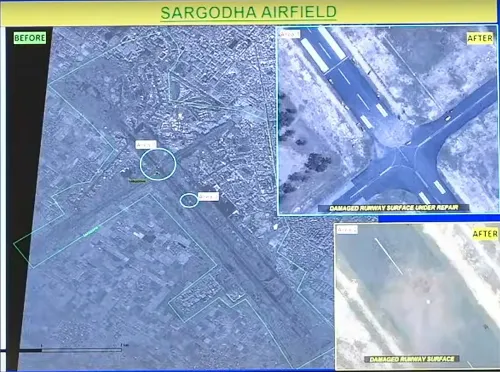
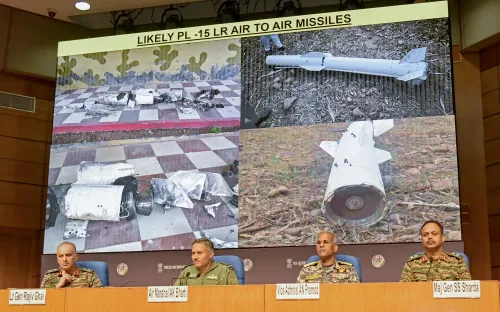
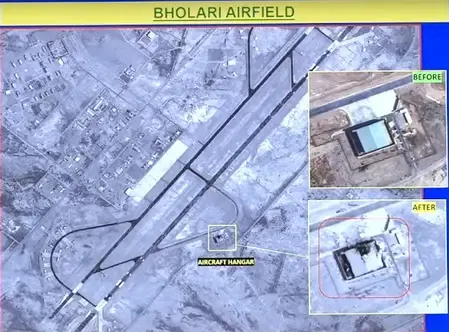
Operation Sindoor was a carefully planned, non-escalatory, tri-service military initiative executed on May 7-8 of the previous year, as a response to the Pahalgam terror attack that claimed the lives of 26 individuals.
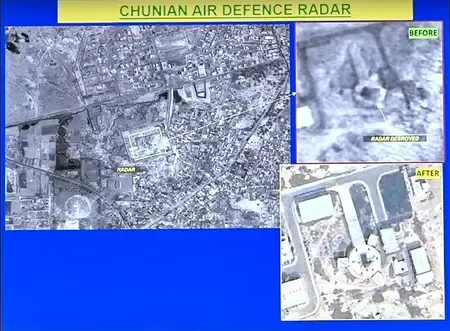
This military action successfully dismantled critical terrorist infrastructure and neutralized those responsible in both Pakistan and Pakistan-occupied Kashmir (PoK).
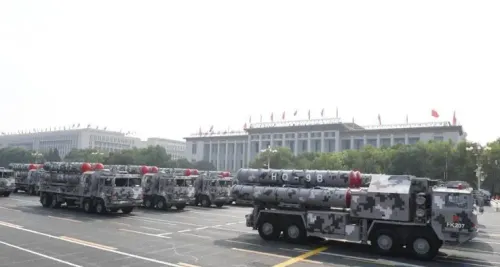
China has found itself the target of global ridicule, as its HQ-9B missiles, once celebrated as top-tier air defense systems, have failed dramatically in Pakistan, Venezuela, and Iran within a single year. Although China's HQ-9B missiles and JY-27A radars showcased impressive capabilities during military parades, they have proven ineffective in real combat scenarios, described as "blind, deaf, and mute," according to a report from the American newspaper, 'The Hill'.
The report states, "Since May of last year, serious concerns have been raised about the HQ-9B's inadequacy. In India's Operation Sindoor against Pakistan, the Chinese missiles were soundly defeated for four consecutive days, failing to defend, destroy, or track any targets."
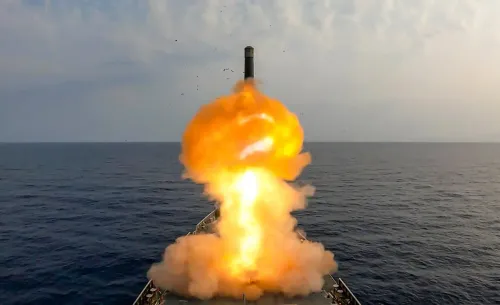
In stark contrast to the Chinese systems, India employed an effective multi-layered air defense network during Operation Sindoor, prominently using the S-400 Triumf (dubbed 'Sudarshan') for long-range threats and the indigenous Akash missile system for medium-range challenges.
This comprehensive system successfully intercepted Pakistani aircraft, drones, and missiles.
'The Hill' notes that the HQ-9B, also referred to as Red Flag 9, is considered a "cheap imitation" of the US Patriot missiles and the Russian S-300. Theoretically, the report suggests that the HQ-9B is equipped with integrated radar systems to simultaneously track and engage multiple targets; however, in practice, they have demonstrated the opposite efficacy.
China's JY-27 radar system is said to be capable of identifying and scanning targets from 280 to 390 kilometers away, specializing in the early detection of fast, supersonic fighter jets like the F-22 and F-35.
However, during real combat situations, such as when Maduro was apprehended in Venezuela, the Chinese radars were a source of national embarrassment, failing to detect any of the 150 aircraft that infiltrated Venezuelan airspace.
Furthermore, during the US-launched Operation Epic Fury in Iran, which resulted in the deaths of Iranian Supreme leader Ayatollah Ali Khamenei and approximately 49 senior military officers, the Iranian defense systems—including the Chinese HQ-9B missile system—failed to perform.
The report concludes, "Chinese military power has failed miserably. The US has showcased its technological prowess and exceptional military expertise. While China's propaganda may be effective, its military technology has not lived up to expectations. Several countries, including Egypt, Azerbaijan, Pakistan, and Iran, that invested heavily in Chinese air defense systems are now regretting their decisions."
Events in Pakistan, Venezuela, and Iran provide a glimmer of hope for Taiwan. China has lost credibility in the arms race, and although Beijing remains a nuclear power, its combat technology and radar systems have proven to be unreliable and inferior compared to those of the US.
Point of View
It's crucial to acknowledge the operational success of India's military during Operation Sindoor and the subsequent failure of Chinese defense technology. This incident not only reflects on the ongoing tensions in the region but also raises important questions about the reliability of military alliances and the credibility of defense systems.
NationPress
16 Oct 2026
Frequently Asked Questions
What was Operation Sindoor?
Operation Sindoor was a tri-service military operation conducted by India on May 7-8, last year, in response to the Pahalgam terror attack, aimed at dismantling terrorist infrastructure in Pakistan and PoK.
What were the outcomes of Operation Sindoor?
The operation successfully neutralized key terrorist threats and demonstrated the effectiveness of India's multi-layered air defense network against Chinese missiles.
How did Chinese missiles perform during the operation?
The Chinese missiles, specifically the HQ-9B, failed to defend, destroy, or track targets effectively during the operation, leading to their defeat over four consecutive days.
What does this mean for China's military credibility?
The failures of Chinese military technology in recent conflicts have led to questions about its reliability and effectiveness, diminishing its credibility in the arms race.
How does this affect regional security?
The incident highlights the shifting dynamics of military power in the region and raises concerns for countries relying on Chinese defense systems.