Operation Sindoor exposed China's HQ-9B failures, boosted India's defence standing
Synopsis
Operation Sindoor didn't just neutralise terror infrastructure — it exposed the real-world limits of China's marquee HQ-9B air defence system. With Pakistan's Chinese-supplied defences overwhelmed by India's indigenous BrahMos and Harop weapons, Beijing's defence export credibility took a serious hit while India's strategic standing in the Indo-Pacific rose sharply.
Key Takeaways
Operation Sindoor launched on 6–7 May 2025 after the Pahalgam terror attack killed 26 civilians on 22 April 2025 .
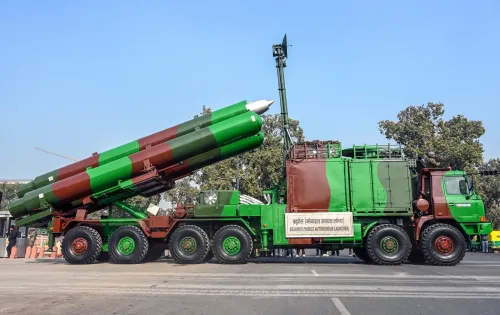
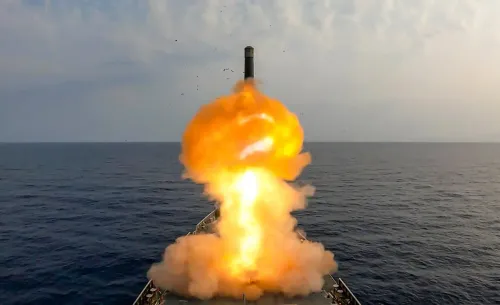
India destroyed nine terror camps in four days using indigenous weapons: BrahMos missile , Akashteer , and Harop loitering munition .
Pakistan's Chinese-made HQ-9B air defence system failed to intercept Indian missiles and drones.
A similar HQ-9B failure was reported in 2026 when Iran's system could not stop joint US–Israel strikes on Natanz and Fordow nuclear sites.
Chinese defence firms AVIC , NORINCO , and CETC saw stock plunges; Indian defence stocks reportedly surged 49% .
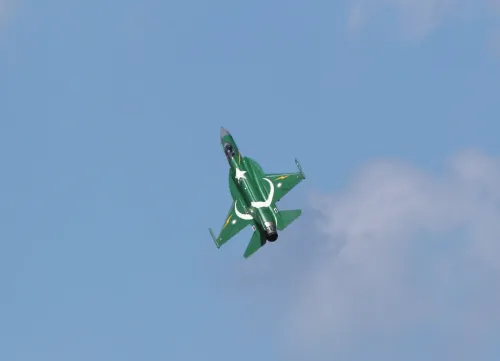
Pakistan's Chinese-made HQ-9B air defence system failed to intercept Indian missiles and drones during Operation Sindoor in May 2025, exposing critical vulnerabilities in Beijing's advanced weapons under real combat conditions, according to a report by Maldivian media outlet Etruth MV. The findings have significantly dented global confidence in Chinese military hardware and triggered a crisis in Beijing's defence export market.
What Happened During Operation Sindoor
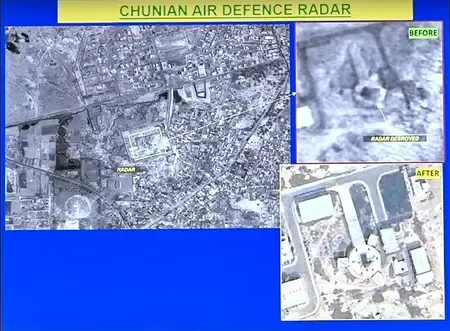
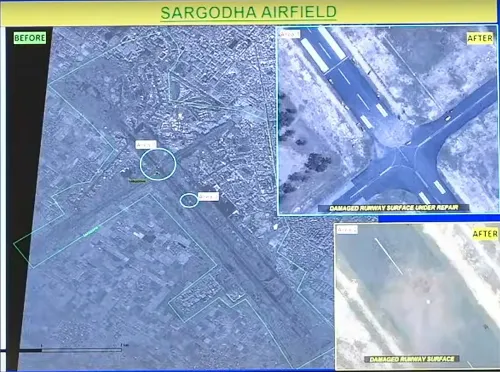
Following a Pakistan-backed terrorist attack in Pahalgam on 22 April 2025 that killed 26 civilians, India launched Operation Sindoor on 6–7 May 2025, conducting precision strikes on Pakistan-based militant infrastructure along the Line of Control. According to the report, the operation involved 125 fighter jets from both sides at standoff ranges. Within four days, Indian forces destroyed nine terror camps and strongholds using indigenous weapons including the BrahMos missile, the Akashteer air defence system, and the Harop loitering munition.
The Indian Air Force reportedly achieved air superiority by 10 May 2025, targeting Pakistan Air Force (PAF) air bases, AWACS platforms, radars, and defences with BrahMos and SCALP-EG missiles, ultimately forcing a ceasefire. Analysts cited in the report credit India's success to a coordinated strategy integrating advanced electronic warfare and AI-driven targeting.
China's HQ-9B: A System That Failed the Test
The HQ-9B, promoted by Beijing as a top-tier long-range air defence system capable of countering stealth aircraft and protecting critical airbases and cities, suffered heavy losses during the strikes, according to the report. Its inability to intercept Indian missiles and drones marked a stark contrast to its marketed capabilities.
Military expert John Spencer was quoted in the report as saying,
Point of View
The episode validates the Atmanirbhar Bharat defence push in a way no test range ever could. The 49% surge in Indian defence stocks reflects not just investor sentiment but a structural shift in how the region — and potentially the world — perceives Indian military-industrial capability.
NationPress
22 Sept 2026
Frequently Asked Questions
What was Operation Sindoor and when did it take place?
Operation Sindoor was a precision military operation launched by India on 6–7 May 2025 in response to a Pakistan-backed terrorist attack in Pahalgam on 22 April 2025 that killed 26 civilians. Indian forces struck nine terror camps and strongholds along the Line of Control using indigenous weapons.
Why did China's HQ-9B air defence system fail during Operation Sindoor?
According to the Etruth MV report, Pakistan's Chinese-made HQ-9B — marketed as capable of countering stealth aircraft and protecting key infrastructure — was unable to intercept Indian missiles and drones, suffering heavy losses. Analysts attribute India's success to coordinated electronic warfare and AI-driven targeting that overwhelmed the system's defences.
Which Indian weapons were used in Operation Sindoor?
India deployed indigenous systems including the BrahMos missile, the Akashteer air defence system, and the Harop loitering munition. SCALP-EG missiles were also reportedly used against PAF air bases, AWACS platforms, and radar installations.
How did Operation Sindoor affect China's defence exports?
The HQ-9B's failure reportedly triggered a crisis in Beijing's defence export market, with Chinese firms AVIC, NORINCO, and CETC seeing stock plunges as global buyers questioned the reliability of Chinese military hardware. Indian defence stocks, by contrast, reportedly surged 49%.
Was the HQ-9B failure limited to Operation Sindoor?
No. According to the report, a similar failure occurred in 2026 when Iran's HQ-9B system — acquired after joint US–Israel strikes in July 2025 — was unable to stop attacks on the Natanz and Fordow nuclear sites, though no radiation leaks were reported. The back-to-back failures compounded concerns about the system's real-world effectiveness.