Operation Sindoor exposed Pakistan's Chinese defence systems as unreliable: Report
Synopsis
A new report by the Afghan Diaspora Network concludes that Operation Sindoor didn't just strike Pakistani airfields — it shattered the credibility of China's most-marketed defence exports. From the HQ-9 to the JF-17 and J-10C, each platform underperformed, leaving Pakistan as a cautionary tale and China's arms narrative in serious doubt.
Key Takeaways
The Afghan Diaspora Network report identified Operation Sindoor as the "clearest example" of Pakistan's defence systems failing under real combat conditions.
Pakistan's HQ-9 long-range surface-to-air system failed to protect strategic air bases from repeated, coordinated Indian strikes.
The JF-17 multirole fighter, co-developed with China, showed no comparable damage on Indian air bases and failed to prevent strikes on sensitive Pakistani military sites.
The J-10C and PL-15 BVRAAM showed no conclusive evidence of tactical success; Pakistan remains the only export customer for the J-10C, per the Pentagon's 2025 China military report .
The report concluded that Operation Sindoor demolished Pakistan's claim that its defence systems are "reliable" and "battle-ready," with persistent credibility gaps now visible in international arms markets.
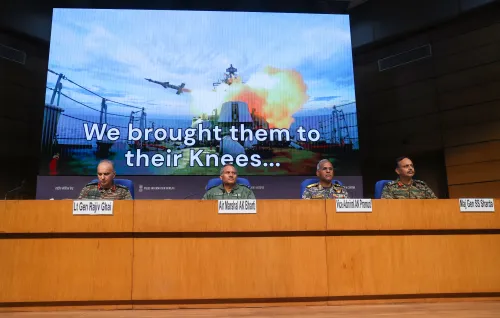
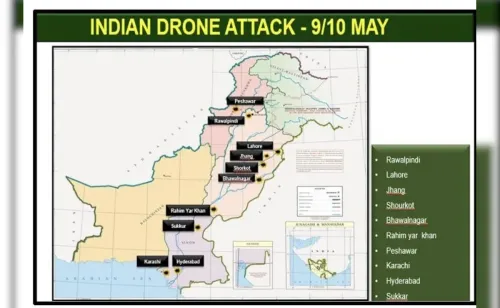
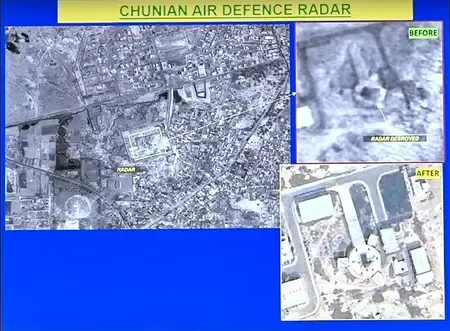
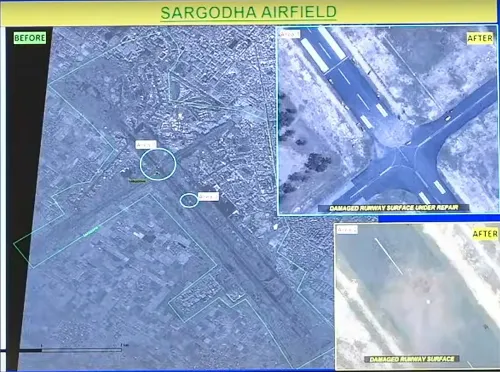
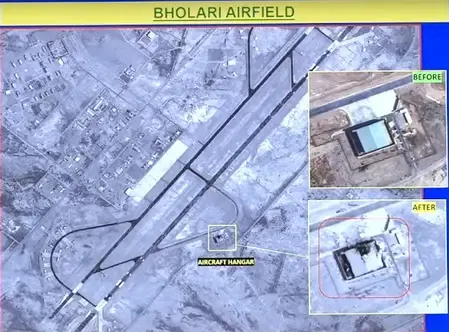
India's Operation Sindoor laid bare critical gaps in Pakistan's Chinese-supplied defence systems, with a new report concluding that the operation was the "clearest example" of how Islamabad's military hardware fell far below advertised capabilities when tested in real combat conditions. The findings, published by the Afghan Diaspora Network, detail extensive damage to Pakistani airfields, hangars, and radar installations caused by coordinated Indian strikes.
Key Findings of the Report
The report states that while modern air defence networks are not expected to intercept every incoming threat, they are designed to protect core military nodes from repeated, coordinated strikes. Pakistan's integrated air defence system, the report asserts, failed to meet even that baseline standard during Operation Sindoor.
"While modern air defence networks do not need to intercept everything, they are expected to protect core military nodes from repeated, coordinated strikes. During Operation Sindoor, it failed to do so," the Afghan Diaspora Network report stated.
Chinese Hardware Under Scrutiny
The report singles out several high-profile Chinese-origin platforms for underperformance. The HQ-9 long-range surface-to-air missile system, marketed as a high-end Chinese answer to Western and Russian equivalents, reportedly failed to complicate Indian air operations or shield strategic air bases as intended.
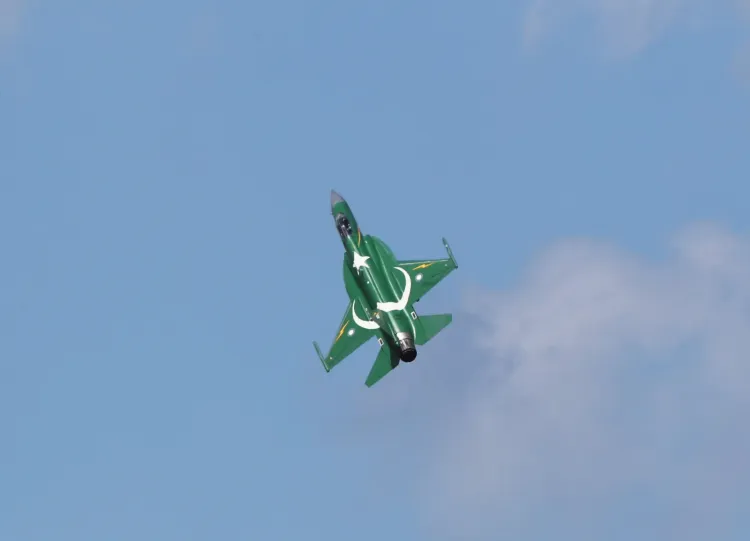
The JF-17 multirole fighter aircraft, jointly developed by Pakistan and China, also emerged with a weakened reputation. The platform neither prevented Indian strikes on sensitive military sites nor demonstrated any comparable visible damage on Indian air bases following the early air battle. "For a platform sold as the backbone of Pakistan's affordable airpower, that is not a convincing battlefield result," the report noted.
The J-10C multirole combat aircraft and the PL-15 beyond-visual-range air-to-air missile (BVRAAM) similarly showed no conclusive evidence of tactical success. Crucially, the report points out that evidence supporting Pakistan's claims of the J-10C's alleged "tactical success" was never shared in international media. Citing the Pentagon's 2025 China military report, the Afghan Diaspora Network noted that Pakistan remained the only export customer for the J-10C — undermining any narrative of the platform's broader credibility.
Pakistan as a 'Laboratory' for Chinese Arms
The report draws a sharp conclusion about the broader strategic dynamic: Pakistan has functioned as a "reliable laboratory" for testing Chinese military equipment — and has borne the consequences of its failures on the battlefield. This framing raises pointed questions about the long-term costs of Islamabad's deep dependence on Beijing for defence procurement.
Notably, this is not the first time Chinese-origin systems supplied to third-party operators have faced scrutiny after live combat. Observers have previously flagged performance gaps in Chinese air defence and aviation platforms deployed in conflict zones across the Middle East and Africa.
Impact on Pakistan's Defence Credibility
The report concludes that Operation Sindoor did not merely damage individual weapons systems — it demolished Pakistan's overarching claim that its defence architecture is "reliable" and "battle-ready." The credibility gaps now extend beyond domestic confidence to international arms markets, where buyers weigh battlefield performance alongside price and political alignment.
As the dust settles on Operation Sindoor, the strategic and reputational fallout for both Pakistan and its primary arms supplier China is likely to reverberate through defence procurement decisions across South and Central Asia in the months ahead.
Point of View
But for what it implies about China's arms export credibility. Beijing has long used Pakistan as a showcase for its defence platforms — the JF-17 was supposed to be proof that Chinese-origin fighters could hold their own in a contested environment. Operation Sindoor appears to have complicated that narrative decisively. The fact that Pakistan remains the sole export customer for the J-10C, even after Islamabad's own claims of its 'tactical success,' suggests that international buyers are watching battlefield performance more closely than official press releases. For India, the strategic dividend extends beyond the immediate military outcome — it has introduced a layer of doubt into Chinese arms deals across the region.
NationPress
23 Sept 2026
Frequently Asked Questions
What did the Afghan Diaspora Network report say about Operation Sindoor?
The report concluded that Operation Sindoor was the clearest example of Pakistan's defence systems failing under real combat conditions, with extensive damage recorded at Pakistani airfields, hangars, and radar installations. It stated that Pakistan's integrated air defence failed to protect core military nodes from repeated, coordinated Indian strikes.
How did the HQ-9 missile system perform during Operation Sindoor?
The HQ-9 long-range surface-to-air missile system, marketed as a high-end Chinese answer to Western and Russian systems, underperformed significantly. It failed to complicate Indian air operations or protect strategic Pakistani air bases as it was designed to do.
What does the report say about the JF-17 and J-10C fighter aircraft?
The JF-17 multirole fighter, jointly developed by Pakistan and China, failed to prevent Indian strikes on sensitive military sites and showed no comparable damage on Indian air bases. The J-10C similarly showed no conclusive evidence of tactical success, and Pakistan remains its only export customer according to the Pentagon's 2025 China military report.
Why is Pakistan described as a 'laboratory' for Chinese weapons?
The report describes Pakistan as a 'reliable laboratory' for testing Chinese military equipment because Islamabad has consistently procured and deployed Chinese-origin platforms — and, according to the report, has borne the consequences of their battlefield failures, as seen during Operation Sindoor.
What is the broader impact of Operation Sindoor on Pakistan's defence credibility?
The report concludes that Operation Sindoor demolished Pakistan's claim that its defence architecture is 'reliable' and 'battle-ready.' The credibility gaps now extend to international arms markets, where buyers assess battlefield performance, potentially affecting future procurement decisions involving Chinese-origin systems.