Operation Sindoor met all three predefined objectives, Afghan media reports
Synopsis
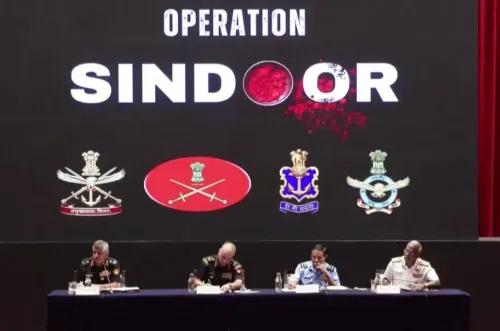
A year after Operation Sindoor, Afghanistan's Khaama Press has published a rare third-party doctrinal assessment concluding that India met all three predefined military objectives — degrading terror infrastructure, shattering Pakistan's depth illusion, and managing escalation — without crossing into a state-on-state war. The report calls it India's most expansive military operation since 1971.
Key Takeaways
Khaama Press , a leading Afghan news agency, assessed that India met all three predefined objectives of Operation Sindoor on its first anniversary.
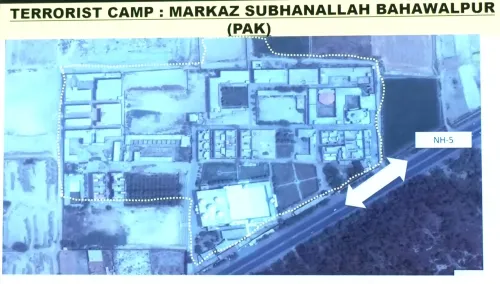
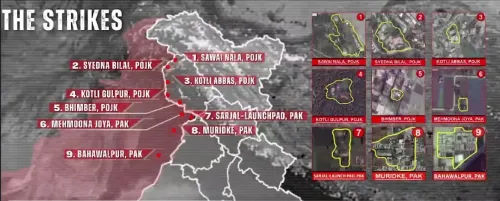
Targets struck included Markaz Taiba (Muridke) , Jamia Masjid Subhan Allah (Bahawalpur) — 100 km inside Pakistan — and a Hizbul Mujahideen camp in Punjab.
All strikes were conducted from Indian airspace using standoff weapons, preserving India's legal posture and denying Pakistan a casus belli .
The report called it the most expansive Indian military operation since 1971 , shattering the so-called depth illusion of Pakistan's security establishment.
Three doctrinal outcomes were identified: terror treated as an act of war; conventional space below nuclear threshold remains usable; precision and messaging can produce coercive outcomes without general war.
India's decisive military action during Operation Sindoor met all three of its predefined strategic objectives despite Pakistan's attempts to escalate, Khaama Press, a leading Afghan news agency, reported on Thursday — marking the first anniversary of the operation. The report offered a detailed doctrinal assessment of how India combined defined targeting, credible escalation reserve, and strict political focus to degrade the terror infrastructure responsible for the Pahalgam massacre of 22 April 2025.
Three Core Objectives of Operation Sindoor
According to the Khaama Press report, India's three predefined objectives were: physically degrading the operational core of cross-border terror groups; shattering what strategists called the depth illusion — the assumption that terror facilities located deeper inside Pakistan were beyond India's reach; and managing escalation while accepting calibrated risk.
The report assessed that all three were achieved, marking Operation Sindoor as the most expansive Indian military operation since 1971.
Targets Struck Deep Inside Pakistan
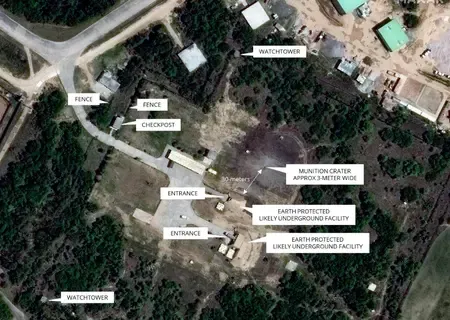
The report detailed that India struck multiple high-value terror infrastructure targets entirely from Indian airspace, using long-range standoff weapons, air-launched missiles, and loitering munitions. Key sites hit included Markaz Taiba in Muridke — the nerve centre of Lashkar-e-Taiba; Jamia Masjid Subhan Allah in Bahawalpur, located 100 km inside Pakistan, which functioned as an indoctrination and recruitment hub for Jaish-e-Mohammed; Mehmoona Joya in Punjab, a Hizbul Mujahideen camp; and multiple targets in Pakistan-occupied Jammu and Kashmir (PoJK).
Notably, conducting the strikes from Indian airspace preserved India's legal posture and, according to the report, denied Pakistan a clear casus belli — an occasion for war.
Shattering the Depth Illusion
The second objective centred on dismantling the strategic assumption within Pakistan's security establishment that the farther inland a terror facility, the safer it would be from Indian retaliation. By striking Bahawalpur in southern Punjab and Muridke in the Punjabi heartland, India directly challenged this calculus.
Point of View
Or provokes a counter-escalation doctrine from Rawalpindi, is the question that will define the subcontinent's security calculus for years to come.
NationPress
22 Sept 2026
Frequently Asked Questions
What were the three predefined objectives of Operation Sindoor?
According to Khaama Press, the three objectives were: physically degrading the operational core of cross-border terror groups responsible for the Pahalgam massacre; shattering the depth illusion that terror facilities deep inside Pakistan were beyond India's reach; and managing escalation while accepting calibrated risk. India reportedly met all three.
Which targets were struck during Operation Sindoor?
Key targets included Markaz Taiba in Muridke (Lashkar-e-Taiba's nerve centre), Jamia Masjid Subhan Allah in Bahawalpur (100 km inside Pakistan, a Jaish-e-Mohammed hub), a Hizbul Mujahideen camp at Mehmoona Joya in Punjab, and multiple sites in Pakistan-occupied Jammu and Kashmir. All strikes were conducted from Indian airspace using standoff weapons and loitering munitions.
Why is Operation Sindoor called India's most expansive military operation since 1971?
The Khaama Press report describes it as such because of the geographic depth of the strikes — reaching as far as Bahawalpur in southern Punjab — and the scale of terror infrastructure targeted across Pakistan and PoJK. Previous Indian military actions had not struck targets this deep inside Pakistani territory.
What is the depth illusion that Operation Sindoor reportedly shattered?
The depth illusion refers to the assumption within Pakistan's security establishment that terror facilities located farther inland were safe from Indian retaliation, partly shielded by Pakistan's nuclear umbrella. India's strikes on Bahawalpur and Muridke directly dismantled this assumption, according to the report.
What doctrinal outcomes emerged from Operation Sindoor?
The report identified three doctrinal outcomes: acts of terror will be treated as acts of war with no distinction between state sponsors and proscribed outfits; conventional military space below the nuclear threshold remains usable; and technological precision combined with disciplined messaging can produce coercive outcomes without escalating into a general war.