China's space insurers back domestic rivals as SpaceX IPO reshapes orbital race
Synopsis
China's space-insurance sector has surged in 2026 as domestic rocket firms race to rival SpaceX — whose landmark IPO has redrawn the commercial space landscape. A single 2016 SpaceX explosion triggered a near-US$300 million insurance claim, illustrating just how much financial firepower the orbital economy now requires.
Key Takeaways
A SpaceX rocket explosion in 2016 triggered an insurance payout of nearly US$300 million for satellite operator Israel's Space Communications .
China's space-insurance industry has accelerated significantly in 2026 , driven by domestic firms scaling up launch and manufacturing capabilities.
The commercial space-insurance market has evolved from a niche specialty into a critical financial backstop for the global orbital economy.
SpaceX 's IPO , completed on Friday , has intensified competitive pressure on Chinese launch and satellite companies.
Insurance market growth in China is both a signal of domestic space ambition and a financial enabler for high-risk new entrants.
China's space-insurance industry has accelerated sharply in 2026, underwriting a new generation of domestic launch and satellite companies racing to close the gap with SpaceX — whose blockbuster initial public offering on Friday has reset the stakes for the entire commercial space sector globally.
Why it matters
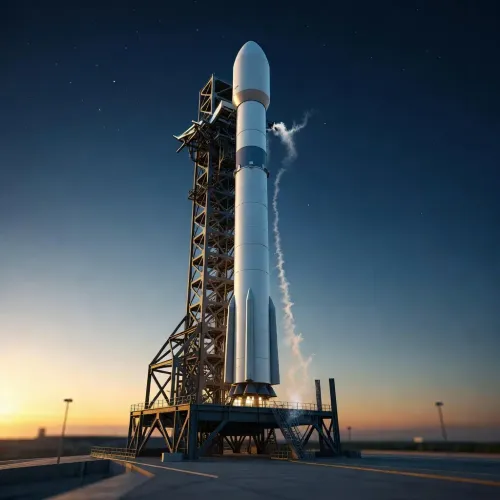
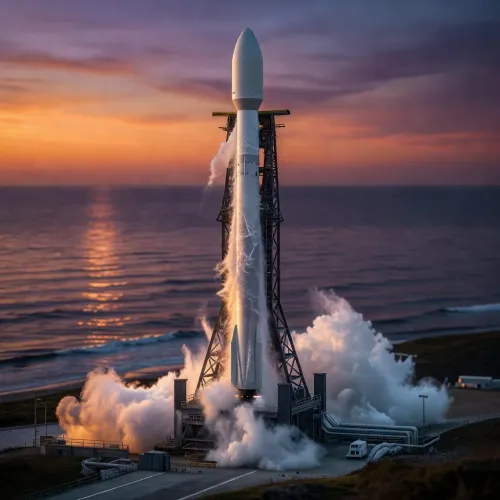
Insurance is the invisible infrastructure of the orbital economy. Without it, satellite operators, manufacturers and launch providers cannot absorb the catastrophic financial shock of a vehicle failure — a risk that is far from theoretical. In 2016, a SpaceX rocket exploded during a pre-launch test, destroying onboard equipment and surrounding facilities worth tens of millions of dollars. Israel's Space Communications, the satellite operator, held a policy worth nearly US$300 million on the cargo, largely containing the financial damage.
From niche to critical backstop
Over the past decade, as commercial space activity has expanded from a handful of government-backed programmes to a sprawling ecosystem of private ventures, the space-insurance market has matured in step. What was once a highly specialised niche now functions as a foundational financial layer — protecting satellite operators, vehicle manufacturers and spaceflight service providers against losses that can run into hundreds of millions of dollars in a single incident.
China's insurance push
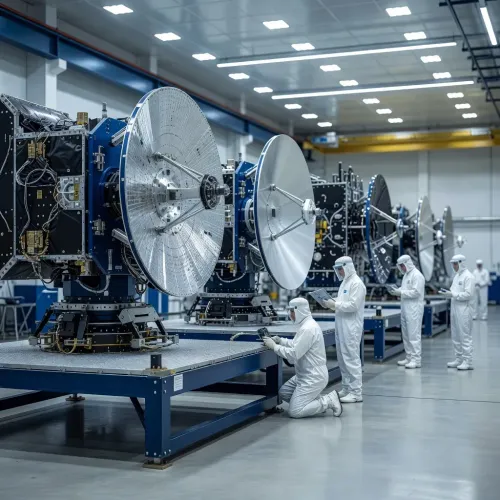
In China, the shift has been especially pronounced this year. A wave of domestic firms — spanning rocket manufacturing, satellite production and launch services — has intensified activity in research, manufacturing and launch capabilities, driving demand for coverage. The domestic space-insurance sector, anchored by major Chinese insurers, has moved into high gear to keep pace, according to industry reports. The surge reflects both the commercial ambitions of Chinese space companies and the government's strategic push to develop a credible alternative to US-led launch infrastructure.
The competitive backdrop
SpaceX's IPO — widely described as a landmark moment for the commercial space industry — has intensified the urgency felt by Chinese competitors. Elon Musk's company has set the benchmark for reusable launch vehicles, rapid iteration and cost reduction, capabilities that Chinese firms are actively working to replicate. The insurance market's growth is both a symptom of that competitive pressure and an enabler of it: access to affordable, comprehensive coverage lowers the financial barrier for new entrants attempting high-risk launches.
What's next
As the cadence of domestic launches increases, underwriters will face mounting pressure to price risk accurately in a market where failure data is still accumulating. The evolution of China's space-insurance ecosystem will be a key indicator of how seriously global capital views the country's orbital ambitions — and how quickly domestic challengers can close the gap on SpaceX.
Frequently Asked Questions
What does space insurance cover for rocket launches?
Space insurance covers satellite operators, manufacturers and launch providers against catastrophic financial losses from vehicle failures, explosions or onboard equipment damage. A single incident can trigger claims of hundreds of millions of dollars, as seen when a SpaceX rocket explosion in 2016 led to a claim of nearly US$300 million for Israel's Space Communications .
Why is China's space-insurance market growing in 2026?
A wave of domestic Chinese firms expanding in rocket manufacturing, satellite production and launch services has driven sharp growth in demand for space-insurance coverage in 2026 . These companies require financial protection as they scale up high-risk launch activities in competition with established players like SpaceX .
How does SpaceX's IPO affect Chinese space companies?
SpaceX 's landmark IPO has reset the commercial benchmark for the orbital economy, intensifying pressure on Chinese rivals to demonstrate comparable technical and financial credibility. It has also highlighted the scale of capital available to US -based launch providers, raising the stakes for domestic competitors seeking investment and insurance coverage.
Who insures Chinese rocket and satellite companies?
Major domestic Chinese insurers have moved to underwrite the country's growing commercial space sector, according to industry reports. The market has shifted from a niche specialty into a structured segment as launch frequency and asset values have increased.
What happened when a SpaceX rocket exploded in 2016?
In 2016 , a SpaceX rocket exploded during a pre-launch test, destroying onboard equipment and surrounding facilities. Satellite operator Israel's Space Communications held an insurance policy worth nearly US$300 million on the cargo, which largely absorbed the financial impact of the loss.