China satellite engine record, rare earth gaps: 7 science highlights
Synopsis
China's satellite engine has reportedly outpaced its nearest US rival while the Long March-10B rocket positions itself as a direct SpaceX challenger — yet structural weaknesses in China's rare earth sector simultaneously expose limits to Beijing's strategic leverage.
Key Takeaways
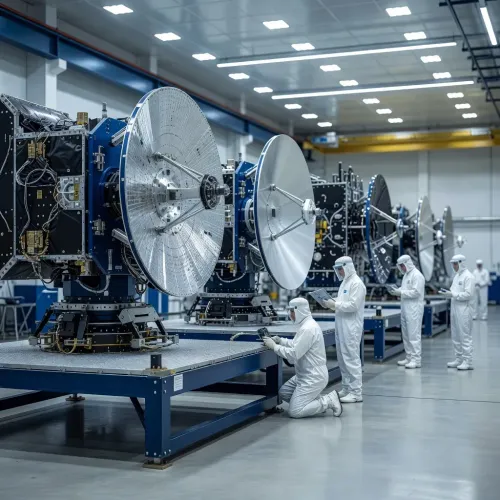
China's satellite engine has broken a performance record, reportedly surpassing its closest US rival in a key propulsion benchmark.
The Long March-10B rocket is being developed as China's primary heavy-lift challenger to SpaceX's Starship and Falcon Heavy vehicles.
China's rare earth industry faces internal structural weaknesses including processing inefficiencies and rising environmental compliance costs.
US scientists achieved a microwatt milestone in low-power computing, with potential applications in medical implants and edge AI.
Neurobiologist Chih-Ying Su at the Shenzhen Academy of Medical Sciences contributed to new sensory neuroscience findings published during the period.
Cross-border scientific collaboration continues even as US-China technology and trade tensions persist across chips, space, and critical minerals.
China has set a new benchmark in satellite propulsion technology, with a domestically developed engine reportedly smashing previous performance records and outpacing its closest US rival — one of several significant science and technology developments tracked over the past two weeks spanning space, biology, and critical minerals.
Satellite Engine Breaks Records
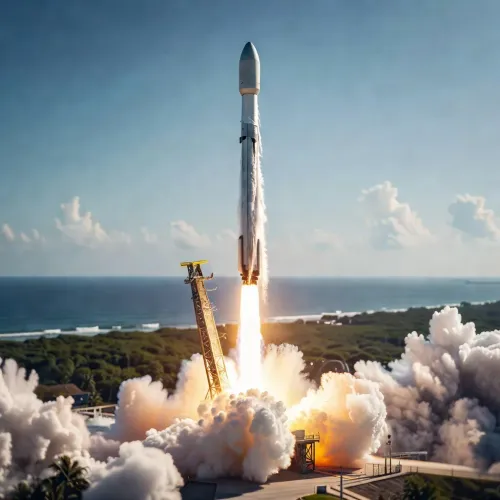
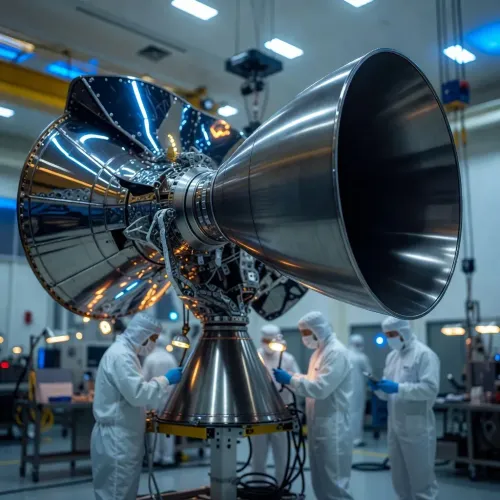
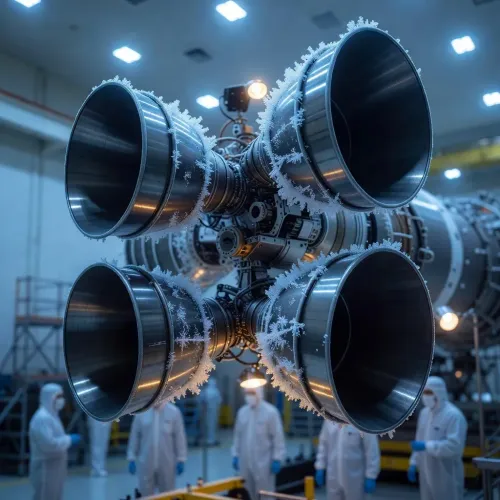
China's satellite engine has achieved a performance milestone that reportedly leaves its nearest American competitor far behind, according to reports. The breakthrough signals accelerating momentum in China's commercial and strategic space ambitions, coming at a time when SpaceX continues to set the global pace in launch cadence and reusable rocketry.
Details of the engine's specific thrust or efficiency ratings were not fully disclosed publicly, but the achievement underscores the depth of investment Beijing has channelled into indigenous propulsion research.
New Rocket Positioned to Rival SpaceX
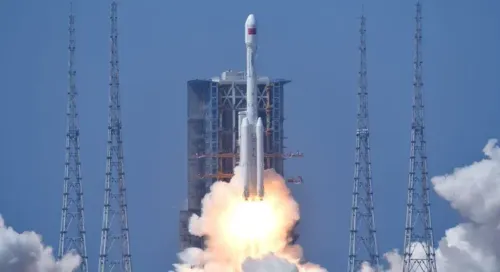
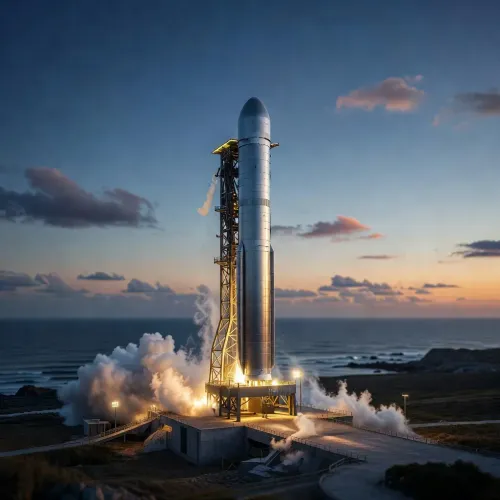
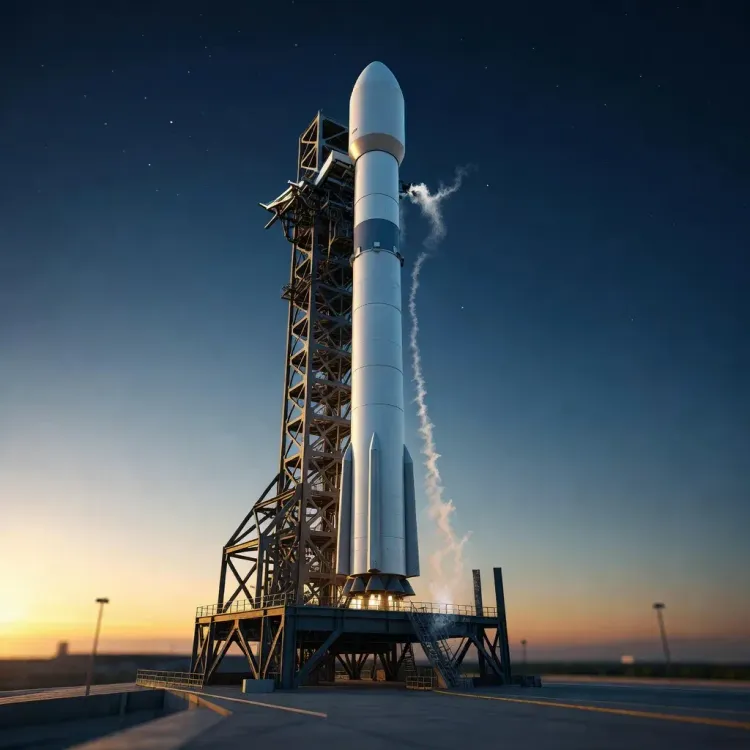
China's Long March-10B rocket has emerged as the country's most direct challenger yet to SpaceX's heavy-lift dominance. The vehicle is designed to support crewed lunar missions and large-payload commercial deployments, placing it squarely in competition with SpaceX's Starship and Falcon Heavy platforms.
The Long March-10B represents a generational leap for China's launch architecture, incorporating technologies that analysts say could meaningfully narrow the gap with US commercial space operators within this decade.
Rare Earth Weakness Exposed
China's rare earth sector, long considered a strategic lever in geopolitical competition, faces internal structural vulnerabilities that could complicate its role as the world's dominant supplier. Reports indicate that processing inefficiencies and environmental compliance costs are creating friction within the industry, even as Beijing attempts to weaponise export controls on critical minerals.
The rare earth industry's weaknesses matter because Western nations — particularly the US and members of the European Union — are accelerating alternative sourcing strategies, reducing the window in which China can extract maximum strategic leverage.
Microwatt Milestone and Neuroscience Advances
US scientists reached a so-called microwatt milestone in low-power computing research, a development with implications for implantable medical devices and edge AI hardware. Separately, neurobiologist Chih-Ying Su and colleagues at the Shenzhen Academy of Medical Sciences published findings relevant to sensory neuroscience, adding to a growing body of cross-border collaborative research even amid broader US-China technology tensions.
The juxtaposition of scientific cooperation and strategic rivalry defines the current era: researchers continue to publish jointly while their governments erect barriers around chips, rockets, and minerals.
What to Watch Next
The Long March-10B's development timeline and SpaceX's Starship certification progress will be the two most watched variables in the heavy-lift competition over the next 18 months. On the minerals front, any further tightening of China's rare earth export quotas could trigger immediate supply-chain responses from defence and semiconductor manufacturers globally.
Point of View
But the extractive industries meant to give China geopolitical leverage are structurally fragile. Mainstream coverage tends to treat rare earth export controls as an unambiguous Chinese trump card — the internal cost pressures suggest the hand is weaker than advertised. Meanwhile, the satellite engine record, if verified independently, would mark the first time a Chinese propulsion system has demonstrably outperformed a US equivalent in a directly comparable metric, a threshold moment that defence procurement planners in Washington will not ignore. The microwatt computing milestone by US scientists, largely overlooked in geopolitical framing, may ultimately matter more for the AI hardware race than any single rocket launch.
NationPress
13 Oct 2026
Frequently Asked Questions
What record did China's satellite engine break?
China's satellite engine reportedly achieved a performance milestone that surpasses its nearest US rival, according to reports. Specific thrust or efficiency figures were not fully disclosed publicly, but the development marks a significant advance in indigenous Chinese propulsion technology.
How does the Long March-10B compare to SpaceX rockets?
The Long March-10B is China's most direct heavy-lift challenger to SpaceX's Starship and Falcon Heavy. It is designed to support crewed lunar missions and large commercial payloads, placing it in direct competition with SpaceX's flagship vehicles.
What are the weaknesses in China's rare earth industry?
China's rare earth sector reportedly faces processing inefficiencies and rising environmental compliance costs that create internal friction. These structural issues could limit Beijing's ability to use rare earth export controls as an effective geopolitical tool as Western nations accelerate alternative sourcing.
Who is Chih-Ying Su and what was the research finding?
Chih-Ying Su is a neurobiologist associated with the Shenzhen Academy of Medical Sciences who contributed to sensory neuroscience research published during the two-week period. The work adds to a growing body of cross-border scientific collaboration despite broader US-China technology tensions.
What is the microwatt milestone achieved by US scientists?
US scientists reached a microwatt milestone in low-power computing research, a breakthrough with implications for implantable medical devices and edge AI hardware. The achievement is considered significant for next-generation computing architectures that must operate under severe energy constraints.