China's satellite engine logs 14-hour record, outpacing US and European rivals
Synopsis
China's new 750-newton satellite engine ran for over 14 hours in testing — more than double the ~7-hour design life of the US R-42DM and Europe's Leros-1B — after successfully completing five orbit-raising burns during the late-June 2026 maiden flight of Communications Technology Experiment Satellite 26A.
Key Takeaways
China Academy of Aerospace Propulsion Technology in Xian developed a new satellite engine producing 750 newtons of thrust.
The engine fired for 11,617 seconds (3.2 hours) across five orbit-raising manoeuvres during its maiden flight in late June 2026 .
Ground testing showed continuous operation exceeding 14 hours , enabled by a novel heat- and oxidation-resistant coating .
The engine was designed for a nearly 10-hour operational life, already surpassing the ~7-hour rating of rival systems including the US-made R-42DM and Europe's Leros-1B .
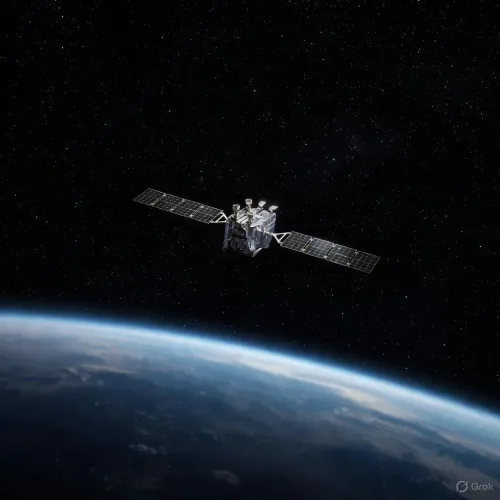
Communications Technology Experiment Satellite 26A was placed into orbit approximately 35,800 km (22,000 miles) above Earth.
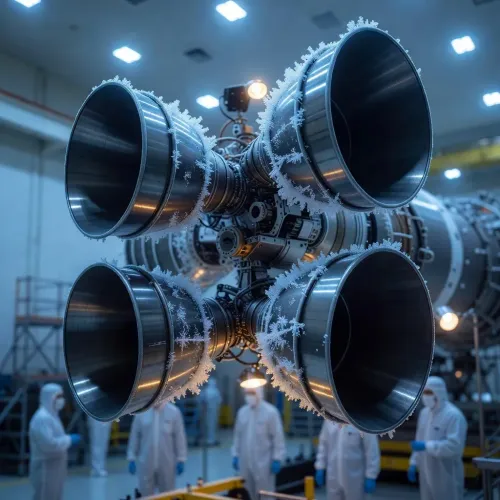
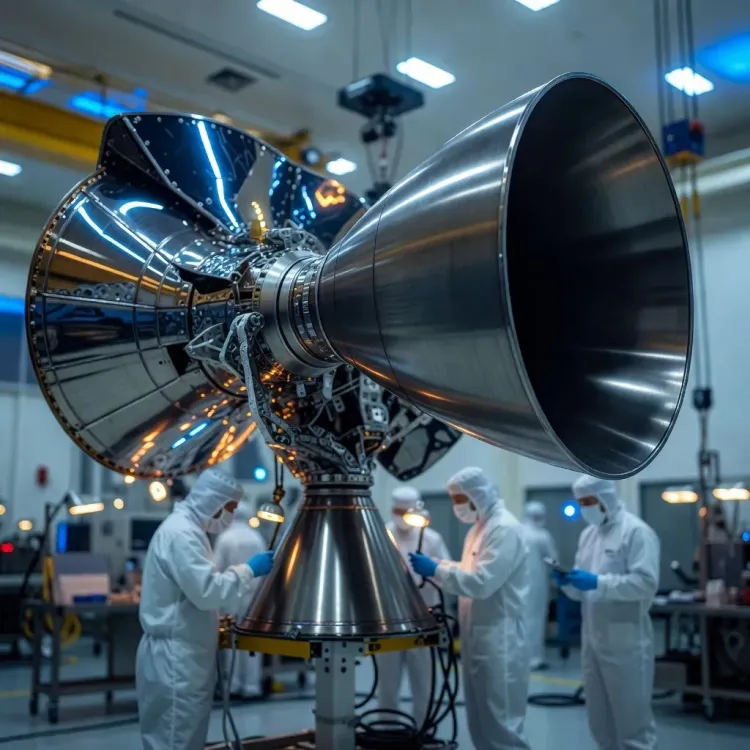
China has tested a next-generation satellite engine that set a new global operating-life record, a milestone that could accelerate the deployment of communications, military, and deep-space spacecraft into their intended orbits with greater speed and reliability. The engine, developed by the China Academy of Aerospace Propulsion Technology in Xian, reportedly operated continuously for more than 14 hours during ground testing — significantly exceeding the performance envelope of competing Western systems.
The record-breaking test
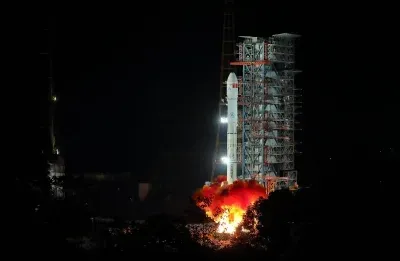
The upgraded engine produces 750 newtons of thrust and was originally designed for a nearly 10-hour operational life. During its maiden flight in late June 2026, it fired for 11,617 seconds — approximately 3.2 hours — across five orbit-raising manoeuvres, successfully placing Communications Technology Experiment Satellite 26A into a geostationary orbit roughly 35,800 km (22,000 miles) above Earth, according to Chinese media reports.
The extended endurance was made possible by a novel heat- and oxidation-resistant coating, the reports said. Crucially, the performance gains did not come at the expense of thrust output or reliability, according to the same reports.
Why it matters: leaving Western rivals behind
The benchmark comparison is stark. The leading Western apogee engines currently used for orbit-raising — including the US-made R-42DM and Europe's Leros-1B — are typically designed to operate for about seven hours. China's new engine more than doubles that designed ceiling in testing, representing a meaningful leap in propulsion endurance.
Longer-running apogee engines reduce the number of burns required to reach geostationary orbit, lowering mission risk and potentially cutting the time satellites spend in the radiation-heavy Van Allen belts — a key concern for sensitive electronics aboard high-value spacecraft.
The competitive backdrop
The achievement is the latest in a series of propulsion advances from the China Academy of Aerospace Propulsion Technology, which has been systematically closing — and in some metrics now exceeding — the gap with US and European aerospace incumbents. China's commercial satellite sector is expanding rapidly, with operators requiring engines capable of handling heavier, more capable platforms destined for geostationary and deep-space missions.
Western propulsion firms, which have long held the premium end of the satellite engine market, now face a credible Chinese alternative that reportedly surpasses their flagship products on endurance — a parameter that directly influences mission architecture and insurance costs.
What's next
The engine's successful debut on Communications Technology Experiment Satellite 26A positions it as a candidate for future high-profile missions, including China's planned heavy communications satellites and potentially deep-space probes. Industry analysts will be watching whether the technology is offered to international customers, which could further disrupt the global satellite propulsion supply chain.
With China pressing forward on both commercial and state-backed space programmes, the propulsion gap between East and West is narrowing faster than many Western aerospace planners had anticipated.
Point of View
It could erode the pricing power of Aerojet Rocketdyne and Nammo, the firms behind the R-42DM and Leros-1B respectively, at precisely the moment the geostationary satellite market is entering a new build cycle driven by high-throughput broadband platforms. The broader pattern here is consistent — in batteries, solar, EVs, and now space propulsion, China is converting state R&D investment into export-ready technology that undercuts incumbents on performance, not just price.
NationPress
2 Oct 2026
Frequently Asked Questions
What record did China's new satellite engine set?
China's new satellite engine operated continuously for more than 14 hours during ground testing, surpassing its own design target of nearly 10 hours and more than doubling the approximately 7-hour operational life of leading Western rivals such as the US-made R-42DM and Europe's Leros-1B .
Who developed the record-breaking Chinese satellite engine?
The engine was developed by the China Academy of Aerospace Propulsion Technology , based in Xian, China . The organisation is a state-backed research and manufacturing body responsible for a wide range of spacecraft propulsion systems.
What satellite did the new engine launch, and where is it now?
Communications Technology Experiment Satellite 26A was placed into geostationary orbit approximately 35,800 km (22,000 miles) above Earth during the engine's maiden flight in late June 2026 . The engine completed five orbit-raising manoeuvres , firing for a total of 11,617 seconds .
How does China's engine compare to US and European alternatives?
The US R-42DM and Europe's Leros-1B — currently the leading apogee engines for orbit-raising — are typically designed for about 7 hours of operation. China's new engine is designed for nearly 10 hours and demonstrated over 14 hours in testing, giving it a substantial endurance advantage.
Why does a longer-running satellite engine matter?
Greater engine endurance means fewer orbital burns are needed to reach the target orbit, reducing mission risk and limiting the time a satellite spends in the Van Allen radiation belts — which can damage sensitive onboard electronics. For heavy geostationary and deep-space missions, this translates directly into lower insurance costs and more reliable deployment timelines.