China targets asteroid at Mach 26 in planetary defence test before 2030
Synopsis
China plans to slam a spacecraft into asteroid 2015 XF261 at over Mach 26 — faster than NASA's DART — with the goal of actually shifting the rock's orbit relative to Earth, or breaking it apart entirely, before 2030.
Key Takeaways
China's CNSA is planning a planetary defence mission to strike asteroid 2015 XF261 before 2030 , according to a paper led by chief scientist Li Mingtao .
The planned impact speed exceeds 9 km/s (Mach 26) , significantly higher than NASA DART's impact velocity of 6.1 km/s .
Unlike DART , the mission aims to alter the asteroid's orbit relative to Earth directly — or 'break up its structure', according to the paper.
The target asteroid will pass within approximately 7 million kilometres of Earth in 2029 or 2030 , providing the intercept window.
The paper is currently under peer review by the Journal of Deep Space Exploration and has not yet received official CNSA mission status confirmation.
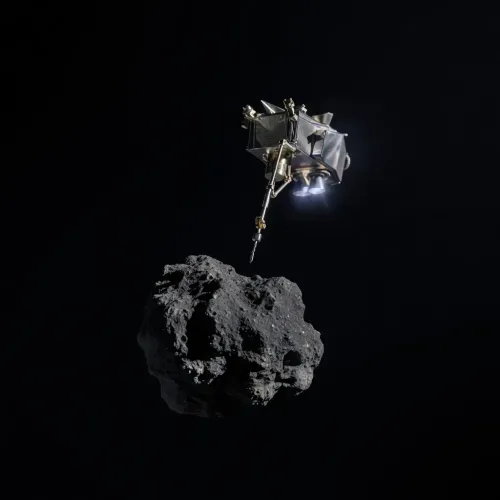
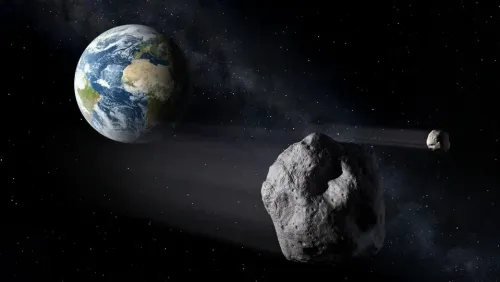
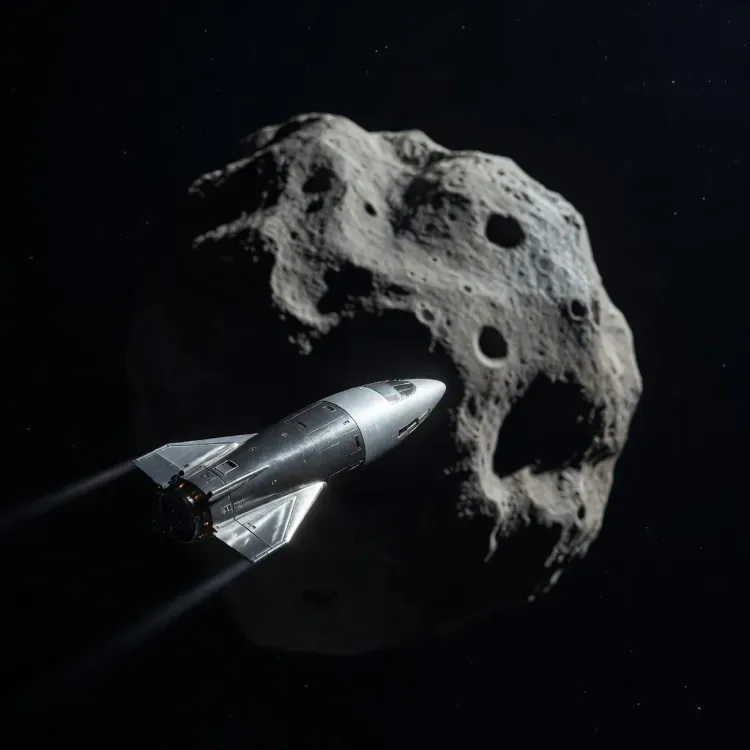
China's National Space Administration (CNSA) is planning its first planetary defence mission to strike an asteroid at over 9 kilometres per second — roughly Mach 26 — before 2030, in what would be a significantly more ambitious undertaking than NASA's Double Asteroid Redirection Test (DART). The mission aims to directly alter an asteroid's orbit relative to Earth, or potentially break apart the target body's structure entirely.
Beyond a proof-of-concept
While NASA's DART mission demonstrated that a spacecraft could nudge one asteroid's orbit around another — a controlled proof-of-concept — China's proposed mission sets a more operationally realistic goal. According to a paper led by Li Mingtao, chief scientist for planetary defence at the China National Space Administration, the mission intends to produce a measurable change in an asteroid's trajectory relative to Earth itself, not merely around a companion body.
The paper is currently under peer review by the Chinese-language Journal of Deep Space Exploration.
The target and the timeline
The spacecraft is expected to intercept its target — asteroid 2015 XF261 — during a close approach to within approximately 7 million kilometres of Earth in 2029 or 2030, according to the paper. The planned impact speed of more than 9 km/s (5.6 miles per second) substantially exceeds DART's impact velocity of 6.1 km/s. The mission trajectory reportedly involves a gravity-assist flyby of Venus en route to the target.
Why it matters
An impact speed equivalent to over 26 times the speed of sound near sea level would deliver considerably more kinetic energy to the target than any prior planetary defence test, making the data far more applicable to real-world deflection scenarios. The team, affiliated with the Chinese Academy of Sciences, also notes the possibility of fracturing the asteroid's structure — a more drastic intervention that goes beyond simple orbital nudging.
The mission would place China alongside the European Space Agency (ESA), whose Hera spacecraft is currently en route to study the aftermath of the DART impact, as a major player in international planetary defence efforts.
The competitive backdrop
NASA's DART, which impacted asteroid Dimorphos in September 2022, remains the only mission to have successfully altered an asteroid's orbit. ESA's Hera mission is expected to arrive at the Dimorphos system in 2026 to characterise the crater and measure the precise orbital change. China's entry into this field with a higher-energy, Earth-relative deflection test would generate a new and independent dataset for the global planetary defence community.
What's next
The paper's peer-review outcome at the Journal of Deep Space Exploration will be a key indicator of the mission's scientific credibility and readiness. With the 2029–2030 launch window approaching, observers will be watching for an official CNSA mission announcement and details on spacecraft development milestones. How the international planetary defence community — including NASA and ESA — responds to and potentially coordinates with China's effort will shape the next chapter of global asteroid preparedness.
Point of View
Rather than its orbit around a companion body, is the operationally meaningful test that DART deliberately avoided. If the mission proceeds as described, China would hold independent kinetic-impact data that no other nation possesses, a significant asymmetry in any future international asteroid emergency requiring coordinated response. The peer-review status of the paper also warrants scrutiny — translating an academic proposal into a funded, launched mission before a fixed celestial window closes in 2029–2030 is an engineering and budgetary challenge the paper does not yet address.
NationPress
20 Oct 2026
Frequently Asked Questions
What is China's planetary defence asteroid mission?
China is planning a mission to strike asteroid 2015 XF261 with a spacecraft travelling at over 9 km/s (Mach 26) before 2030 , aiming to alter the asteroid's orbit relative to Earth or break apart its structure. The mission is described in a paper led by Li Mingtao , chief scientist for planetary defence at the China National Space Administration .
How does China's mission compare to NASA's DART?
NASA's DART struck asteroid Dimorphos at 6.1 km/s to nudge its orbit around a larger companion asteroid — a controlled proof-of-concept. China's planned mission targets a higher speed of over 9 km/s and seeks to change an asteroid's orbit relative to Earth directly, which is the operationally relevant scenario for actual planetary defence.
Which asteroid is China targeting and when?
The target is asteroid 2015 XF261 , which will make a close approach to within approximately 7 million kilometres of Earth in 2029 or 2030 . That flyby provides the mission's intercept window, according to the paper under review.
Has China officially confirmed the planetary defence mission?
Not yet. The details come from a paper led by Li Mingtao of the Chinese Academy of Sciences and CNSA , which is currently under peer review by the Journal of Deep Space Exploration . An official CNSA mission announcement with confirmed funding and development timelines has not been made public.
What role does the European Space Agency play in asteroid defence?
ESA's Hera spacecraft is currently en route to the Dimorphos system to study the crater left by NASA's DART impact and precisely measure the orbital change achieved. China's independent mission, if launched, would add a second dataset to the global planetary defence knowledge base, complementing rather than duplicating ESA and NASA efforts.