China launches low-altitude hypersonic missile research at CAS
Synopsis
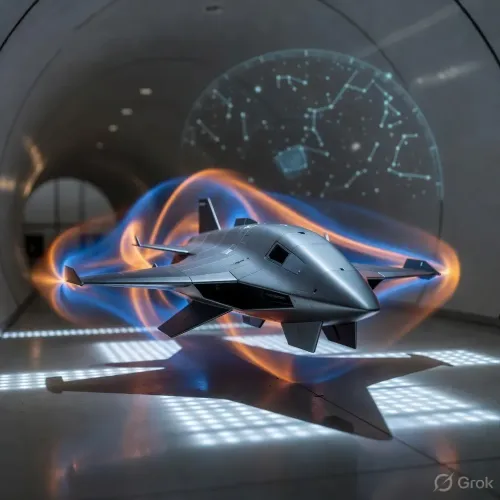
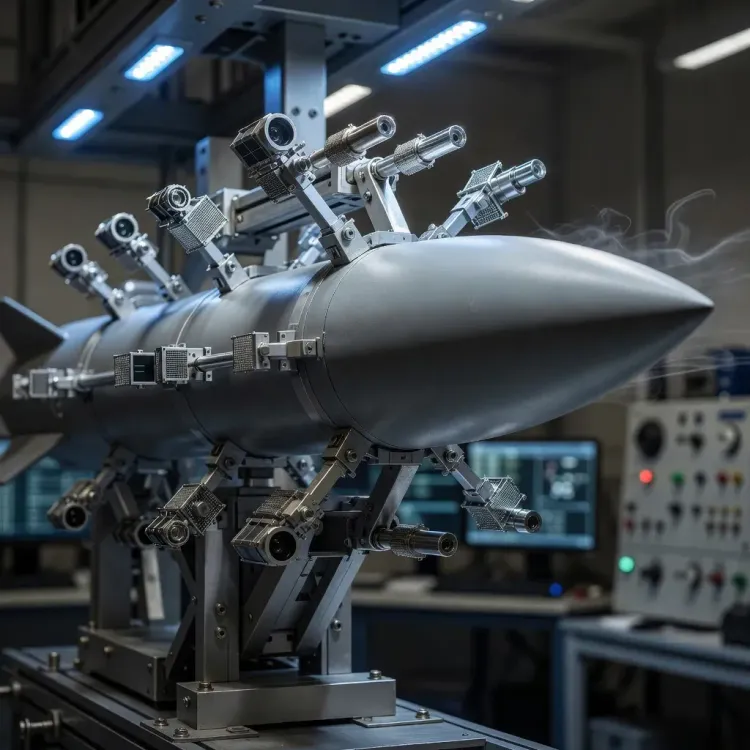
China's top science body launched a sea-skimming hypersonic research programme on 19 June 2026 that could one day produce Mach 5+ missiles flying below radar horizons — a potential game-changer against US Navy carrier groups that current air-defence systems are not designed to counter.
Key Takeaways
China's Chinese Academy of Sciences (CAS) launched a low-altitude hypersonic flight research programme on 19 June 2026 .
The programme is led by CAS's Institute of Mechanics in collaboration with the University of Science and Technology of China and the Ningbo Institute of Materials Technology and Engineering .
Target capability is sustained flight at faster than Mach 5 just above the sea surface, below the radar horizon of adversary warships.
Key technical hurdles include extreme aerodynamic heating, severe drag, shock-wave interactions, and electromagnetic disturbances affecting guidance systems.
China already fields hypersonic weapons, but all known systems use high-altitude boost-glide or cruise trajectories — a low-altitude variant would be a qualitative leap.
The research is at a fundamental stage; an operational weapon remains years away, but findings could reshape Indo-Pacific naval threat assessments.
China's Chinese Academy of Sciences (CAS) launched an ambitious low-altitude hypersonic flight research programme on Monday, 19 June 2026, targeting technology that could enable missiles travelling faster than five times the speed of sound to skim just above the sea surface — a capability that could significantly challenge US Navy air-defence systems by compressing radar detection windows and cutting warning times.
What the programme involves
The project is funded under CAS's Stable Support Programme for Basic Research Youth Teams and is led by the academy's Institute of Mechanics. It is being developed in collaboration with the University of Science and Technology of China and the Ningbo Institute of Materials Technology and Engineering — all regarded as top-tier Chinese research institutions with established records in solving advanced engineering challenges.
The research will investigate the fundamental physics and engineering barriers that must be overcome before sea-skimming hypersonic vehicles can be made operationally viable.
Why it matters
Low-altitude hypersonic flight offers a distinct tactical edge: by staying below the radar horizon, such missiles could dramatically reduce detection ranges, shorten adversary warning times, and improve penetration rates against layered air-defence networks. Potential platforms include hypersonic cruise missiles, high-speed uncrewed aircraft, and other next-generation strike systems.
The implications for US Navy carrier strike groups operating in the Pacific are significant — existing shipborne radar and intercept systems are largely optimised for high-altitude boost-glide or ballistic threats, not low-observable sea-skimmers moving at hypersonic velocities.
The engineering challenge
Operating at hypersonic speeds near the ocean surface is far more technically demanding than high-altitude flight. Vehicles must endure extreme aerodynamic heating, severe drag forces, and complex shock-wave interactions with the dense lower atmosphere. Guidance and navigation systems also face intense electromagnetic disturbances generated by hypersonic plasma sheaths, according to the research brief.
These compounded challenges explain why no country has yet fielded a confirmed sea-skimming hypersonic weapon — making this a frontier research problem rather than an incremental upgrade.
Competitive backdrop
China has already deployed several hypersonic weapons systems, but these rely on high-altitude boost-glide trajectories or high-altitude cruise profiles — meaning they are detectable, in principle, earlier in their flight path. A low-altitude variant would represent a qualitative leap in first-strike and anti-ship capability.
The United States, Russia, and other powers are also investing heavily in hypersonic research, but none has publicly demonstrated a sustained sea-skimming hypersonic platform.
What's next
The programme is at an early, fundamental-research stage, meaning an operational weapon remains years away. Analysts will be watching whether CAS publishes findings in open literature — a signal of confidence — or classifies results, which would indicate closer proximity to weapons development. The trajectory of this programme could reshape naval threat calculus across the Indo-Pacific.
Point of View
Where Western naval defences have the least margin. The timing is notable: it comes as the US accelerates its own hypersonic development and debates the survivability of carrier strike groups in a near-peer conflict. What mainstream coverage often misses is that fundamental-research programmes like this one, funded through youth-team grants, are precisely how China has historically seeded dual-use breakthroughs — academic openness masks strategic intent. The hardest unsolved problem here is not speed but guidance: plasma blackout at low altitude over a reflective sea surface is a physics challenge that no nation has publicly cracked, and whether CAS publishes or classifies its results will be the clearest indicator of how close this gets to a real weapon.
NationPress
19 Sept 2026
Frequently Asked Questions
What is China's new hypersonic missile research programme?
China's Chinese Academy of Sciences (CAS) launched a low-altitude hypersonic flight research programme on 19 June 2026 , aiming to develop the science behind missiles that travel at more than five times the speed of sound while skimming just above the ocean surface. The project is led by the Institute of Mechanics and involves the University of Science and Technology of China and the Ningbo Institute of Materials Technology and Engineering .
Why is low-altitude hypersonic flight considered a threat to the US Navy?
A sea-skimming hypersonic missile flying below the radar horizon would dramatically reduce the detection range and warning time available to US Navy ships, making existing intercept systems far less effective. Current US naval air-defence architecture is primarily designed to counter high-altitude boost-glide or ballistic threats, not low-observable hypersonic sea-skimmers.
Does China already have hypersonic weapons?
China has already deployed multiple hypersonic weapons systems, but all known platforms rely on high-altitude boost-glide trajectories or high-altitude cruise flight profiles. A low-altitude, sea-skimming variant would represent a fundamentally new and more challenging category of weapon.
What are the main technical challenges of low-altitude hypersonic flight?
Vehicles operating at hypersonic speeds near the sea surface must withstand extreme aerodynamic heating, severe drag, and complex shock-wave interactions with the dense lower atmosphere. Guidance systems must also function through intense electromagnetic disturbances — plasma effects generated by hypersonic flight — which can disrupt navigation and communications.
When could a Chinese sea-skimming hypersonic missile become operational?
The programme is at an early, fundamental-research stage, meaning an operational weapon is likely many years away. Analysts will monitor whether CAS publishes findings openly or classifies them, as the latter would suggest closer proximity to active weapons development.