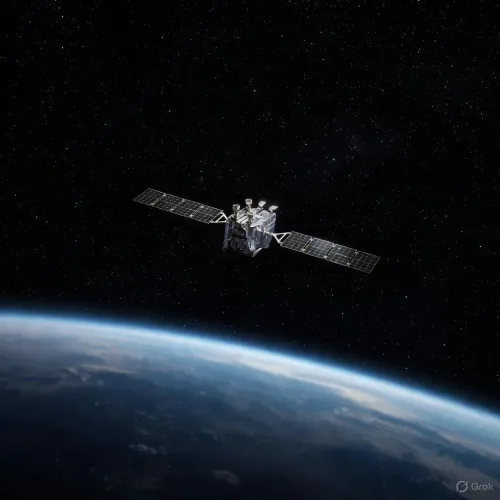
China hypersonic weapons gain star-based navigation to beat GPS jamming
Synopsis
China's Guangdong Aerospace Research Academy has validated a star-based navigation system for hypersonic weapons that works at Mach 5+ even when GPS and BeiDou are jammed — eliminating the primary guidance vulnerability of hypersonic strike platforms.
Key Takeaways
China 's Guangdong Aerospace Research Academy passed the final expert review for a hypersonic celestial navigation system on Monday, August 11, 2026 .
The system enables guidance at Mach 5 and above by tracking predictable star movements, requiring no satellites or ground stations.
It is specifically designed to overcome the plasma sheath , thermal-chemical radiation , and radiation interference that impair sensors at hypersonic speeds.
Celestial navigation is immune to GPS and BeiDou jamming, removing a key vulnerability in current hypersonic weapon guidance.
No operational deployment timeline was disclosed in the academy's August 10 report.
China's hypersonic weapons programme has achieved a significant navigation breakthrough: a star-based guidance system capable of functioning even when satellite networks such as GPS or BeiDou are jammed or disabled. The project, led by the Guangdong Aerospace Research Academy, passed its final expert review on Monday, August 11, 2026, marking a milestone in autonomous hypersonic guidance technology.
What the breakthrough involves
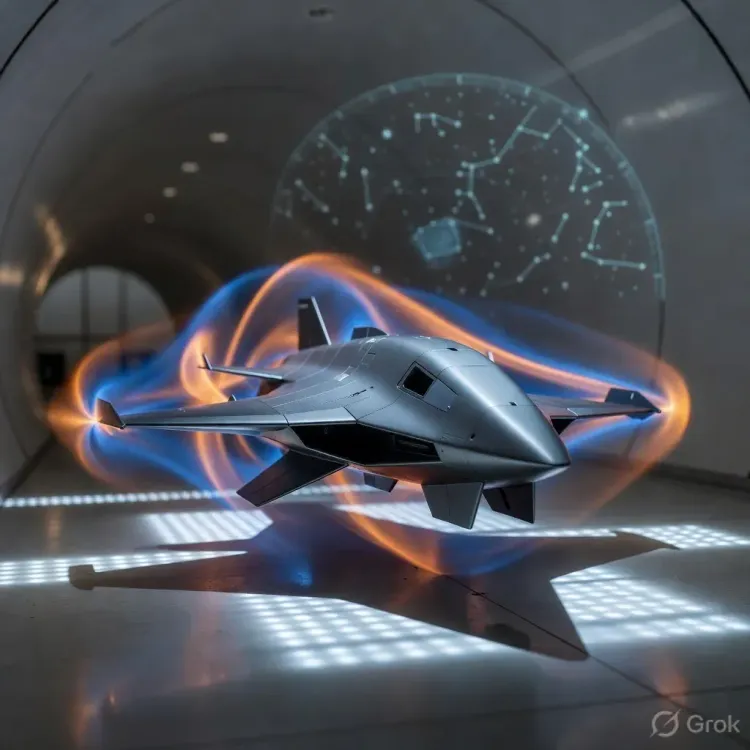
According to a report published by the academy on August 10, researchers developed a celestial navigation system engineered to operate reliably at hypersonic speeds — Mach 5 and above. The system tracks the natural, predictable movements of stars to calculate a vehicle's precise position and motion in space, an approach that requires no ground stations, no satellites, and is immune to external electromagnetic interference.
The concept echoes centuries-old maritime practice: before electronic instruments, sailors used sextants to navigate by the North Star. Modern star sensors perform an analogous function at speeds and altitudes that push the limits of current engineering.
Why it matters
Hypersonic weapons — those travelling at Mach 5 or faster — are already considered extremely difficult to intercept, making them a prized strategic asset in great-power competition. Their Achilles' heel has historically been navigation: at such velocities, inertial systems drift, and satellite signals can be denied or spoofed by adversaries. A self-contained celestial navigation system eliminates that vulnerability entirely.
The research specifically addressed the challenge of operating a star sensor through the plasma sheath — the ionised gas layer that envelops a hypersonic vehicle and can block or distort signals — as well as thermal-chemical radiation and other forms of radiation interference generated at extreme speeds.
The competitive backdrop
The development arrives amid intensifying global competition in hypersonic technology. The United States, Russia, and China have all invested heavily in hypersonic glide vehicles and cruise missiles. Navigation resilience — the ability to guide a weapon accurately when adversaries actively attempt to deny satellite coverage — is widely regarded by defence analysts as a decisive differentiator in next-generation strike capability.
Unlike inertial navigation, which accumulates positional error over time, or satellite-dependent systems that are vulnerable to jamming, celestial navigation provides an independent, drift-free reference that cannot be switched off by an opponent.
What's next
The passage of the final expert review suggests the system has cleared a formal technical validation threshold, though no timeline for operational deployment was stated in the academy's report. Observers will watch for integration announcements tied to China's existing hypersonic platforms and for competing programmes in the United States and elsewhere to accelerate work on similarly jam-resistant guidance solutions.
Point of View
But about who can guide a weapon accurately when the electromagnetic spectrum is fully contested. Celestial navigation is an elegant counter to satellite-denial strategies — the very strategies the United States has invested in as an asymmetric check on China's hypersonic programme. What mainstream coverage tends to underplay is the plasma sheath problem: solving star-sensor functionality inside that ionised envelope is a genuine engineering feat, not an incremental upgrade. If operationalised, this capability could render current US missile-defence architectures — already strained against hypersonic threats — even less effective, accelerating pressure on Washington to fund its own jam-resistant guidance alternatives.
NationPress
26 Sept 2026
Frequently Asked Questions
What is China's new hypersonic navigation system?
China has developed a celestial navigation system for hypersonic weapons that uses star-tracking to determine position and velocity at speeds of Mach 5 and above . The system, developed by the Guangdong Aerospace Research Academy , passed its final expert review on August 11, 2026 , and does not rely on GPS , BeiDou , or any ground-based infrastructure.
Why does China need star-based navigation for hypersonic weapons?
Satellite navigation systems like GPS and BeiDou can be jammed or spoofed by adversaries, leaving hypersonic weapons without reliable guidance. Celestial navigation is self-contained and immune to electromagnetic interference, eliminating that vulnerability at the extreme speeds where inertial systems also tend to drift.
What is a plasma sheath and why does it matter for hypersonic guidance?
A plasma sheath is the layer of ionised gas that forms around a vehicle travelling at hypersonic speeds, and it can block or distort electronic signals — including those from star sensors. The Guangdong Aerospace Research Academy 's research specifically addressed how to maintain star-sensor accuracy through this interference, along with thermal-chemical radiation produced at high Mach numbers.
How does celestial navigation compare to GPS for hypersonic missiles?
Unlike GPS or BeiDou , celestial navigation requires no external signal and cannot be jammed or denied. Unlike inertial systems, it does not accumulate positional error over time. It tracks the natural, predictable movements of stars — a method that is both highly precise and completely independent of any infrastructure an adversary could disable.
When could China deploy hypersonic weapons with this star-navigation system?
No deployment timeline has been disclosed. The system passed its final expert review on August 11, 2026 , which indicates formal technical validation, but the Guangdong Aerospace Research Academy 's report did not specify when or on which platforms the technology might be integrated operationally.