China's BeiDou satellite refuelled in orbit in space-race first
Synopsis
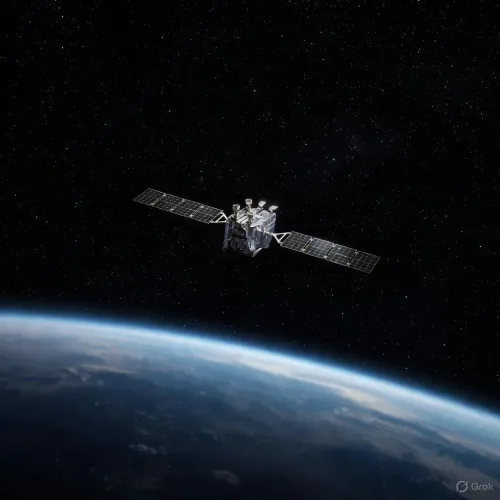
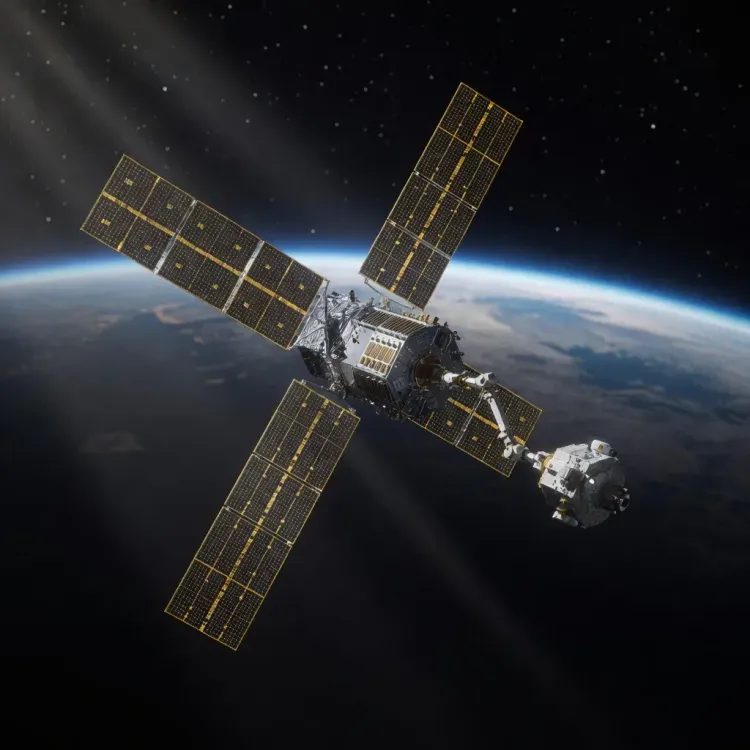
Chinese researchers have disclosed what appears to be the first-ever satellite-to-satellite refuelling of a high-orbit BeiDou navigation satellite — a strategic milestone that, if verified, could give China a durable edge in extended space operations and deep-space ambitions.
Key Takeaways
Chinese researchers affiliated with the state-funded Deep Space Exploration Laboratory claim to have conducted the first room-temperature propellant refuelling of a high-orbit BeiDou satellite.
The findings are contained in a paper currently under peer review for the Journal of Deep Space Exploration and have not yet been independently verified.
The team acknowledged that room-temperature propellants are less efficient than cryogenic alternatives and stressed the need to develop cryogenic transfer technologies for large spacecraft and deep-space missions.
BeiDou is China's strategic alternative to the US Global Positioning System (GPS) , making in-orbit servicing of its satellites a matter of both civilian and military significance.
No timeline, cost, or technical specifics of the refuelling operation were disclosed in the paper.
Independent analyst Jonathan McDowell has previously tracked anomalous manoeuvres by Chinese satellites potentially consistent with in-orbit servicing activities.
Chinese researchers have reportedly disclosed a previously undisclosed satellite-to-satellite refuelling operation conducted in high Earth orbit, potentially positioning China at the leading edge of a technology that analysts say could fundamentally alter the dynamics of the global space race.
The Breakthrough Claim
In a paper currently undergoing peer review for the Journal of Deep Space Exploration, a research team stated that China had 'successfully provided room-temperature propellant refuelling for a high-orbit BeiDou satellite for the first time.' The researchers are affiliated with the state-funded Deep Space Exploration Laboratory, which operates under the broader umbrella of China's government-backed space research infrastructure.
The team offered no operational details about when or exactly how the refuelling was carried out, leaving key technical specifics unverified pending full peer review.
Why It Matters
In-orbit refuelling — also called on-orbit servicing — is considered a critical capability for extending satellite lifespans, reducing launch costs, and enabling long-duration deep-space missions. The ability to refuel assets already in orbit could allow operators to reposition or extend satellites that would otherwise become space debris.
The BeiDou navigation network is China's answer to the US Global Positioning System (GPS), providing positioning and timing services globally. A refuelling capability applied to such high-value strategic assets underscores both military and civilian implications.
Technical Limitations Acknowledged
The researchers themselves flagged a key constraint: the operation used room-temperature propellants, which they acknowledged are less efficient than cryogenic — extremely low-temperature — propellants. They emphasised the need to develop technologies for transferring cryogenic propellants, noting these offer 'better performance for large spacecraft and deep-space missions.'
This candid admission suggests the current achievement, while significant, represents an early-stage capability rather than a fully mature operational system.
The Competitive Backdrop
In-orbit servicing has attracted intensifying interest from both state and commercial actors. US Space Force and private companies have been developing analogous capabilities, while China's Shijian series satellites have previously drawn attention for proximity operations in orbit. The disclosure of a refuelling event on a BeiDou navigation satellite — a high-orbit strategic asset — raises the stakes considerably.
Independent space analysts, including Jonathan McDowell of the Harvard-Smithsonian Center for Astrophysics, have previously tracked anomalous manoeuvres by Chinese satellites consistent with servicing operations, though direct confirmation has been rare.
What's Next
The paper's full publication in the Journal of Deep Space Exploration and subsequent peer scrutiny will be closely watched by the global space community. If validated, this would mark a significant step toward routine in-orbit servicing — a capability with profound implications for satellite longevity, strategic deterrence, and the economics of future space infrastructure.
Point of View
Not just launch milestones. Mainstream coverage tends to focus on rocket launches and crewed missions, but in-orbit servicing is arguably the more consequential long-term capability, enabling satellite fleets to outlast adversaries' assets without new launches. The fact that this was revealed via a peer-review paper rather than a state media fanfare suggests the disclosure may be calibrated — enough to establish a precedent in the scientific record without triggering a full geopolitical reaction. Washington and its allies, who are themselves investing heavily in on-orbit servicing through DARPA and commercial partners, will now face renewed urgency to demonstrate comparable high-orbit capabilities.
NationPress
27 Sept 2026
Frequently Asked Questions
What did China claim about its BeiDou satellite refuelling?
Chinese researchers claimed they successfully conducted room-temperature propellant refuelling of a high-orbit BeiDou navigation satellite for the first time, according to a paper under peer review in the Journal of Deep Space Exploration . The Deep Space Exploration Laboratory team did not disclose operational details such as the date or the spacecraft involved.
Why is in-orbit satellite refuelling significant?
In-orbit refuelling can dramatically extend the operational lifespan of satellites, reduce the cost of maintaining satellite constellations, and enable repositioning of strategic assets without launching new vehicles. For navigation systems like BeiDou , which rival the US GPS , this capability adds both economic and military value.
Has the BeiDou refuelling claim been independently verified?
No — the paper is still undergoing peer review and has not been independently verified as of September 2026 . The researchers themselves provided no specific operational data, and full peer scrutiny is pending publication in the Journal of Deep Space Exploration .
What are the limitations of China's current in-orbit refuelling technology?
The researchers acknowledged that the operation used room-temperature propellants, which are less efficient than cryogenic propellants. They explicitly noted the need to develop cryogenic transfer technologies, which offer 'better performance for large spacecraft and deep-space missions.'
How does this compare to US in-orbit servicing efforts?
US Space Force and agencies such as DARPA , along with private companies, have been actively developing in-orbit servicing and refuelling capabilities. Independent analyst Jonathan McDowell has previously flagged anomalous manoeuvres by Chinese satellites consistent with proximity and servicing operations, suggesting both nations are advancing in this domain simultaneously.