China surpasses US in satellite navigation, recon and ASAT: ITIF

Synopsis
A US think tank warns China has overtaken America in GPS-rival navigation, spy-satellite reconnaissance, and anti-satellite weaponry — and could seize the top spot in a projected US$1 trillion global space economy if Washington fails to act decisively.
Key Takeaways
China has surpassed the United States in GPS-style navigation , orbital reconnaissance, and anti-satellite weaponry , according to an ITIF report released on June 8, 2026 .
The global space economy is projected to exceed US$1 trillion within the next decade, making space dominance a major economic as well as strategic prize.
China has overtaken Russia as the primary space competitor to the United States , the ITIF report concludes.
ITIF analyst Ellis Scherer warns that without decisive US policy action, China will claim the top position in the global space economy.
Chinese firms including LandSpace , CAS Space , and Space Epoch are challenging SpaceX , while Guowang and Qianfan constellations target Starlink and Amazon 's Project Kuiper .
The BeiDou navigation system, Gaofen Earth-observation satellites, and Jilin-1 constellation underpin China 's dual-use space edge.
China has overtaken the United States in three critical space technology domains — GPS-style navigation, orbital reconnaissance, and anti-satellite (ASAT) weaponry — according to a report released on June 8 by the Washington-based Information Technology and Innovation Foundation (ITIF). The findings mark a significant shift in the global space power balance, arriving as analysts project the global space economy could exceed US$1 trillion within the next decade.
The ITIF Assessment
The report, authored by ITIF space policy analyst Ellis Scherer, concludes that China has already displaced Russia as America's primary space rival. It credits Beijing's strategy of combining heavy state backing with a rapidly maturing commercial sector for the country's accelerated rise.
'China's space sector has gone from a nascent, slow-moving industry mostly led by state-owned enterprises to a robust, innovative commercial sector that trails only the United States in the global market,' Scherer said.
Why It Matters
The report underscores the dual-use nature of most commercial space capabilities. According to Scherer, militaries rely most heavily on positioning, navigation and timing (PNT), remote sensing, low Earth orbit (LEO) broadband, and anti-satellite weaponry — all areas where China has made measurable advances.
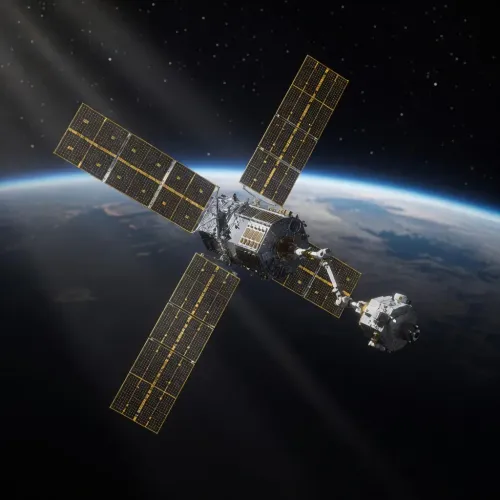
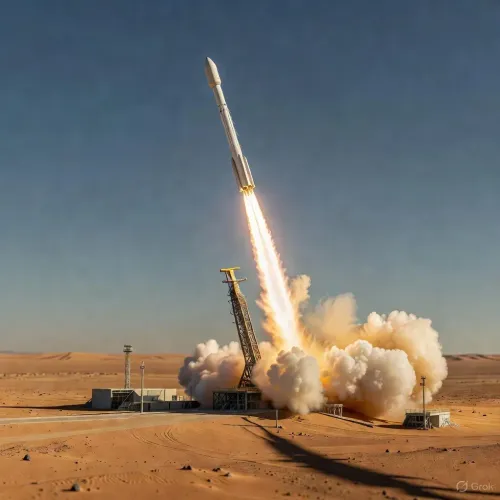
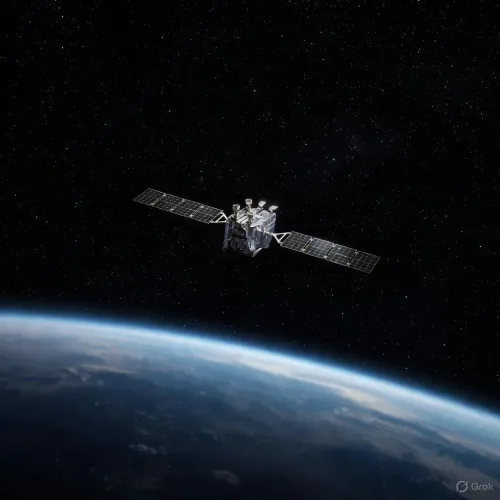
China's BeiDou navigation system now rivals GPS in global coverage, while its Gaofen Earth-observation satellites and the commercial Jilin-1 constellation provide persistent reconnaissance capability. On the launch side, firms such as LandSpace, CAS Space, and Space Epoch are mounting a credible challenge to SpaceX's dominance.
The Competitive Backdrop
China's Guowang and Qianfan mega-constellations are positioned to compete directly with SpaceX's Starlink and Amazon's Project Kuiper in the LEO broadband market. The pace of deployment signals that Beijing views space connectivity as both a commercial prize and a strategic asset.
Meanwhile, China's ambitions extend to crewed spaceflight infrastructure, with its own space station operating independently following its exclusion from the International Space Station programme — a separation that has arguably accelerated indigenous capability development.
What's Next
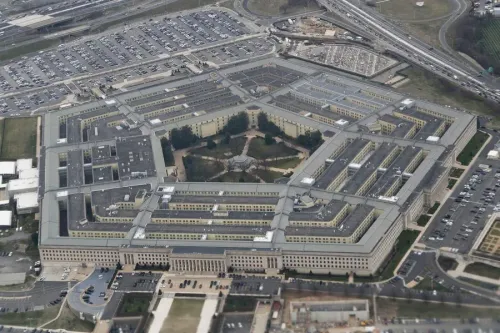
The ITIF report issues a direct policy warning: 'If the United States does not take decisive action soon, China will claim the top spot in the global space economy.' The call to action is aimed squarely at Washington policymakers, urging structural reforms to sustain American leadership across both civil and defence space programmes.
The report's release intensifies pressure on US legislators and the defence establishment to respond — whether through procurement reform, export policy, or direct investment in next-generation launch and satellite capabilities. How quickly Washington acts may determine whether the trillion-dollar space economy remains anchored in American hands.
Point of View
Mirroring the semiconductor playbook, but the window to shape the architecture of the space economy may already be narrowing.
NationPress
27 Sept 2026
Frequently Asked Questions
Has China really surpassed the US in space technology?
According to an ITIF report released on June 8, 2026 , China has surpassed the United States specifically in GPS-style navigation , satellite reconnaissance, and anti-satellite weaponry, though the US retains an overall lead in the broader space economy. The report warns that lead is narrowing rapidly.
What is the ITIF and why does its report matter?
The Information Technology and Innovation Foundation (ITIF) is a Washington -based think tank that advises on technology and innovation policy. Its space report, authored by analyst Ellis Scherer , carries weight because it directly informs US congressional and defence policy debates on space competitiveness.
What Chinese space systems are highlighted as threats?
The report highlights the BeiDou navigation system as a GPS rival, the Gaofen Earth-observation satellites and Jilin-1 constellation for reconnaissance, and China 's ASAT weapons capability. Commercial launch firms LandSpace , CAS Space , and Space Epoch are also cited as challengers to SpaceX .
How big is the global space economy expected to get?
Analysts project the global space economy could exceed US$1 trillion within the next decade, according to the ITIF report. That figure makes leadership in space a major commercial prize alongside its well-established strategic and military significance.
What does the ITIF recommend the US do about China's space rise?
The ITIF report calls for 'decisive action' by the United States to avoid ceding the top spot in the global space economy to China . While the report does not enumerate specific policy prescriptions in the excerpts available, the urgency is directed at Washington policymakers overseeing both civil space programmes and defence procurement.