Smriti Irani at BVM2026: India's $2.3 Trillion Trade Moment
Synopsis
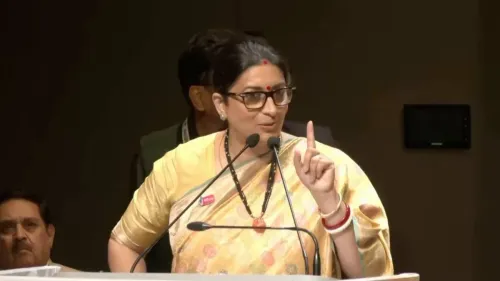
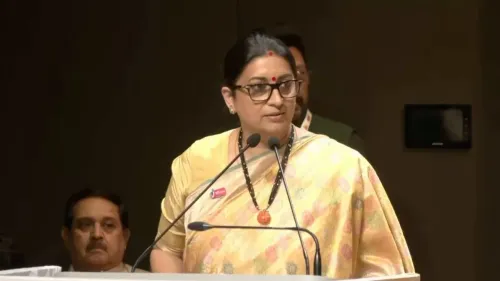
BJP leader Smriti Irani addressed the inaugural of Bharatiya Vyapar Mahotsav 2026 at Bharat Mandapam on 12 August, spotlighting India's $2.3 trillion retail opportunity by 2030 and calling small traders the backbone of the nation's journey to becoming a developed economy.
Key Takeaways
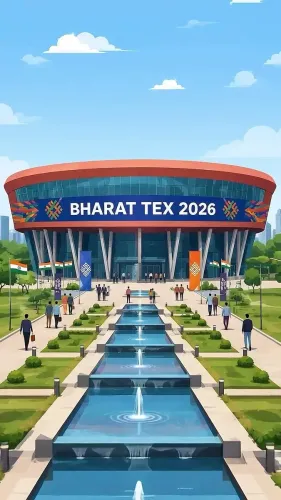
BVM2026 runs from 12 to 15 August 2026 at Bharat Mandapam, New Delhi , organised by CAIT and ITPO.
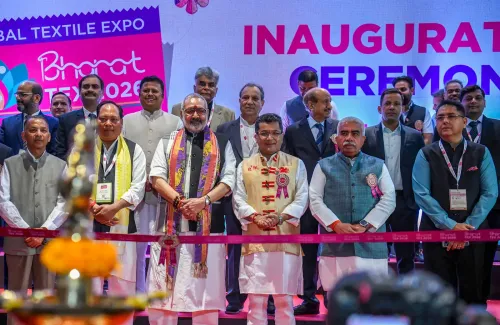
Smriti Irani addressed the inaugural alongside Commerce Minister Piyush Goyal and MoS Jitin Prasada .
India's retail sector is projected to reach an estimated $2.3 trillion by 2030 , cited as the backdrop for the event.
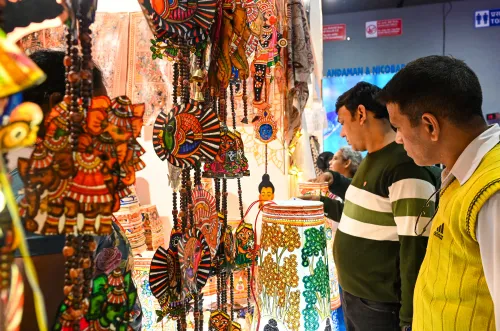
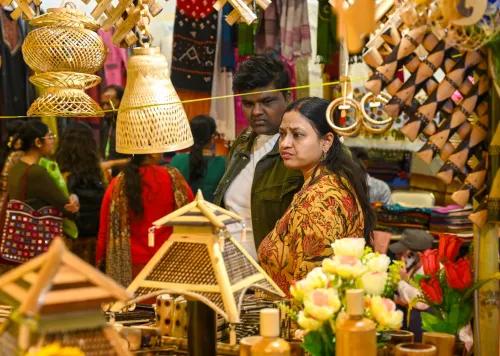
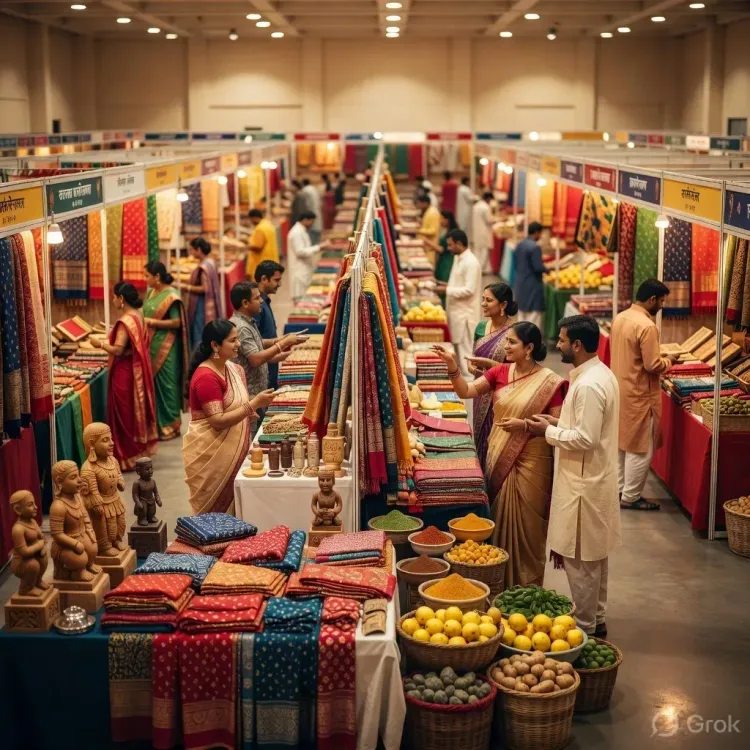
The event brings together traders, entrepreneurs and industry leaders from across India to reflect the diversity of Bharat's retail ecosystem.
Irani linked trader empowerment to digital public infrastructure, GST formalisation and the Atmanirbhar Bharat and Viksit Bharat frameworks.
Swadeshi Jagaran Manch was represented at the inaugural, underscoring the event's emphasis on indigenous enterprise and self-reliance.
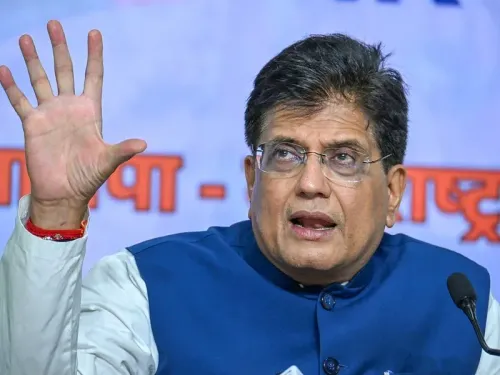
India's traders — the millions who stock shelves, run supply chains, and keep local commerce alive — took centre stage at Bharat Mandapam, New Delhi, on 12 August 2026, as the Bharatiya Vyapar Mahotsav 2026 (BVM2026) opened its doors. BJP leader and former Union Minister Smriti Irani addressed the inaugural ceremony, framing the four-day event not as a trade fair but as a national reckoning with where India's retail economy is headed.
Four Days, a $2.3 Trillion Horizon
Running from 12 to 15 August, BVM2026 brings together traders, entrepreneurs, innovators and industry leaders from across the country under one roof at Bharat Mandapam, the convention centre at Pragati Maidan that has become the address of choice for India's most consequential gatherings. The event is organised jointly by the Confederation of All India Traders (CAIT) and the India Trade Promotion Organisation (ITPO).
The timing is deliberate. India's retail sector is moving towards what Irani described as 'an estimated $2.3 trillion opportunity by 2030' — a number that reframes every small kirana owner and district-level distributor as a participant in a macro-economic transformation, not a bystander to it.
Who Was in the Room at Bharat Mandapam
The inaugural drew a notable gathering. Union Commerce and Industry Minister Piyush Goyal was present, alongside Minister of State Jitin Prasada, CAIT Secretary General Praveen Khandelwal, and Kashmiri Lal, National Organising Secretary of the Swadeshi Jagaran Manch — the RSS-affiliated body that has long championed indigenous enterprise and economic self-reliance. That combination of government ministers, trader bodies and Swadeshi voices in one room signals the ideological weight the event is designed to carry.
Digital Infrastructure, Formalisation and the Swadeshi Thread
Irani's address wove together three distinct policy strands that have defined the government's approach to India's unorganised trade sector over the past decade. Digital public infrastructure — anchored by UPI's explosive spread since 2016 — has given small businesses a payments backbone that was unimaginable a generation ago. GST formalisation since 2017 has pulled millions of traders into the tax net, giving them an official identity and, crucially, access to credit. And the Atmanirbhar Bharat framework, launched in May 2020, provided the ideological scaffold for Swadeshi enterprise to be positioned as both patriotic duty and economic strategy.
'Our traders have long been the backbone of India's economy,' Irani said, adding that today, 'empowered by digital public infrastructure, expanding formalisation and a rapidly growing consumer economy, they have an even greater role to play in India's journey towards becoming a developed nation.'
From Market Size to Livelihoods: The Argument Irani Made
The sharpest line in Irani's address was also the most consequential: 'The story is about much more than market size.' She pivoted from the headline figure to the human detail — the small trader embracing technology, the entrepreneur expanding into new markets, the local enterprise generating employment. It is a framing that connects BVM2026 to the larger Viksit Bharat goal of a developed India, positioning retail trade not as a sector to be managed but as an engine to be unleashed.
BVM2026 is the kind of event that produces announcements — schemes, partnerships, technology tie-ups — that filter down to district trade associations in the weeks that follow. Whether those follow-through measures materialise will be the real measure of the Mahotsav's impact.
Point of View
A pattern that has intensified since the Atmanirbhar Bharat push of 2020. Irani's presence alongside Piyush Goyal and Swadeshi Jagaran Manch leadership signals that the government is keen to consolidate its credentials with the trader community — a politically significant constituency that CAIT claims to represent in the tens of millions. The $2.3 trillion retail framing is designed to shift the conversation from welfare for small traders to partnership in a growth story, which is a subtler but more durable political message. The real test will come in the weeks after the Mahotsav: whether concrete policy measures or schemes follow, or whether the event remains a ceremonial milestone.
NationPress
13 Aug 2026
Frequently Asked Questions
What is Bharatiya Vyapar Mahotsav 2026?
Bharatiya Vyapar Mahotsav 2026 (BVM2026) is a national trade and commerce event held from 12 to 15 August 2026 at Bharat Mandapam, New Delhi, organised by CAIT and ITPO to celebrate India's traders, entrepreneurs and small businesses.
Who attended the BVM2026 inaugural ceremony?
The inaugural was addressed by BJP leader Smriti Irani and attended by Commerce Minister Piyush Goyal, MoS Jitin Prasada, CAIT Secretary General Praveen Khandelwal, and Swadeshi Jagaran Manch's National Organising Secretary Kashmiri Lal.
What is India's retail sector opportunity by 2030?
India's retail sector is estimated to reach a $2.3 trillion opportunity by 2030, a figure cited at BVM2026 to underscore the scale of growth available to small traders and entrepreneurs.
What is CAIT and why is it significant?
CAIT, the Confederation of All India Traders, is a national body representing retail traders and small businesses across India. It is one of the key organisers of BVM2026 and is considered an influential voice for India's vast unorganised trade sector.
How does BVM2026 connect to Atmanirbhar Bharat?
BVM2026 is framed around self-reliance, digital adoption and Swadeshi enterprise — themes central to the Atmanirbhar Bharat initiative launched in May 2020 — positioning small traders as active contributors to India's goal of becoming a developed nation.