Smriti Irani Bets on Traders to Drive India's $2.3 Trillion Retail Future
Synopsis
BJP leader Smriti Irani highlighted India's retail sector's projected $2.3 trillion valuation by 2030, emphasising that the country's traders — not just organised retail — stand at the core of this economic transformation.
Key Takeaways
BJP leader Smriti Irani posted on 12 August 2026 highlighting India's retail growth trajectory.
India's retail sector is projected to reach $2.3 trillion by 2030 , a figure cited in industry discussions.
Irani placed India's traders — including the vast unorganised segment — at the centre of this transformation.
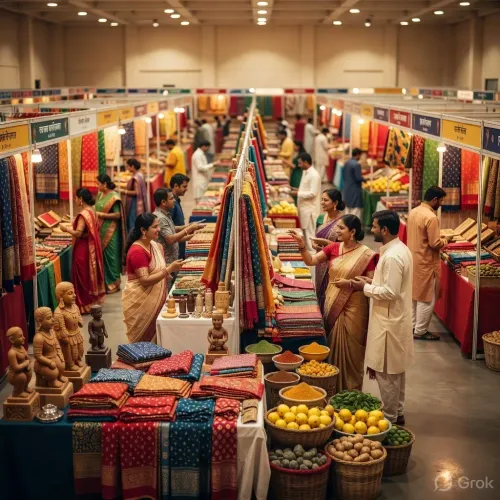
India's retail landscape remains predominantly unorganised, employing millions of small traders and kirana store owners .
The statement fits a broader political pattern of balancing organised retail growth with protection of traditional trade livelihoods.
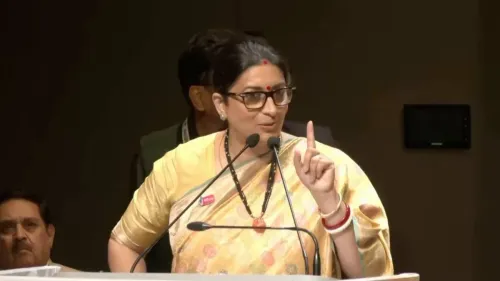
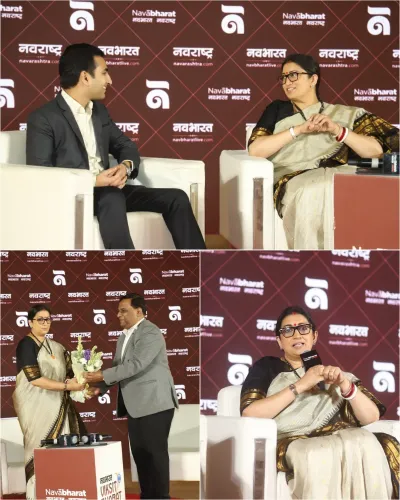
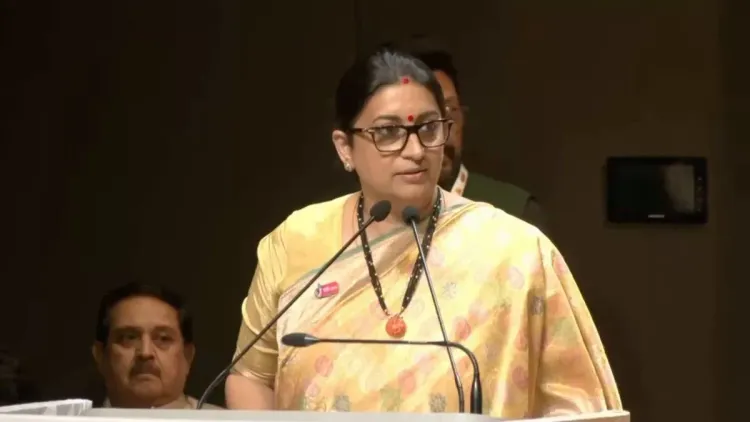
India's retail sector is on a trajectory that few economies can match — and BJP leader Smriti Irani wants the country's traders to know they are at the centre of it. On Wednesday, 12 August 2026, Irani posted a pointed reminder that India's retail market is projected to become a $2.3 trillion force by 2030, placing the nation's traders — not just the big-box chains or the e-commerce giants — at the heart of that transformation.
A $2.3 Trillion Number and the Traders Behind It
The projection Irani cited — India's retail sector reaching $2.3 trillion by 2030 — has circulated in industry discussions as a benchmark for the country's consumption-driven growth story. India's retail landscape is still predominantly unorganised: millions of kirana stores, street vendors, and small traders who form the backbone of daily commerce in every city, town, and village. Any path to $2.3 trillion runs directly through them. By framing traders as the 'heart of this transformation', Irani signals a political and economic argument that organised retail expansion and traditional trade are not a zero-sum contest. Successive governments have wrestled with this balance — how to attract formal retail investment while protecting the livelihoods of the unorganised segment that employs tens of millions.Why the Timing of This Message Matters
Retail policy in India sits at a perennial crossroads. Debates over foreign direct investment in multi-brand retail, the rapid rise of quick-commerce platforms, and the ongoing formalisation push under the Goods and Services Tax regime have all reshaped the competitive landscape for small traders. Irani's post arrives as those pressures intensify — and as the 2030 horizon draws close enough to feel real in policy planning cycles. Economic surveys and budget statements in recent years have increasingly flagged retail infrastructure and trader-support measures as levers for consumption growth. A statement like this, from a senior BJP figure, can foreshadow the framing of upcoming policy positions — or simply reinforce a constituency that the party has long cultivated. For India's traders, the message is straightforward: the growth story belongs to them too. Whether the policy architecture catches up to that promise is the question worth watching.Point of View
She aligns with a BJP constituency that has historically been sensitive to organised-retail encroachment. The $2.3 trillion projection gives the message an economic heft that lifts it above routine rhetoric. It also previews a potential policy argument — that trader-inclusive growth, not just FDI-led expansion, is the route to the 2030 target. Watch for this framing to surface in budget or Economic Survey discussions as the government positions its retail and MSME support architecture.
NationPress
26 Sept 2026
Frequently Asked Questions
What is India's retail sector projected to be worth by 2030?
India's retail sector is projected to reach $2.3 trillion by 2030 , a figure cited in industry reports and referenced by BJP leader Smriti Irani in her August 2026 post.
What did Smriti Irani say about Indian traders?
Irani said that traders stand 'at the heart' of India's retail transformation, framing their role as central — not peripheral — to the country reaching its $2.3 trillion retail target.
Why does India's unorganised retail sector matter so much?
India's retail landscape is still predominantly unorganised, meaning millions of small traders, kirana stores, and street vendors drive the bulk of daily commerce. Any large-scale growth projection must account for their participation and welfare.
Is the $2.3 trillion retail projection an official government figure?
The $2.3 trillion by 2030 figure has circulated in industry and trade body discussions. It has not been confirmed as an official government projection in a specific Economic Survey or budget document.
How does retail policy affect small traders in India?
Debates over foreign direct investment in multi-brand retail, quick-commerce platforms, and GST formalisation have all reshaped competition for small traders, making government messaging on their role in growth politically and economically significant.