US warns China, Russia turning space into a warfighting domain
Synopsis
A US Congressional hearing on 30 April laid bare the scale of the space arms race: China is conducting what the US Space Force calls 'dogfighting in orbit', Russia has deployed a nuclear-capable anti-satellite weapon, and more than 80% of satellites are now commercial — all while the rules governing outer space remain dangerously thin.
Key Takeaways
Congressman Keith Self declared space a warfighting domain at a 30 April Congressional subcommittee hearing.
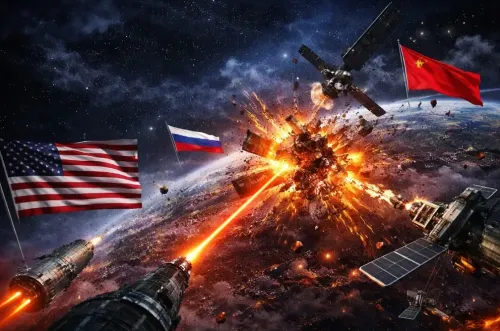
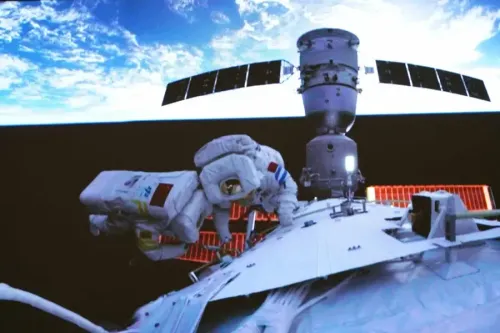
China was identified as the most consequential threat , with aggressive orbital manoeuvres described as "dogfighting in orbit" by the US Space Force.
Russia has deployed a nuclear-capable anti-satellite weapon capable of devastating low Earth orbit satellite operations.
More than 80% of satellites are now commercial, and over 100 countries operate in space, intensifying global competition.
The Artemis Accords now include more than 60 countries as the US seeks to lead through partnerships.
Experts warned of an unguarded arms race: "The arms race in outer space will continue unabated with no guardrails," according to Mallory Stewart of the Council on Strategic Risks.
The United States has issued a stark warning that outer space is rapidly becoming a contested military domain, with China and Russia expanding capabilities that could threaten global satellite infrastructure, communications networks, and international stability. Eminent lawmakers and defence experts, testifying at a Congressional subcommittee hearing on 30 April, described an accelerating strategic competition across military, commercial, and diplomatic fronts.
Space Declared a Warfighting Domain
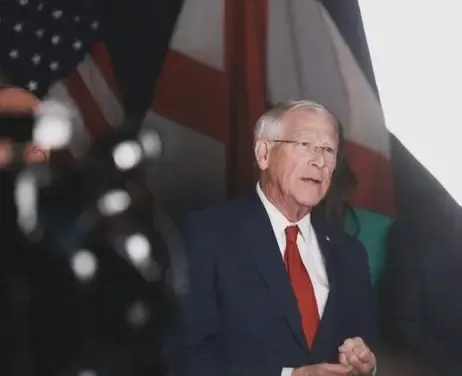
Congressman Keith Self, chairing the House subcommittee hearing, set the tone early.
Point of View
But without binding norms, there is no legal architecture to deter or penalise them. Meanwhile, the dual-use dilemma — where a satellite repair mission is indistinguishable from a sabotage mission — means miscalculation risk is structurally embedded. Washington's push for the Artemis Accords is a start, but 60 signatories mean little if China and Russia remain outside the framework and continue setting facts on orbit.
NationPress
15 Sept 2026
Frequently Asked Questions
Why is the US warning about China and Russia in space?
The US warned at a 30 April Congressional hearing that China and Russia are rapidly expanding military space capabilities, including anti-satellite weapons and aggressive orbital manoeuvres, that could threaten global satellite infrastructure and destabilise international security. Officials described space as a fully-fledged warfighting domain.
What has China been doing in space that concerns the US?
According to Congressman Keith Self and defence expert Kari Bingen, China has been conducting aggressive manoeuvres in orbit — including pushing defunct satellites out of orbit and close-proximity operations that the US Space Force has characterised as dogfighting in orbit. China is also rapidly expanding satellite numbers, launch capabilities, and space partnerships across the Global South.
What is Russia's space threat according to the US?
Russia has deployed a nuclear-capable anti-satellite weapon that, if used, could have devastating impacts on satellite operations in low Earth orbit, according to Congressman Self. Such a strike would disrupt military systems as well as civilian infrastructure including communications, navigation, and financial networks.
What are the Artemis Accords and why do they matter?
The Artemis Accords are a US-led framework for international cooperation in space exploration and governance, now signed by more than 60 countries. Experts at the hearing cited them as a key tool for the US to maintain leadership in space by building alliances and setting rules of behaviour before rivals do.
How does India fit into US space strategy?
Scott Pace, director of the Space Policy Institute at George Washington University, specifically named India as a priority partner, recommending that the US include space security in annual dialogues with key Indo-Pacific allies including Japan, Australia, India, and South Korea. India's growing space capabilities make it central to future space governance efforts.