China tests shape-shifting hypersonic ramjet from Mach 1.8 to Mach 6

Synopsis
Chinese researchers have tested a shape-shifting ramjet that fires from Mach 1.8 to Mach 6 without a rocket booster — sealed with ordinary graphite — potentially eliminating the costliest bottleneck in hypersonic weapon design.
Key Takeaways
Northwestern Polytechnical University and the Beijing Power Machinery Institute jointly developed and tested the variable-geometry ramjet engine.
The engine operated continuously from Mach 1.8 to Mach 6 , bypassing the historical Mach 4 ignition threshold that previously required a separate rocket booster.
The combustion chamber throat adjusted in one-third of a second while processing gases at 1,650 degrees Celsius .
The high-temperature sealing material used was graphite , the same mineral found in pencil cores.
Findings were published in the Journal of Propulsion Technology on May 28, 2026 .
The breakthrough has implications for hypersonic programmes in the United States , Europe , Australia , and Canada , which are all competing in the same technology domain.
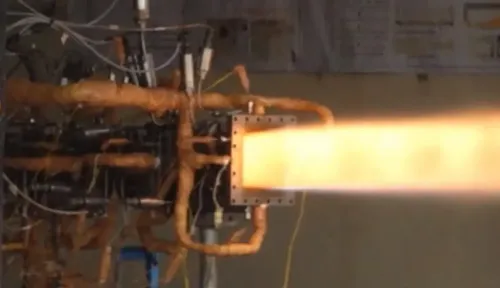
China has successfully conducted a ground test of a variable-geometry ramjet engine capable of reshaping its internal airflow channel mid-flight, operating continuously from Mach 1.8 all the way to Mach 6 — a breakthrough that researchers say eliminates the need for a separate rocket booster to achieve ignition speed. The test was carried out at a high-speed flight simulation facility, with findings published in the Journal of Propulsion Technology on May 28, 2026.
What was tested and why it matters
Conventional ramjets — air-breathing jet engines with no moving compressor — have historically been unable to ignite below Mach 4, requiring costly rocket boosters to first accelerate the vehicle to that threshold. The new engine, developed jointly by researchers from Northwestern Polytechnical University and the Beijing Power Machinery Institute, sidesteps that limitation entirely by dynamically adjusting its combustion chamber geometry during flight.
The engine's combustion chamber throat — a moving metal component — tightened and relaxed to manage airflow at varying speeds, completing each adjustment in just one-third of a second while inhaling gases at a staggering 1,650 degrees Celsius, according to the published paper.
The graphite factor
One of the more striking details from the research is the sealing material used to contain superheated gases inside the engine: graphite, the same carbon mineral found in pencil cores. The choice of graphite — a relatively abundant and low-cost material — suggests the design prioritises manufacturability alongside performance. Its thermal stability at extreme temperatures made it effective at preventing gas leakage during the high-speed combustion cycles.
The competitive backdrop
Hypersonic propulsion has become a central front in the global defence technology race. The United States, Europe, Australia, and Canada have all invested heavily in hypersonic research programmes, with Washington accelerating efforts under legislative frameworks including the Defence Production Act. Meanwhile, access to critical materials — including graphite, for which Mozambique and China are among the world's leading suppliers — has emerged as a strategic concern, referenced in frameworks such as the Critical Raw Materials Act.
The ability to operate a ramjet across such a wide speed envelope without a booster stage directly addresses one of the most persistent engineering barriers to practical hypersonic cruise missiles and aircraft.
What's next
The research team has demonstrated ground-based performance, but the path from test facility to operational system involves flight testing, materials qualification at scale, and integration challenges that remain unaddressed in the published findings. Still, the documented Mach 1.8-to-Mach 6 continuous operation — if replicable in flight conditions — would represent a significant reduction in the complexity and cost of future hypersonic platforms. Defence analysts and rival aerospace programmes will be watching closely for follow-on publications or flight-test announcements from Northwestern Polytechnical University and the Beijing Power Machinery Institute.
Point of View
Chinese researchers have potentially unlocked a design space where hypersonic vehicles can be launched from conventional aircraft or ground platforms without staged propulsion, dramatically lowering cost and logistical burden. What mainstream coverage underplays is the graphite sealing detail: it signals that the design is oriented toward producibility, not just a laboratory demonstration. Combined with China's dominant position in global graphite supply chains — a point of acute sensitivity given ongoing Western critical-minerals legislation — this research sits at the intersection of propulsion engineering and resource geopolitics in ways that extend well beyond a single journal paper.
NationPress
28 Sept 2026
Frequently Asked Questions
What did China's hypersonic ramjet test achieve?
Chinese researchers successfully ran a variable-geometry ramjet engine from Mach 1.8 to Mach 6 in a continuous ground test, eliminating the need for a rocket booster that was previously required to reach the ignition threshold of Mach 4 . The test was conducted at a facility simulating high-speed flight conditions.
Who conducted the hypersonic ramjet research?
The research was carried out jointly by scientists from Northwestern Polytechnical University and the Beijing Power Machinery Institute . Their findings were published in the Journal of Propulsion Technology on May 28, 2026 .
Why does eliminating the rocket booster matter for hypersonic weapons?
Previously, ramjet engines could not ignite until an aircraft reached Mach 4 , requiring a separate rocket booster stage that added cost, weight, and operational complexity. An engine that ignites at Mach 1.8 can potentially be launched from conventional aircraft or ground launchers, making hypersonic platforms significantly cheaper and simpler to deploy.
What material was used to seal the engine at extreme temperatures?
Graphite — the same carbon mineral used in pencil cores — was used to seal the combustion chamber and prevent superheated gases from escaping. The engine processed gases at 1,650 degrees Celsius , and graphite's thermal stability made it effective in that environment.
How does this development affect the global hypersonic race?
Nations including the United States , Europe , Australia , and Canada are all investing in competing hypersonic programmes. A proven wide-range ramjet that removes the booster requirement could accelerate deployment timelines and lower costs, raising the competitive stakes for Western defence programmes already under pressure to match China's hypersonic advances.