China's Z-Trak Aerospace tests CO2 cold-launch tech for small rockets
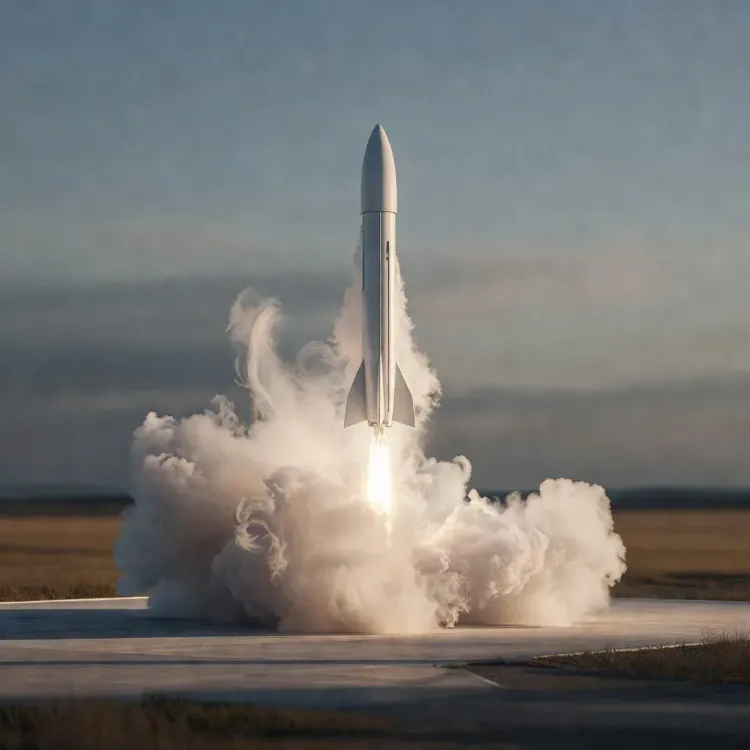
Synopsis
A Chinese start-up founded just last year is betting that supercritical carbon dioxide — the same gas that carbonates soft drinks — can cold-eject rockets before engine ignition, potentially slashing launch infrastructure costs and enabling rapid commercial launch cadence.
Key Takeaways
Z-Trak Space (Zhiyu Aerospace Technology) , founded last year and based in Zhuzhou, Hunan , announced a supercritical CO2 cold-launch collaboration on 1 July 2026 .
The technology uses supercritical carbon dioxide to generate instantaneous high-pressure gas that physically ejects the rocket before engine ignition.
Rocket engines ignite only after the vehicle reaches a designated altitude, keeping exhaust fumes away from the ground platform entirely.
Chiyang Space Power Technology Company is the partner firm in the collaboration.
Z-Trak claims the method can enable 'low-cost, high-frequency, fast-response commercial launches' for small launch vehicles.
No prototype test date or operational vehicle specifications have been disclosed yet.
Z-Trak Space (Zhiyu Aerospace Technology), a Zhuzhou, Hunan-based commercial space start-up, has announced a collaboration to apply supercritical carbon dioxide cold-launch technology to small launch vehicles — a method that uses the same compound found in carbonated beverages to eject rockets before their engines ignite in mid-air. The announcement was made on Monday, 30 June 2026, with a formal statement issued on Tuesday, 1 July 2026.
What the technology does
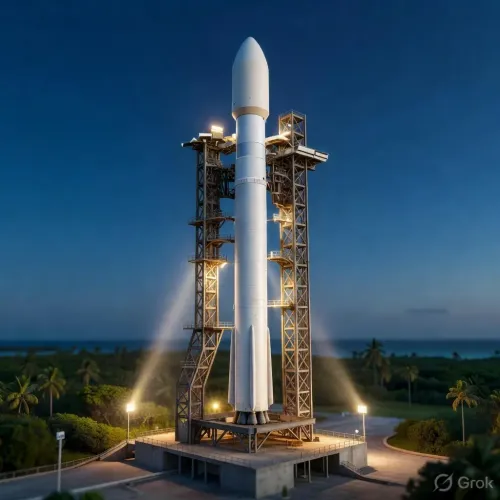
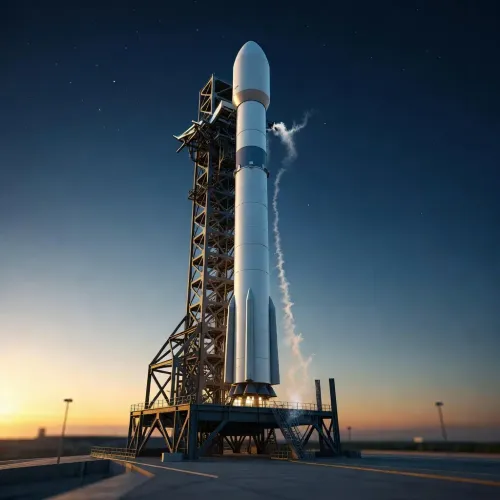
The system uses supercritical carbon dioxide — a fluid state achieved when CO2 is held at or above its critical temperature and pressure — to generate high-pressure gas that expands instantaneously, physically ejecting the rocket from its launch platform. Once the vehicle reaches a designated altitude, its engines ignite in mid-air, initiating normal flight. The key advantage: scorching exhaust fumes never contact the ground platform, dramatically reducing infrastructure wear and launch site requirements.
The partnership
Z-Trak Space, founded last year in the prefecture-level city of Zhuzhou in China's central Hunan province, is partnering with Chiyang Space Power Technology Company to commercialise the cold-launch method. According to the company statement, the combined expertise aims to deliver what Z-Trak described as the ability to 'truly achieve low-cost, high-frequency, fast-response commercial launches.'
Why it matters
Cold-launch techniques — where propulsion ejects a missile or rocket before engine ignition — have long been used in military applications but remain rare in commercial spaceflight. Applying supercritical CO2 as the ejection medium is a novel approach that could reduce the thermal and acoustic stress on ground infrastructure, potentially lowering per-launch costs and enabling higher launch cadence from simpler facilities. This is directly relevant to the rapidly expanding small-satellite market, where launch frequency and turnaround time are competitive differentiators.
Competitive backdrop
China's commercial launch sector has grown aggressively, with firms racing to challenge incumbents including SpaceX in the United States. Analysts and industry observers have noted that cost reduction and rapid reusability remain the primary battlegrounds. Sinolink Securities is among the financial institutions tracking the sector's expansion. Z-Trak's CO2-based approach, if validated at scale, could offer a differentiated position against competitors relying on conventional hot-fire launch pads.
What's next
No launch date or vehicle specifications were disclosed in the announcement. The collaboration with Chiyang Space Power Technology Company is at an early development stage, and the technology has yet to be demonstrated on an operational launch vehicle. Observers will be watching for prototype test results and any regulatory approvals from China's civil space authorities as the partnership matures.
Point of View
Which represent a significant fraction of launch site capital expenditure; if the supercritical CO2 approach scales, it could enable mobile or semi-permanent launch pads that dramatically lower barriers to entry. Mainstream coverage tends to focus on China's large reusable rocket programmes, but the more disruptive near-term pressure on global small-sat launch pricing may come from these asset-light, infrastructure-minimising approaches. The partnership structure — a young vehicle integrator teaming with a propulsion specialist — mirrors the modular commercialisation playbook that has accelerated development timelines elsewhere in the sector.
NationPress
30 Sept 2026
Frequently Asked Questions
What is supercritical CO2 cold-launch technology for rockets?
Supercritical CO2 cold-launch technology uses carbon dioxide held above its critical temperature and pressure — a fluid state — to generate instantaneous high-pressure gas that physically ejects a rocket from its launch platform before the vehicle's engines ignite. The engines then fire in mid-air at altitude, meaning exhaust never contacts the ground infrastructure.
Who is Z-Trak Space and what did it announce?
Z-Trak Space, also known as Zhiyu Aerospace Technology, is a commercial space start-up founded last year and headquartered in Zhuzhou, Hunan province, China. On 1 July 2026, the company announced a collaboration with Chiyang Space Power Technology Company to apply supercritical CO2 cold-launch technology to small launch vehicle systems.
Why would CO2 cold-launch be cheaper than conventional rocket launches?
By keeping engine exhaust away from the ground platform entirely, the technology eliminates the need for flame trenches, blast deflectors, and heavy thermal protection infrastructure that conventional hot-fire launches require. This could reduce launch site construction and maintenance costs, enabling higher launch frequency from simpler facilities.
How does China's Z-Trak compare to SpaceX?
Z-Trak Space is a very early-stage start-up founded last year, with no operational launches disclosed, while SpaceX is the dominant global commercial launch provider. Z-Trak's CO2 cold-launch approach targets a different competitive angle — infrastructure cost reduction for small vehicles — rather than direct competition on payload capacity or reusability.
When will Z-Trak's CO2 rocket technology be ready?
No launch date, prototype test schedule, or operational vehicle specifications have been announced. The collaboration with Chiyang Space Power Technology Company is at an early development stage, and further milestones depend on technical validation and regulatory approvals from Chinese civil space authorities.