Sachin Pilot mourns Bunker Roy, founder of Barefoot College
Synopsis
Congress leader Sachin Pilot mourned the death of Sanjit 'Bunker' Roy, founder of the Barefoot College in Tilonia, Rajasthan, calling his contributions to rural empowerment and women's uplift unforgettable, and extending condolences to activist Aruna Roy and the family.
Key Takeaways
Sanjit 'Bunker' Roy , founder of Barefoot College in Tilonia, Rajasthan , has passed away.
Congress leader Sachin Pilot expressed condolences on 10 November 2026 , highlighting Roy's contributions to rural empowerment and women's agency.
Barefoot College, operational since the 1970s , trained rural women in solar technology, water management, and community health without requiring formal qualifications.
Pilot extended specific condolences to Aruna Roy , co-founder of MKSS and a central figure in India's Right to Information movement.
Barefoot College's model influenced rural development programmes globally, including across Africa, Asia, and Latin America .
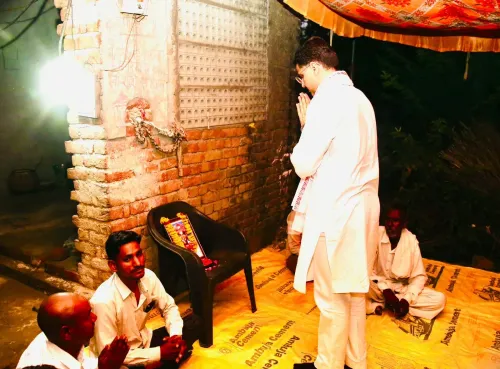
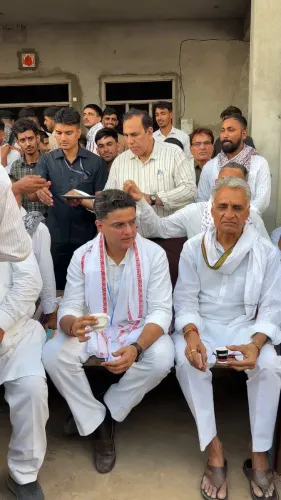
A quiet giant of India's rural empowerment movement has passed. Sanjit 'Bunker' Roy, founder of the celebrated Barefoot College in Tilonia, Rajasthan, is no more — and tributes from across the political spectrum are beginning to pour in. Congress leader Sachin Pilot, general secretary and Chhattisgarh in-charge of the Indian National Congress, expressed deep grief on Tuesday, 10 November 2026, mourning the loss of a man who spent decades transforming village life from the ground up.
Pilot wrote: 'Deeply saddened to hear of the passing of Sanjit Bunker Roy ji. His remarkable contributions to various social causes and rural empowerment will always be remembered. Through the Barefoot College in Tilonia, he transformed the lives of countless people in rural communities by empowering them, especially women.' He extended his heartfelt condolences to Smt. Aruna Roy ji and the entire family.
What Barefoot College built in Tilonia
Founded in Tilonia, a village in Ajmer district, Rajasthan, Barefoot College was not a conventional institution. It trained the rural poor — overwhelmingly women — in solar technology, water management, handicrafts, and community health, insisting that expertise need not come wrapped in a formal degree. The model was radical in its simplicity: take knowledge to the village, in the village's own language, on the village's own terms. Over decades, the college's reach extended well beyond Rajasthan, with its solar-electrification programme touching villages across Africa, Asia, and Latin America. The United Nations and several governments cited its model as a blueprint for grassroots sustainable development. Roy's core philosophy — that the most marginalised communities already hold the capacity to solve their own problems — sat at the heart of every programme the college ran.Aruna Roy and a shared life in the grassroots movement
Pilot's condolences were directed specifically to Aruna Roy, herself one of India's most consequential social activists. A co-founder of the Mazdoor Kisan Shakti Sangathan (MKSS), Aruna Roy was instrumental in the Right to Information movement that eventually produced the RTI Act of 2005 — arguably the most powerful transparency tool Indian citizens have ever held. Her and Bunker Roy's overlapping circles of work — grassroots accountability, rural livelihoods, women's agency — defined an entire era of non-state social action in independent India. Pilot also tagged @nikhilmkss, signalling acknowledgment of the MKSS network and the broader community of activists mourning Roy's passing.A movement larger than one man
What Bunker Roy built refuses to be neatly filed away. The Barefoot College model has quietly run parallel to India's official rural livelihood missions since the 1970s, often out-performing state schemes in the very villages they were designed to serve. His passing leaves a question hanging in the air that he would have hated: who carries the architecture forward? The answer, as Roy himself always argued, already lives in those villages — in the solar engineers, the water managers, the community teachers his college quietly trained for half a century. That, perhaps, is the truest tribute to a barefoot legacy.Point of View
And tributes from elected leaders carry an implicit admission that the state alone did not solve rural poverty. Aruna Roy's presence in the acknowledgment deepens the signal: she is closely associated with the RTI movement and labour rights, areas where the Congress-era legislative record is a double-edged sword. The post is solemn and carefully worded — no political point-scoring, but the choice of figures mourned always tells its own story.
NationPress
10 Nov 2026
Frequently Asked Questions
Who was Sanjit Bunker Roy?
Sanjit 'Bunker' Roy was an Indian social activist and the founder of Barefoot College in Tilonia, Rajasthan, an NGO that trained rural communities — especially women — in solar technology, water management, and other practical skills without requiring formal education credentials.
What is Barefoot College and where is it located?
Barefoot College is an NGO based in Tilonia village, Ajmer district, Rajasthan. Founded in the 1970s, it focuses on skilling the rural poor, particularly women, and its solar-electrification model has been replicated in villages across Africa, Asia, and Latin America.
Who is Aruna Roy and what is her connection to Bunker Roy?
Aruna Roy is a prominent Indian social activist and co-founder of the Mazdoor Kisan Shakti Sangathan (MKSS). She was closely associated with Bunker Roy's circle of grassroots movements and was central to the campaign that led to India's Right to Information Act of 2005.
Why did Sachin Pilot pay tribute to Bunker Roy?
Sachin Pilot, Congress general secretary and Chhattisgarh in-charge, posted condolences recognising Roy's decades of work in rural empowerment and women's uplift through Barefoot College, extending personal sympathies to Aruna Roy and the family.
What was Barefoot College's impact on rural women in India?
Barefoot College specifically trained rural women — many of them illiterate or semi-literate — as solar engineers, water managers, and community health workers, enabling them to become self-reliant practitioners and transforming livelihoods in hundreds of villages across India and beyond.