Subhash Ghai on AR Rahman: How 'Lagaan' and 'Rang De Basanti' reshaped Mumbai's music
Synopsis
Subhash Ghai has gone on record about how AR Rahman transformed Mumbai's film music — from the nervous pitch for 'Taal' in 1999, when Rahman barely knew Hindi lyrics, to an Oscar for 'Jai Ho' and a generational shift in how Hindi cinema sounds. The tribute is a rare candid account of one of Bollywood's most consequential creative partnerships.
Key Takeaways
Subhash Ghai posted a heartfelt tribute to AR Rahman on Instagram on 10 November 2026 , calling him a 'blessed talent.' Ghai admitted he was initially nervous offering Rahman the film 'Taal' (1999) because the composer was not familiar with Hindi lyrics at the time.
Ghai credited Rahman with changing Mumbai's music culture through films including 'Lagaan' , 'Rang De Basanti' , and 'Rockstar' .
Rahman won an Academy Award for the Hindi song 'Jai Ho' , which Ghai cited as a landmark achievement.
Ghai and Rahman have collaborated on three films : 'Taal' (1999), 'Kisna: The Warrior Poet' (2005), and 'Yuvvraaj' (2008).
Filmmaker Subhash Ghai has paid tribute to music composer AR Rahman, recalling how the maestro fundamentally reshaped Mumbai's music culture through landmark films such as 'Lagaan', 'Rang De Basanti', and 'Rockstar'. Ghai shared his reflections in a heartfelt Instagram post, describing Rahman as a 'blessed talent from our universe.'
Ghai's Initial Nerves Over 'Taal'
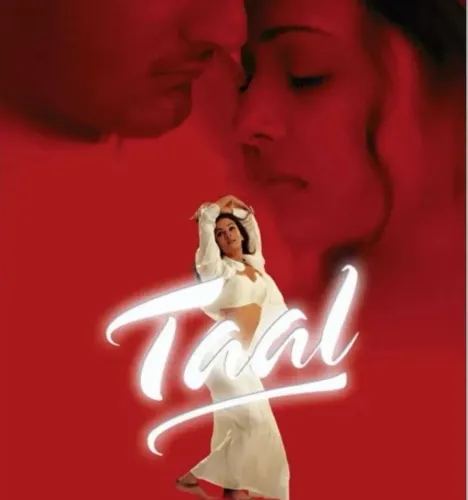
Recounting how their collaboration began, Ghai admitted he was hesitant when he first approached Rahman for his 1999 musical drama 'Taal'. His concern stemmed from the fact that Rahman was not deeply familiar with Hindi lyrics or the conventions of Hindi cinema at the time. 'I was really nervous when I offered him my film TAAL,' Ghai wrote, using his own words. His apprehension lifted when Rahman mentioned that he used to play the Hero flute — a detail that reassured Ghai about their creative compatibility.
'I was relaxed. N entered into his style of music. N u know TAAL till now,' Ghai wrote in his post, letting the film's enduring popularity speak for itself.
Rahman's Cultural Transformation of Hindi Film Music
Beyond 'Taal', Ghai credited Rahman with a broader cultural shift in the way Mumbai approached film music. In his post, he noted that Rahman 'changed the music culture in Mumbai with Lagaan n Rang De Basanti or Rockstar.' He highlighted Rahman's Academy Award win for the song 'Jai Ho' — a composition in Hindi that brought the Oscar to Indian film music for the first time — as a defining marker of the composer's global stature.
Ghai further praised Rahman's versatility, writing that he 'can learn n turn into any sound of any land n culture into music' and that he 'responds to every kind of film n director anywhere.' This adaptability, Ghai argued, is what sets Rahman apart in an industry crowded with accomplished composers.
Three Films, A Lasting Creative Bond
Ghai and Rahman have collaborated on three feature films: 'Taal' (1999), 'Kisna: The Warrior Poet' (2005), and 'Yuvvraaj' (2008). Their debut project together, 'Taal', starred Anil Kapoor, Aishwarya Rai Bachchan, and Akshaye Khanna, and remains widely celebrated for its soundtrack. The film's music is considered one of the more successful crossover experiments of that era, blending classical Indian influences with Rahman's signature electronic textures.
Ghai's Closing Tribute
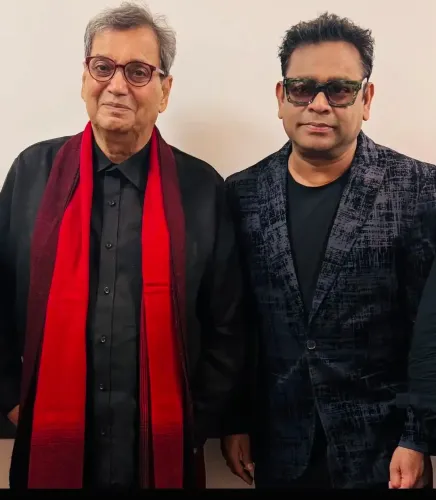
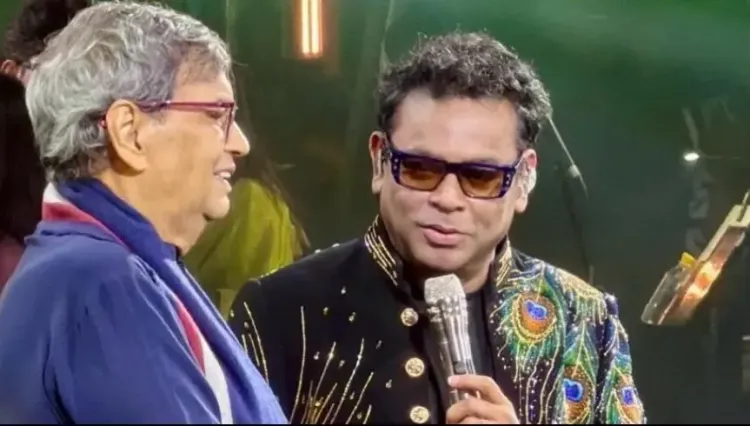
Closing his note with warmth, Ghai wrote that Rahman 'will go on giving surprises to music lovers n will live for a long,' adding, 'My all blessings to his talent n happiness always.' The post was accompanied by a photograph of the two, underscoring the personal dimension of a collaboration that spans nearly three decades. Ghai's public tribute arrives at a time when Rahman's legacy continues to be a touchstone in conversations about the global reach of Indian cinema.
Point of View
Not just a stylistic refresh. The detail about Rahman's unfamiliarity with Hindi lyrics in 1999 is striking; it underscores that his transformation of Mumbai's sound came from outside the system, not within it. What mainstream coverage of this post misses is the implicit admission that the Hindi film industry almost didn't take that gamble. The fact that it did — and that 'Taal', 'Lagaan', and 'Jai Ho' followed — raises the question of how many similar bets have been left on the table since.
NationPress
10 Nov 2026
Frequently Asked Questions
What did Subhash Ghai say about AR Rahman?
Subhash Ghai described AR Rahman as a 'blessed talent from our universe' in an Instagram post, crediting him with changing Mumbai's music culture through films like 'Lagaan', 'Rang De Basanti', and 'Rockstar'. He also recalled his initial hesitation before offering Rahman the film 'Taal' in 1999.
How did AR Rahman and Subhash Ghai first collaborate?
Their first collaboration was on the film 'Taal' (1999), starring Anil Kapoor, Aishwarya Rai Bachchan, and Akshaye Khanna. Ghai admitted he was nervous about the offer because Rahman was not closely associated with Hindi cinema at the time, but was reassured when Rahman mentioned he used to play the Hero flute.
How many films have Subhash Ghai and AR Rahman made together?
Subhash Ghai and AR Rahman have collaborated on three films: 'Taal' (1999), 'Kisna: The Warrior Poet' (2005), and 'Yuvvraaj' (2008). 'Taal' remains the most celebrated of the three for its soundtrack.
What Oscar did AR Rahman win for a Hindi song?
AR Rahman won the Academy Award for Best Original Song for 'Jai Ho', a Hindi song from the film 'Slumdog Millionaire'. Subhash Ghai cited this win as evidence of Rahman's ability to bring global recognition to Indian music.
Why does Subhash Ghai credit AR Rahman with changing Mumbai's music culture?
Ghai argues that Rahman introduced a new sonic vocabulary to Hindi film music — drawing on diverse global and regional influences — that reshaped industry norms. Films such as 'Lagaan' and 'Rang De Basanti' are cited as evidence of this cultural shift, moving mainstream Bollywood music away from its established patterns.