Subhash Ghai on 'Taal' at 25: Big screen made newcomers Aishwarya, Akshaye shine
Synopsis
Twenty-five years on, Subhash Ghai is making the case that 'Taal' was never meant for a small screen — and that A.R. Rahman's soundscape and larger-than-life visuals were what made newcomers Aishwarya Rai and Akshaye Khanna credible leads. In a streaming-saturated moment, it reads as both a tribute and a manifesto.
Key Takeaways
Subhash Ghai shared a social media post revisiting his 1999 blockbuster 'Taal' , stressing that big-screen cinema is irreplaceable.
He noted that even with newcomers Aishwarya Rai and Akshaye Khanna , the film's A.R.
Rahman soundtrack and visuals justified its story. 'Taal' released on 13 August 1999 and also starred Anil Kapoor , Amrish Puri , and Alok Nath .
The soundtrack — featuring songs like 'Taal Se Taal Mila' and 'Ishq Bina' — with lyrics by Anand Bakshi remains one of Rahman's most celebrated works.
Ghai directed, produced, co-wrote, and edited the film — a rare all-in creative role.
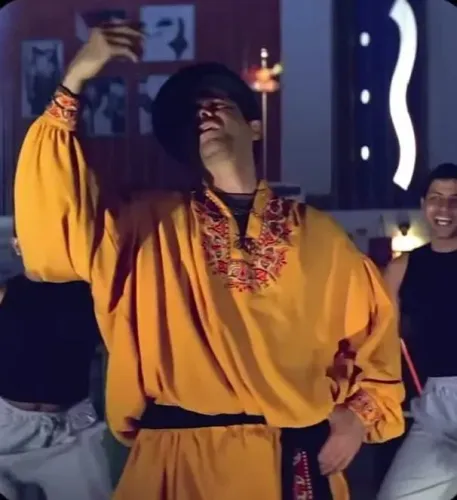
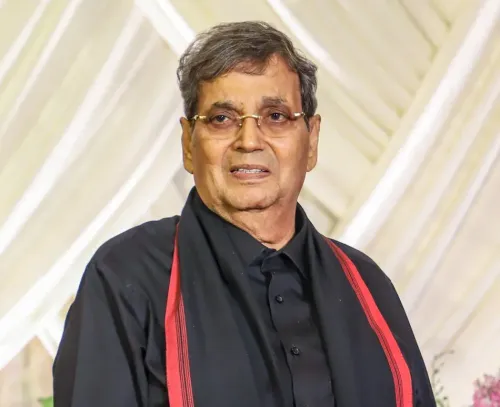
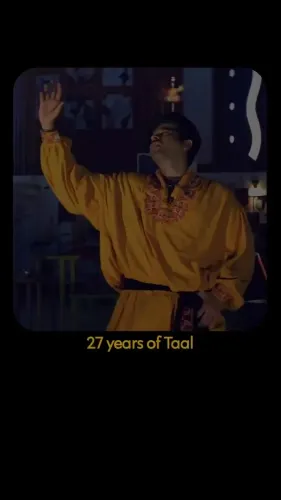
Veteran filmmaker Subhash Ghai has revisited his landmark 1999 musical romantic drama 'Taal', reflecting on how the film's sweeping soundscape and larger-than-life visuals elevated a cast that included then-newcomers Aishwarya Rai and Akshaye Khanna alongside seasoned star Anil Kapoor. Ghai shared his thoughts on the film via his personal social media account, reaffirming his belief that big-screen cinema remains irreplaceable.
Ghai's Case for the Big Screen
In his post, Ghai was unequivocal about his filmmaking philosophy. 'I cud never think of cinema for small screens as a motion picture director as my camera has to give an experience of soundscape n larger visuals to the audience in theatres on big screens only,' he wrote. 'So I can never visualise a story telling as a pocket play.'
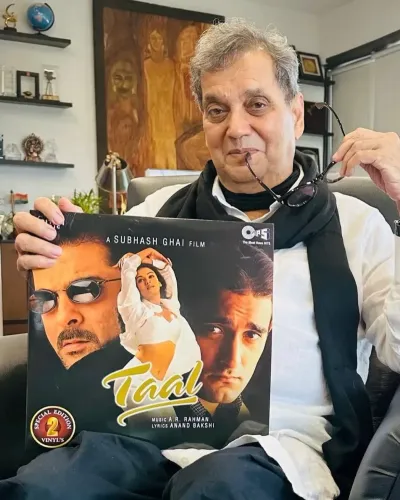
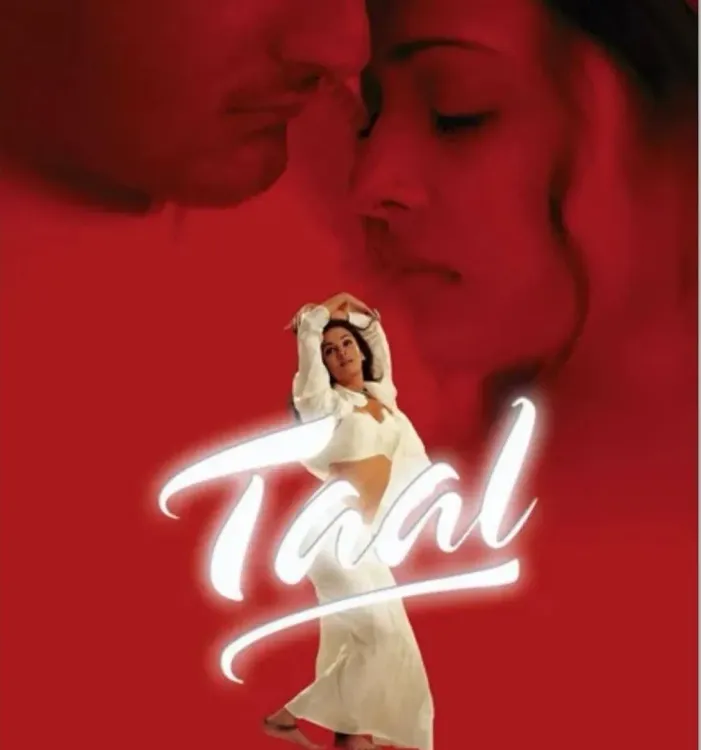
Citing 'Taal' as a prime example, he noted that even with relatively fresh faces leading the film, the scale of its music and visuals gave the story the weight it needed. 'Even taal had new stars like Aishwarya n Akshaye Khanna with veteran anil kapoor. But music soundscape along with visuals were larger than life n it justified its story. So the crux is BIG SCREEN CINEMA IS BK. So I am on it. (sic)' he added. His post was accompanied by an iconic 'Taal' poster featuring Aishwarya Rai Bachchan in a white outfit set against a bold red backdrop.
About the Film
'Taal' released on 13 August 1999 and starred Aishwarya Rai Bachchan, Akshaye Khanna, and Anil Kapoor in the lead roles, with Amrish Puri and Alok Nath in pivotal supporting parts. Ghai directed, produced, co-wrote, and edited the film, while legendary composer A.R. Rahman scored its music with lyrics by Anand Bakshi.
The film follows Mansi, a gifted folk singer and dancer from Himachal Pradesh, played by Aishwarya, who falls in love with Manav — the son of a wealthy businessman — portrayed by Akshaye. Their relationship fractures after Mansi and her father Tarababu are humiliated by Manav's family during a visit to Mumbai. Wounded by the rejection, Mansi resolves to forge her own path and eventually joins forces with Vikrant, a successful music composer and entertainment-company head played by Anil Kapoor, launching her transformation from a small-town performer into a celebrated artist.
The Soundtrack That Defined a Generation
A significant part of 'Taal's enduring appeal lies in its music. Rahman's compositions — including 'Taal Se Taal Mila', 'Ishq Bina', 'Nahin Saamne', 'Ramta Jogi', and 'Ni Main Samajh Gayi' — became cultural touchstones and remain among the most recognised songs in Hindi cinema. The album was a commercial phenomenon and is widely regarded as one of Rahman's finest collaborative works.
Why This Reflection Matters Now
Ghai's remarks arrive at a moment when the debate over theatrical versus streaming releases continues to divide the Hindi film industry. His championing of the big-screen experience, using 'Taal' as a case study, is a pointed intervention in that ongoing conversation. Notably, 'Taal' was also one of the first Bollywood productions to achieve significant traction in the North American box office, underlining the global potential of large-format Indian cinema. As streaming platforms increasingly commission original content and theatrical windows shrink, Ghai's post reads as both a nostalgic tribute and a forward-looking declaration.
Point of View
And that a Rahman score heard in a theatre is a fundamentally different product from the same song on earphones. The industry would do well to take that seriously, especially as mid-budget films increasingly skip theatrical releases citing cost. 'Taal' did not have guaranteed stars — it had guaranteed craft. That distinction is being lost in the current greenlight calculus.
NationPress
18 Oct 2026
Frequently Asked Questions
What did Subhash Ghai say about 'Taal' on social media?
Subhash Ghai posted that 'Taal' exemplified why cinema belongs on the big screen, arguing that its A.R. Rahman soundscape and larger-than-life visuals gave the film its power even though leads Aishwarya Rai and Akshaye Khanna were relatively new at the time. He concluded his post with the declaration that 'BIG SCREEN CINEMA IS BK' (sic).
When did 'Taal' release and who starred in it?
'Taal' released on 13 August 1999 and starred Aishwarya Rai Bachchan, Akshaye Khanna, and Anil Kapoor in the lead roles, with Amrish Puri and Alok Nath in key supporting parts. Subhash Ghai directed, produced, co-wrote, and edited the film.
Who composed the music for 'Taal' and what are its popular songs?
A.R. Rahman composed the music for 'Taal', with lyrics by Anand Bakshi. The soundtrack includes iconic songs such as 'Taal Se Taal Mila', 'Ishq Bina', 'Nahin Saamne', 'Ramta Jogi', and 'Ni Main Samajh Gayi', and is widely regarded as one of Rahman's finest works.
What is the story of 'Taal'?
'Taal' follows Mansi, a folk singer and dancer from Himachal Pradesh played by Aishwarya Rai Bachchan, who falls in love with Manav, a wealthy businessman's son played by Akshaye Khanna. After being humiliated by his family, Mansi joins music composer Vikrant — played by Anil Kapoor — and rises from a small-town performer to a celebrated artist.
Why is Subhash Ghai's post about 'Taal' significant now?
Ghai's remarks come amid an ongoing industry debate over theatrical versus streaming releases. By citing 'Taal' as proof that big-screen scale can elevate a film beyond its cast, he is making a pointed argument for preserving the theatrical experience at a time when streaming platforms are reshaping how films are made and distributed.