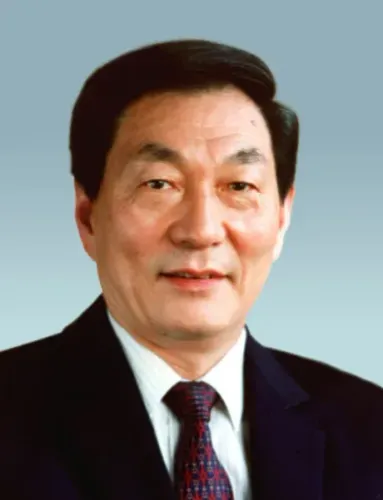
China's hypersonic weapons expert Fang Daining dies at 68 in South Africa

Synopsis
China's top hypersonic weapons researcher and Chinese Academy of Sciences member Fang Daining, 68, died on February 27 in South Africa while scheduled to speak at an academic conference — CAS confirmed his death four months later with a formal obituary but offered no details on the cause or circumstances.
Key Takeaways
Fang Daining , a Chinese Academy of Sciences (CAS) member and hypersonic weapons researcher, died on February 27, 2026 at age 68 .
CAS confirmed his death in an official obituary published on Tuesday, May 19, 2026 , nearly three months after the event.
Fang was in South Africa and scheduled to speak at the African Conference on Computational Mechanics at the University of Cape Town on the day he died.
The CAS obituary cited illness as the cause but provided no details on the circumstances of his death abroad.
In 2022 , Fang faced disciplinary action from his university and CAS after a video of inappropriate conduct during a live-streamed academic meeting went viral.
CAS described him as a pioneer 'in China's field of advanced structural technologies' and a researcher devoted to advanced materials and structural mechanics.
Fang Daining, a Chinese Academy of Sciences (CAS) member and prominent figure in China's hypersonic weapons research, died on February 27 of an illness while on a work trip to South Africa. He was 68. CAS confirmed his death in an official obituary released on Tuesday, May 19, 2026, ending months of speculation that had circulated in online discussions.
Official Confirmation and Circumstances
CAS, China's premier national research institution, published the obituary on its website, describing Fang as a scientist who had 'long been devoted to research in advanced materials and structural mechanics' and a pioneer 'in China's field of advanced structural technologies.' The obituary did not provide details on the cause or specific circumstances of his death.
According to the event programme, Fang had been scheduled to speak at the African Conference on Computational Mechanics at the University of Cape Town on the afternoon of February 27. Earlier online discussions had included unverified claims that he suffered an unexpected medical episode during the trip.
Who Was Fang Daining
Fang held China's highest academic title in science and technology as a full member of the Chinese Academy of Sciences — an honour reserved for the country's most distinguished researchers. His work spanned advanced structural mechanics and materials, fields with direct applications in hypersonic weapons development, which placed him at the intersection of academic research and national defence priorities.
He was affiliated with leading institutions including the Beijing Institute of Technology, and had academic ties spanning Peking University, Tsinghua University, Nanjing Tech University, and international institutions such as the Technion-Israel Institute of Technology and research collaborations in the United States.
The Controversy That Defined His Later Career
Fang became a subject of widespread public attention in 2022 after a video of a young woman repeatedly kissing his face during a live-streamed academic meeting went viral across Chinese social media. The incident prompted formal disciplinary action by his university and by CAS, casting a shadow over his scientific legacy.
Despite the controversy, CAS chose to honour him with a formal obituary, signalling institutional recognition of his contributions to the country's strategic research agenda.
Why It Matters
Fang's death is notable given the sensitivity of hypersonic weapons research in the current geopolitical climate. China has invested heavily in hypersonic technology, and the loss of a CAS-level expert represents a significant gap in a field where the country has sought to maintain a competitive edge over the United States and other powers.
The circumstances — a senior defence-adjacent scientist dying abroad during an academic trip — are likely to draw continued scrutiny, even as official statements remain sparse on detail.
What's Next
No successor or institutional restructuring has been announced by CAS or affiliated institutions. Observers will watch whether China's hypersonic research programmes experience any visible disruption, and whether further details about the circumstances of Fang's death emerge through official or academic channels.
Point of View
And the absence of any detail about circumstances will fuel speculation that official channels are unlikely to address. This sits within a broader pattern of opacity around China's strategic research community, where the line between academic science and military application is deliberately blurred. Fang's work in structural mechanics and advanced materials feeds directly into hypersonic glide vehicle design, making him more strategically significant than a typical academic obituary would suggest. Mainstream coverage has focused on the 2022 controversy; the harder question — what institutional knowledge was lost, and how China's hypersonic programme absorbs that loss — remains largely unasked.
NationPress
7 Oct 2026
Frequently Asked Questions
Who was Fang Daining and why is his death significant?
Fang Daining was a Chinese Academy of Sciences member and leading researcher in advanced materials and structural mechanics, fields central to China's hypersonic weapons development. His death is significant because he held China's highest academic title in science and technology, and his expertise had direct applications in national defence programmes.
When and where did Fang Daining die?
Fang Daining died on February 27, 2026 , in South Africa , where he had travelled for an academic conference. He was scheduled to speak at the African Conference on Computational Mechanics at the University of Cape Town on the afternoon of his death.
What did the Chinese Academy of Sciences say about his death?
CAS published a formal obituary on May 19, 2026 , confirming he died of an illness but providing no details on the cause or circumstances. The institution described him as a pioneer 'in China's field of advanced structural technologies' devoted to advanced materials and structural mechanics.
What was the controversy surrounding Fang Daining in 2022?
In 2022 , a video of a young woman repeatedly kissing Fang Daining's face during a live-streamed academic meeting went viral on Chinese social media. The incident led to formal disciplinary action by his university and by CAS .
What impact could Fang Daining's death have on China's hypersonic research?
Fang was one of China's most senior researchers in structural mechanics and advanced materials — disciplines foundational to hypersonic weapons design. His loss removes a CAS -level expert from a strategically sensitive field at a time when China is competing intensely with the United States in hypersonic technology development.