Amit Shah pays tribute to revolutionary Ras Bihari Bose on jayanti
Synopsis
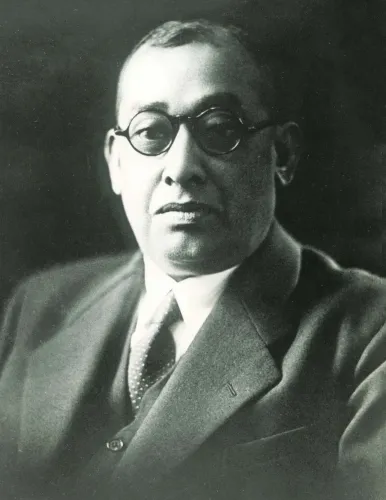
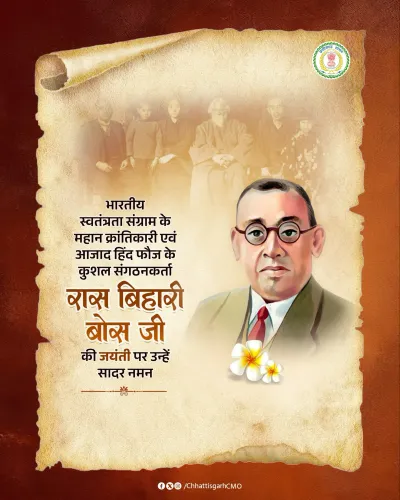
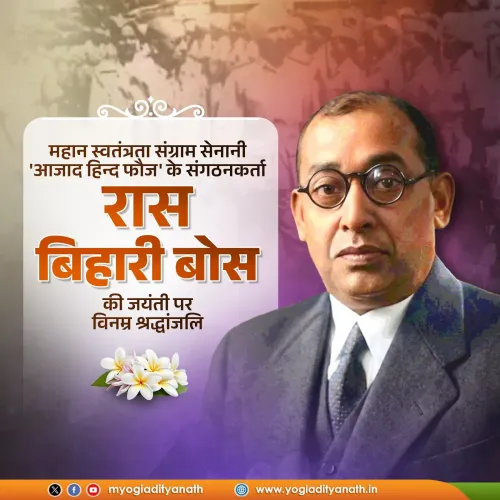
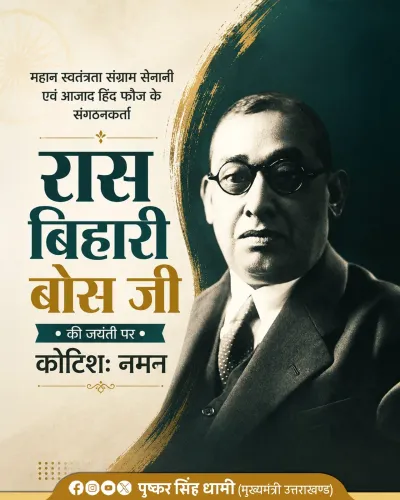
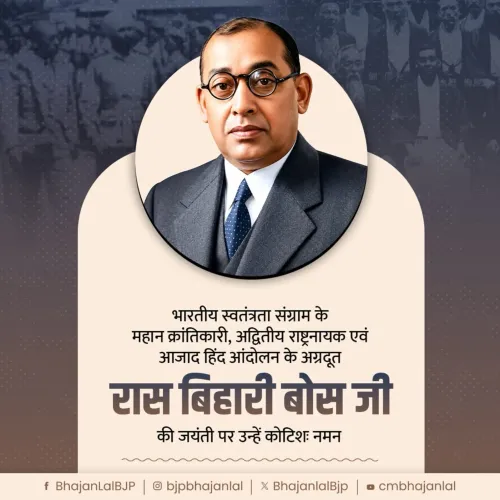
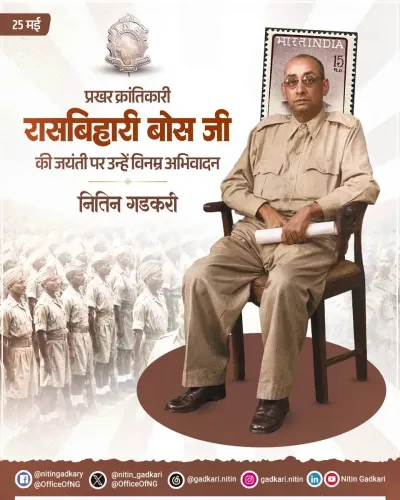
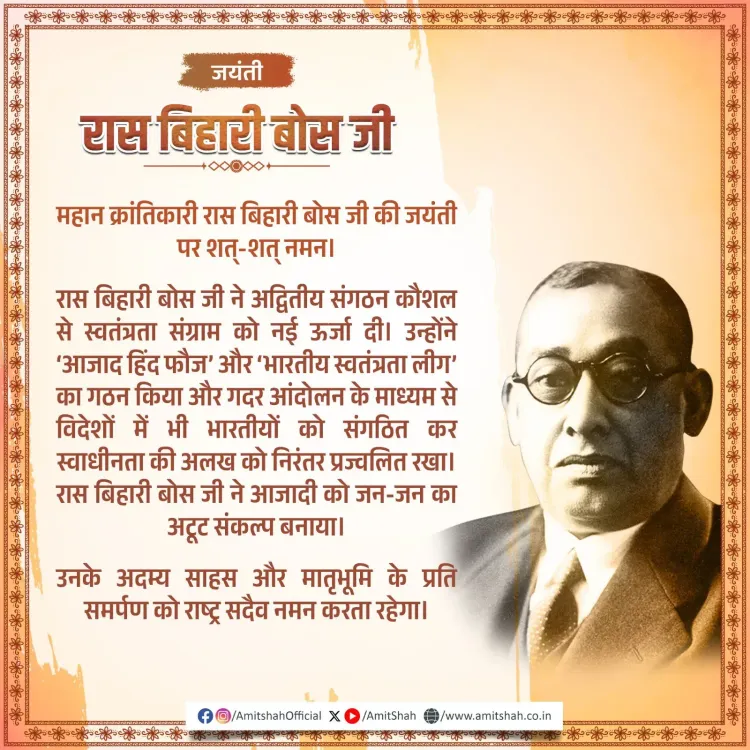
Union Home Minister Amit Shah on 25 May 2026 paid tribute to revolutionary Ras Bihari Bose on his birth anniversary, honouring Bose's founding of the Indian National Army and the Indian Independence League and his work mobilising the Indian diaspora through the Gadar Movement.
Key Takeaways
Union Home Minister Amit Shah posted a tribute to Ras Bihari Bose on his birth anniversary, 25 May 2026 .
Bose ( 1886–1945 ) founded the Azad Hind Fauj (Indian National Army) and the Indian Independence League in 1942 with Japanese support.
Bose organised Indians abroad through the early 20th-century Gadar Movement , primarily among expatriates in North America .
The tribute aligns with the government's Azadi Ka Amrit Mahotsav programme, which has systematically commemorated armed revolutionaries since 2021 .
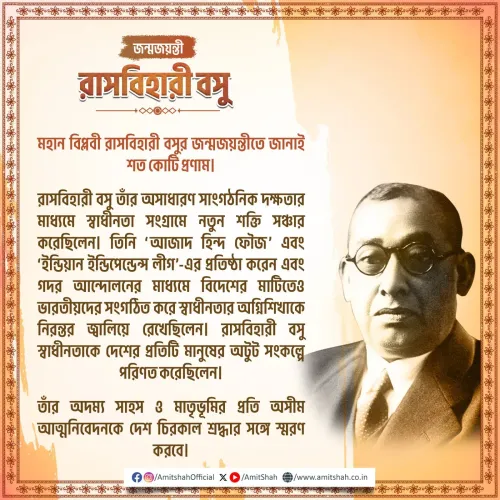
Shah described Bose as having 'made freedom an unbreakable resolve of every citizen' through his unparalleled organisational skills.
Union Home Minister Amit Shah on Monday, 25 May 2026 paid tribute to freedom fighter Ras Bihari Bose on his birth anniversary, honouring the revolutionary's role in organising the independence struggle across India and abroad.
Context
In his post, Shah offered shat-shat naman (a hundredfold salute) to Bose, writing that he 'gave new energy to the freedom struggle through unparalleled organisational skills.' The minister noted that Bose 'formed the Azad Hind Fauj (Indian National Army) and the Indian Independence League, and through the Gadar Movement continued to keep the flame of independence alive by organising Indians abroad.' Shah concluded that Bose 'made freedom an unbreakable resolve of every citizen.'
Ras Bihari Bose was born on 25 May 1886 and died in 1945. He operated primarily from Japan and Southeast Asia after evading British authorities in India, becoming one of the most significant revolutionary figures of the pre-independence era to build an international network for Indian liberation.
Policy Backdrop
The tribute fits within the Azadi Ka Amrit Mahotsav programme launched in 2021, under which the BJP-led government has systematically commemorated contributions of revolutionary figures who operated outside the mainstream Congress-led, non-violent narrative of the freedom struggle. Annual jayanti messages on official platforms have become a consistent feature of this commemorative effort.
The Indian National Army, initially formed in 1942 by Ras Bihari Bose with Japanese support, and the Indian Independence League, established the same year to mobilise overseas Indians, represent key chapters in the history of armed resistance that the current government has sought to elevate in public memory. The Gadar Movement, an early 20th-century network of Indian expatriates primarily in North America, was another pillar of Bose's organising legacy.
Stakeholders and Impact
The tribute is particularly resonant for the Indian diaspora, whose ancestors were directly mobilised by Bose through the Independence League and the Gadar network. History educators and institutions focused on the freedom struggle are among those who regularly engage with such official commemorations as prompts for curriculum and public discourse.
By publicly honouring figures with international revolutionary networks, the government continues to broaden the official memory of India's independence movement, placing armed resistance alongside non-violent civil disobedience in the national narrative.
What's Next
Further official events marking other revolutionary anniversaries through 2026 are expected, as the government's broader commemorative calendar continues. Observers will watch for any parliamentary or educational initiatives that reference overseas Indian contributions to independence, building on the Azadi Ka Amrit Mahotsav framework beyond its initial five-year arc.
Point of View
Sustained effort by the BJP-led government to diversify the official memory of India's freedom struggle, elevating armed revolutionaries and diaspora-linked figures alongside the non-violent mainstream. By invoking the INA, the Indian Independence League, and the Gadar Movement in a single post, the Home Minister reinforces a nationalist historiography that stresses international networks and militant resolve. This pattern, institutionalised through Azadi Ka Amrit Mahotsav, serves both a cultural and a political function: it anchors contemporary nationalist identity to a broader, more combative reading of the independence era. As 2026 marks the centenary of several Gadar-era milestones, such commemorations are likely to intensify.
NationPress
12 Oct 2026
Frequently Asked Questions
Who was Ras Bihari Bose?
Ras Bihari Bose (1886–1945) was an Indian revolutionary who evaded British authorities and operated from Japan and Southeast Asia, where he founded the Indian National Army and the Indian Independence League in 1942 and helped organise the Gadar Movement among overseas Indians.
What is the Azad Hind Fauj?
The Azad Hind Fauj, also known as the Indian National Army (INA), was initially formed in 1942 by Ras Bihari Bose with Japanese support to militarily challenge British rule in India. It was later led by Subhas Chandra Bose.
What was the Indian Independence League?
The Indian Independence League was a political organisation established by Ras Bihari Bose in 1942 to mobilise the Indian diaspora in Southeast Asia and other regions in support of India's independence from British rule.
What is the Gadar Movement?
The Gadar Movement was an early 20th-century revolutionary network of Indian expatriates, primarily in North America, that sought to end British colonial rule in India through organised armed resistance.
Why does Amit Shah regularly pay tribute to freedom fighters on their jayanti?
Such tributes are part of the BJP-led government's Azadi Ka Amrit Mahotsav commemorative programme, launched in 2021, which systematically honours revolutionary figures — including those who used armed resistance or built international networks — to broaden the official narrative of India's independence struggle.