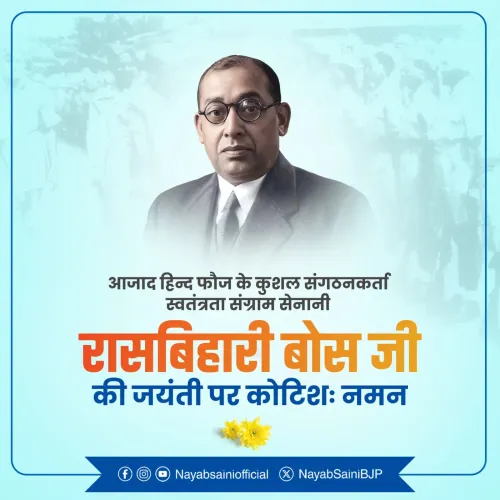
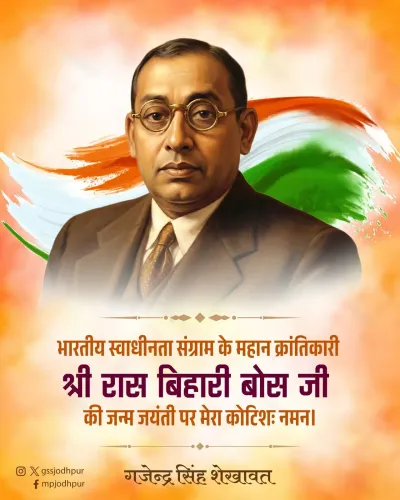
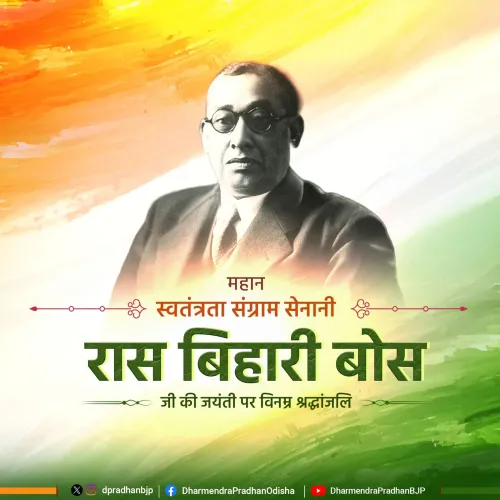
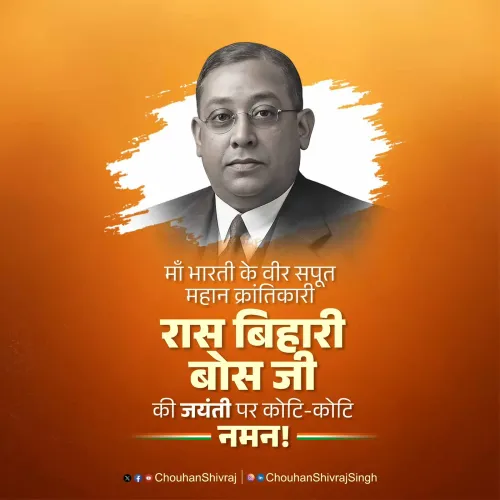
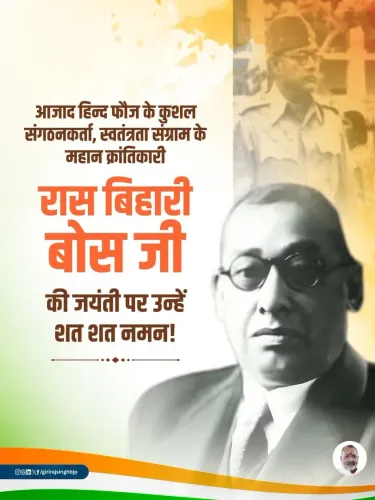
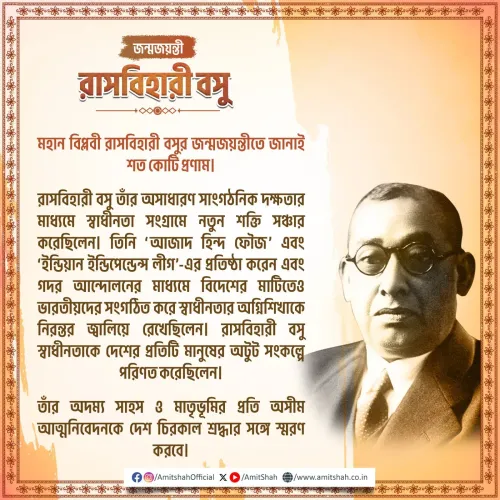
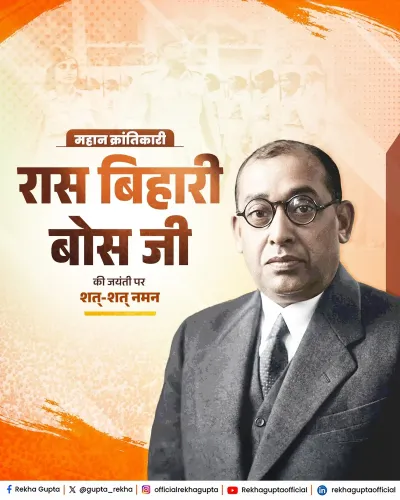
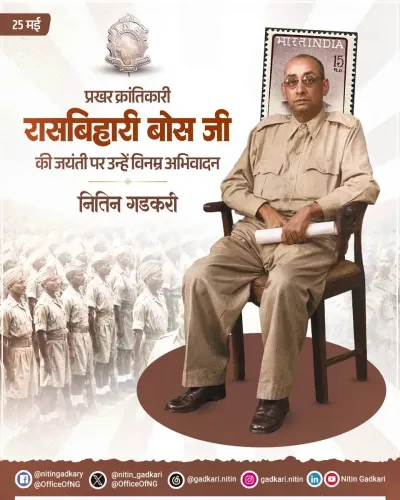
Rajnath Singh pays tribute to Rash Behari Bose on birth anniversary
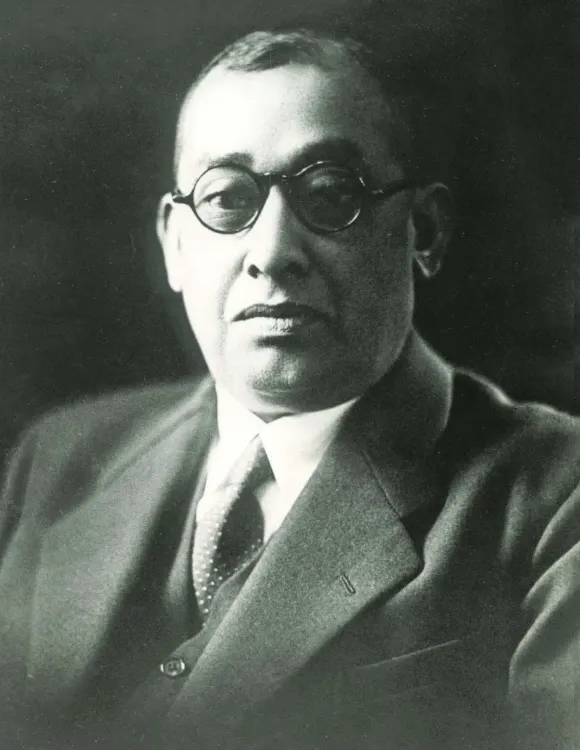
Synopsis
Union Defence Minister Rajnath Singh paid tribute to revolutionary freedom fighter Rash Behari Bose on his birth anniversary on 25 May 2026, honouring his foundational role in the Ghadar Movement and the Azad Hind Fauj — a glorious chapter in India's freedom struggle.
Key Takeaways
Rajnath Singh posted a tribute in Hindi on X on 25 May 2026 , marking the birth anniversary of Rash Behari Bose .
Rash Behari Bose organised the Ghadar Movement inside India before fleeing to Japan in 1915 .
From exile, he founded the Indian Independence League and helped raise the Azad Hind Fauj with Japanese assistance during World War II .
In 1943 , he formally transferred command of the Azad Hind Fauj to Subhas Chandra Bose at a ceremony in Singapore .
The tribute is part of a broader government pattern of officially recognising armed revolutionary figures alongside non-violent leaders in India's independence narrative.
Union Defence Minister Rajnath Singh on Monday, 25 May 2026, paid tribute to revolutionary freedom fighter Rash Behari Bose on his birth anniversary, honouring his contributions to the Ghadar Movement and the ideological and organisational foundations of the Azad Hind Fauj.
Context
Posting in Hindi on X, Rajnath Singh offered what he called 'koti-koti naman evam vinamra shraddhanjali' (countless salutations and humble tribute) to the revolutionary. He described Rash Behari Bose as a 'mahan swatantrata senani, krantikari aur deshbhakt' — a great freedom fighter, revolutionary, and patriot — whose sacrifice and 'unwavering dedication to the nation will always inspire us.'
The minister specifically cited Bose's role from the Ghadar Movement through to strengthening the ideological and organisational foundations of the Azad Hind Fauj, calling it 'a glorious chapter in India's freedom struggle.'
Policy Backdrop
The Ghadar Movement was an early 20th-century armed revolutionary campaign launched primarily by Indian expatriates in North America and East Asia to end British colonial rule. Rash Behari Bose was one of its principal organisers inside India, operating at great personal risk before fleeing to Japan in 1915.
From exile in Japan, he founded the Indian Independence League and played a foundational role in raising the Azad Hind Fauj — the Indian National Army — with Japanese assistance during World War II. In 1943, he formally transferred command of the Azad Hind Fauj to Subhas Chandra Bose at a public ceremony in Singapore.
Stakeholders and Impact
Indian ministers across successive governments have issued public tributes on the birth anniversaries of revolutionary figures linked to the Ghadar and INA streams. These commemorations are part of a broader official effort to incorporate armed revolutionary narratives alongside the dominant non-violent strand of India's independence movement into the national pantheon.
For defence forces and citizens, such tributes reaffirm the state's recognition of a wider spectrum of independence-era contributions — figures who operated outside the mainstream Congress leadership but whose sacrifices shaped the trajectory of the freedom movement.
What's Next
Attention is likely to turn to any official events or memorial initiatives planned around significant INA-related anniversaries later in the year. The government's pattern of social-media commemoration for revolutionary figures suggests continued public engagement with this strand of historical memory, particularly as interest in Subhas Chandra Bose and the INA legacy remains high among Indian audiences.
Point of View
The minister signals continuity in a political project that elevates figures like Bose, Bhagat Singh, and Subhas Chandra Bose as co-equal heroes of the national narrative. For a senior BJP leader and former Home Minister, such posts carry weight beyond ceremonial sentiment — they reinforce a historical reframing that has electoral and cultural resonance. The pattern is consistent and unlikely to diminish ahead of major INA-related anniversaries later in the year.
NationPress
26 Aug 2026
Frequently Asked Questions
Who was Rash Behari Bose?
Rash Behari Bose was an Indian revolutionary freedom fighter who organised the Ghadar Movement inside India, later fled to Japan in 1915, founded the Indian Independence League, and laid the ideological and organisational foundations of the Azad Hind Fauj before transferring its command to Subhas Chandra Bose in 1943.
What is the Ghadar Movement?
The Ghadar Movement was an early 20th-century armed revolutionary campaign launched primarily by Indian expatriates in North America and East Asia to overthrow British colonial rule in India, with Rash Behari Bose among its key organisers on Indian soil.
What was Rash Behari Bose's role in the Azad Hind Fauj?
Rash Behari Bose founded and built the Azad Hind Fauj (Indian National Army) with Japanese assistance during World War II, and in 1943 formally handed over its command to Subhas Chandra Bose at a ceremony in Singapore.
Why did Rajnath Singh pay tribute to Rash Behari Bose?
Rajnath Singh paid tribute on 25 May 2026 to mark the birth anniversary of Rash Behari Bose, honouring his contributions to India's freedom struggle through the Ghadar Movement and the Azad Hind Fauj.
What is the significance of the Azad Hind Fauj in Indian history?
The Azad Hind Fauj, or Indian National Army, was a military force raised during World War II to fight British colonial rule in Southeast Asia. Its legacy is widely commemorated in India as a symbol of armed resistance to colonialism.