Indian diplomat corrects J&K map at Dhaka seminar, video goes viral
Synopsis
An Indian diplomat's on-the-spot correction of a map that showed Jammu and Kashmir as part of Pakistan — at a SAARC seminar in Dhaka — has gone viral. The moment captures New Delhi's zero-tolerance stance on territorial misrepresentation, even in multilateral academic settings, and arrives at a delicate moment in India-Bangladesh relations.
Key Takeaways
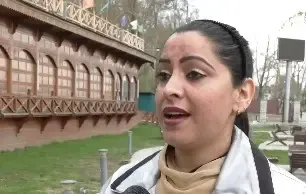
Pooja Kumari Jha , Second Secretary at the Indian High Commission in Dhaka , objected to an incorrect map of India on 11 July 2025 at a seminar in Dhaka .
The map, displayed by former Bangladesh High Commissioner to India Ahmed Tariq Karim , depicted Jammu and Kashmir as part of Pakistan.
Karim said the map was used 'for representational purposes only' and 'doesn't project actual boundaries'; he replied 'Point noted' after Jha's objection.
The incident took place at the Bangladesh Institute of International and Strategic Studies (BIISS) during a seminar on revitalising SAARC .
A video of the exchange went viral on social media, with widespread praise for Jha's prompt intervention.
Bangladesh's State Minister for Foreign Affairs Shama Obaed attended the same seminar, calling for stronger SAARC implementation capacity.
Pooja Kumari Jha, Second Secretary at the Indian High Commission in Dhaka, publicly objected to an incorrect map of India displayed during a seminar in Bangladesh on 11 July 2025, firmly asserting that Jammu and Kashmir is an integral and inalienable part of India. A video of the exchange has since circulated widely on social media, drawing praise for the diplomat's prompt intervention.
What Happened at the Dhaka Seminar
The incident occurred at a seminar titled 'Rebuilding Trust, Renewing Regional Integration: Pathways for Revitalising SAARC', held at the Bangladesh Institute of International and Strategic Studies (BIISS) in Dhaka. During his presentation, former Bangladesh High Commissioner to India Ahmed Tariq Karim displayed a map that depicted Jammu and Kashmir as part of Pakistan.
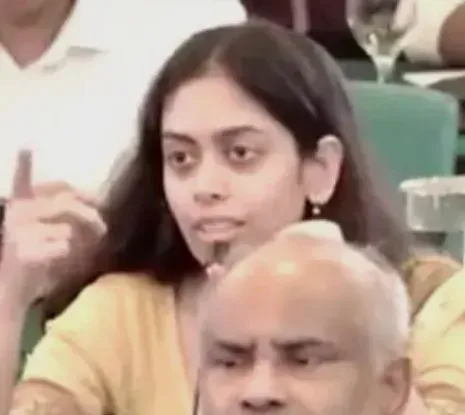
Jha immediately intervened. 'Sir, this is an incorrect map. Jammu and Kashmir is an integral part of India,' she said. Karim responded that the map had been used 'for representational purposes only' and 'doesn't project actual boundaries.'
India's Position Firmly Reiterated
Jha acknowledged the clarification but held her ground. 'I understand, sir, but Jammu and Kashmir is an integral part of India, and it is misrepresented here. So I wanted to point it out,' she said. Karim then asked whether she was from India, following which she identified herself as an officer of the Indian High Commission. 'Point noted,' Karim replied before resuming his presentation.
According to the Indian side, the objection was raised specifically to reiterate New Delhi's longstanding position that Jammu and Kashmir is an integral and inalienable part of the country, and to formally object to the incorrect depiction of India's territorial boundaries.
Online Reaction and Public Praise
The video of the exchange spread rapidly on social media, with numerous users commending Jha for her composure and immediacy. The incident underscores the sensitivity around India's territorial representation at multilateral forums, particularly in a South Asian context where boundary disputes remain a live diplomatic issue.
Notably, this is not the first time incorrect maps of India have surfaced at international events — Indian officials have previously flagged similar depictions at conferences and in foreign publications. The consistency of such objections reflects a standing protocol within the Ministry of External Affairs.
SAARC Revitalisation and the Broader Seminar
The seminar itself was attended by Bangladesh's State Minister for Foreign Affairs Shama Obaed as the chief guest. Addressing delegates, she underlined the need for stronger regional cooperation in South Asia and called for closing the gap between the region's potential and its performance.
'The organisation needs stronger implementation capacity, greater financial strength, more effective specialised mechanisms and a practical culture of follow-up,' Obaed said, outlining steps to revitalise the South Asian Association for Regional Cooperation (SAARC). She added that Bangladesh was considering confidence-building initiatives in consultation with SAARC member states, including engagement with SAARC envoys in Dhaka and discussions with the SAARC Secretariat in Kathmandu on convening a meeting of senior officials and exploring a special session of the Council of Ministers.
The episode at the BIISS seminar is likely to keep India-Bangladesh diplomatic optics under scrutiny as both nations navigate a period of recalibrated bilateral ties.
Point of View
Even 'for representational purposes,' signals either carelessness or a deliberate framing that New Delhi has consistently rejected. India's zero-tolerance protocol on territorial depiction is well-established, and Jha's intervention was textbook. The harder question is why the organisers of a SAARC-focused seminar did not vet the materials beforehand. As India and Bangladesh navigate a recalibrated bilateral relationship, episodes like this carry outsized symbolic weight — and the virality of the video suggests the Indian public is watching the diplomatic frontline closely.
NationPress
11 Jul 2026
Frequently Asked Questions
What happened at the Dhaka seminar involving the Indian diplomat?
At a SAARC-focused seminar at the Bangladesh Institute of International and Strategic Studies on 11 July 2025, Indian diplomat Pooja Kumari Jha objected to a map displayed by former Bangladesh High Commissioner Ahmed Tariq Karim that depicted Jammu and Kashmir as part of Pakistan. She firmly stated that Jammu and Kashmir is an integral part of India, and Karim acknowledged the objection with 'Point noted.'
Who is Pooja Kumari Jha?
Pooja Kumari Jha is the Second Secretary at the Indian High Commission in Dhaka, Bangladesh. She drew widespread attention after her on-the-spot objection to an incorrect map of India at the BIISS seminar went viral on social media.
What was Ahmed Tariq Karim's response to the objection?
Ahmed Tariq Karim said the map was used 'for representational purposes only' and 'doesn't project actual boundaries.' After Jha reiterated India's position, he replied 'Point noted' and resumed his presentation.
Why does India object to maps showing Jammu and Kashmir outside its territory?
India's longstanding official position is that Jammu and Kashmir is an integral and inalienable part of the country. Any depiction to the contrary is considered a misrepresentation of India's sovereign territory, and Indian diplomatic missions are expected to formally object whenever such maps appear at public forums.
What was the broader purpose of the Dhaka seminar?
The seminar, titled 'Rebuilding Trust, Renewing Regional Integration: Pathways for Revitalising SAARC,' was held at the Bangladesh Institute of International and Strategic Studies. It focused on strengthening South Asian regional cooperation, with Bangladesh's State Minister for Foreign Affairs Shama Obaed as the chief guest.