J&K integral part of India, PoK must return: Parties back MEA's China-Pak rebuke
Synopsis
In a rare show of cross-party unity, BJP and Congress leaders rallied behind the MEA's blunt rejection of China and Pakistan's joint statement on Jammu and Kashmir — with Congress MP Pramod Tiwari going as far as demanding PoK's return. The episode reveals how J&K sovereignty functions as India's firmest political consensus, cutting across the sharpest partisan divides.
Key Takeaways
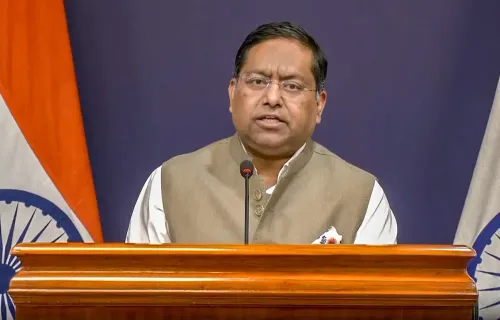
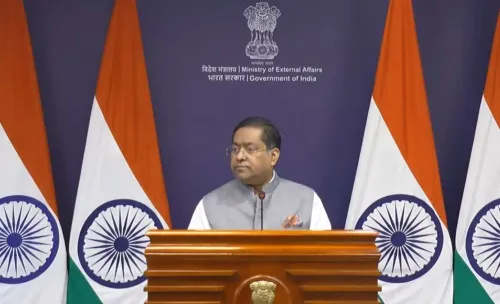
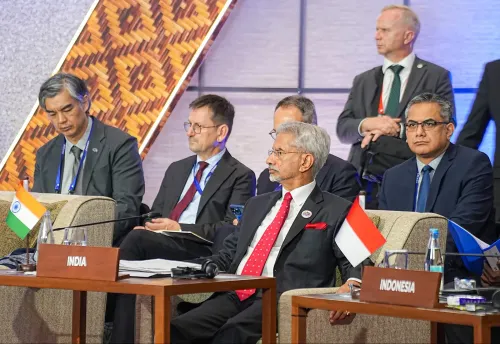
MEA spokesperson Randhir Jaiswal on 27 May categorically rejected China and Pakistan's joint statement referencing Jammu and Kashmir .
Jaiswal stated no other country has 'locus standi' to comment on J&K or Ladakh , which India considers integral and inalienable territories.
Congress MP Pramod Tiwari demanded the return of Pakistan-occupied Kashmir (PoK) , calling it India's rightful territory.
Bihar BJP State President Sanjay Saraogi cited the permanent abolition of Article 370 as settling J&K's constitutional status.
UP Minister Om Prakash Rajbhar underlined full readiness of India's armed forces against any foreign aggression.
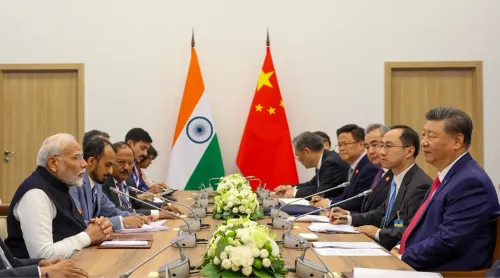
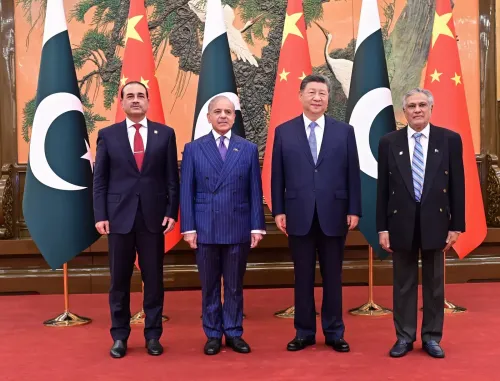
India's political class closed ranks on Wednesday, 27 May as the Ministry of External Affairs (MEA) issued a sharp rejection of China and Pakistan's joint statement that made references to Jammu and Kashmir, with leaders from both the ruling Bharatiya Janata Party (BJP) and the opposition Congress reaffirming that Jammu and Kashmir and Ladakh are integral and inalienable parts of India. The rare cross-party consensus underscores the sensitivity of the issue following the China-Pakistan joint communiqué issued after a bilateral meeting in Beijing.
MEA's Categorical Rejection
MEA spokesperson Randhir Jaiswal issued a strongly-worded statement in response to media queries, saying: 'India categorically rejects unwarranted references to the Union Territory of Jammu and Kashmir in the Joint Statement between China and Pakistan.' He added that India's position is 'consistent and well-known to the parties concerned,' and that 'the Union Territories of Jammu and Kashmir and Ladakh have been, are and will always remain integral and inalienable parts of India. No other country has the locus standi to comment on the same.'
Opposition Voices: PoK Must Return
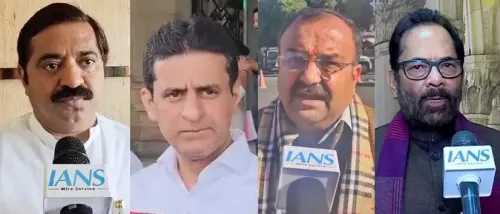
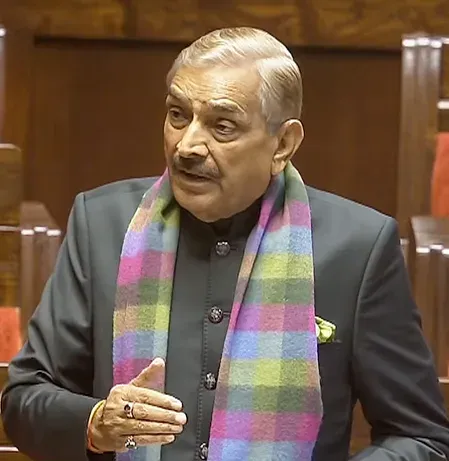
Congress MP Pramod Tiwari said: 'We just want to say that every single bit and every single inch of Jammu, Kashmir, and Ladakh belongs to India. If there is any dispute, it is regarding the part that is Pakistan-occupied-Kashmir. We should get that part back; it should be part of India's map. This is the dream of an Akhand Bharat.' His remarks signal that on territorial sovereignty, the principal opposition party stands firmly alongside the government.
BJP Leaders Invoke Article 370 Abrogation
Bihar BJP State President Sanjay Saraogi backed the MEA's position, stating: 'It is correctly said that Jammu and Kashmir is an integral part of India. Article 370 was permanently abolished by Prime Minister Modi and Home Minister Amit Shah… Jammu and Kashmir is an integral and inseparable part of India.' The reference to the August 2019 abrogation of Article 370 is notable — BJP leaders have consistently framed that move as the legal and constitutional settlement of J&K's status.
Armed Forces Readiness Underlined
Uttar Pradesh Minister Om Prakash Rajbhar went further, emphasising military preparedness: 'It is certain that if any foreign country tries to show aggression or act against India, our armed forces are fully prepared to give a strong response.' His remarks reflect a broader political messaging effort to signal deterrence alongside diplomatic rejection.
Context and What Comes Next
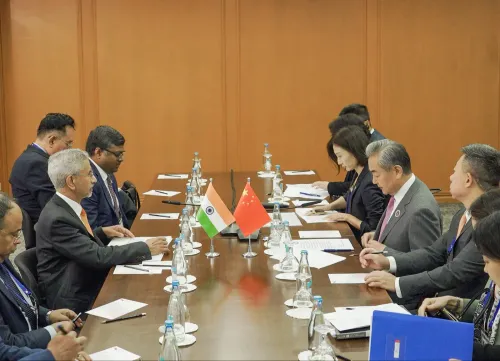
The China-Pakistan joint statement, issued following a meeting between their leaders in Beijing, drew New Delhi's ire for what the MEA described as 'unwarranted references' to J&K — a formulation India views as interference in its internal affairs. This is not the first time such joint statements have triggered a formal Indian rebuttal; New Delhi has consistently objected to any third-country commentary on J&K since the 2019 reorganisation. Notably, the cross-party solidarity on display Wednesday strengthens India's diplomatic hand by presenting a unified domestic front. How Beijing and Islamabad respond — and whether the issue surfaces at upcoming multilateral forums — will be closely watched.
Point of View
But it papers over a more complex diplomatic challenge: India is simultaneously managing border tensions with China and a post-Pahalgam security escalation with Pakistan, while both countries now present a coordinated front in multilateral statements. The MEA's 'locus standi' formulation is legally precise but diplomatically limited — it has been used repeatedly since 2019 without altering Beijing or Islamabad's behaviour. The more consequential question is whether India can leverage this domestic unity into concrete pressure at forums like the UN Security Council or the SCO, where China holds structural influence. Consensus at home is necessary but not sufficient.
NationPress
25 Sept 2026
Frequently Asked Questions
Why did India reject the China-Pakistan joint statement on Jammu and Kashmir?
India rejected the statement because it contained what the MEA called 'unwarranted references' to the Union Territory of Jammu and Kashmir. New Delhi's position is that J&K and Ladakh are integral parts of India and no foreign country has the right to comment on them.
What did MEA spokesperson Randhir Jaiswal say about J&K?
Randhir Jaiswal stated that the Union Territories of Jammu and Kashmir and Ladakh 'have been, are and will always remain integral and inalienable parts of India,' and that no other country has the 'locus standi' to comment on the matter.
Did the Congress party support the government's position on J&K?
Yes. Congress MP Pramod Tiwari affirmed that every inch of Jammu, Kashmir, and Ladakh belongs to India, and additionally called for the return of Pakistan-occupied Kashmir (PoK), describing it as the dream of an Akhand Bharat.
How does Article 370's abrogation relate to this dispute?
BJP leaders cited the August 2019 abrogation of Article 370 — carried out by Prime Minister Narendra Modi and Home Minister Amit Shah — as having permanently settled J&K's constitutional status as an integral part of India, leaving no room for external commentary.
Is this the first time India has rejected such a joint statement by China and Pakistan?
No. India has consistently objected to any third-country references to J&K in bilateral or multilateral statements since the 2019 reorganisation of the region into Union Territories, making this the latest in a series of formal diplomatic rebuttals.