India hits back at China's sovereignty claims, cites illegal occupation since 1963
Synopsis
New Delhi didn't just push back — it flipped the script. After Beijing claimed India 'respects China's sovereignty' post-Manila, the MEA publicly reminded the world that China has been in illegal occupation of Indian territory in Ladakh and J&K since 1963, with even China's own records acknowledging India's rights there. The diplomatic counter-punch signals that normalisation has limits New Delhi will not quietly concede.
Key Takeaways
The MEA on Friday, 25 July rejected China's framing that India 'respects China's sovereignty,' asserting the reverse is true.
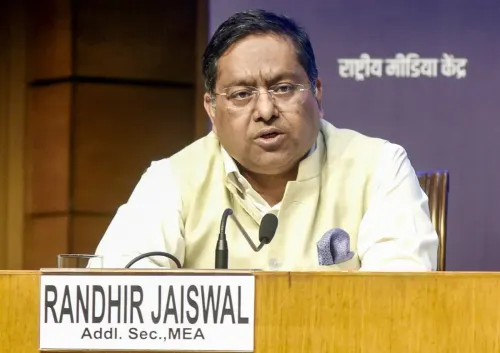
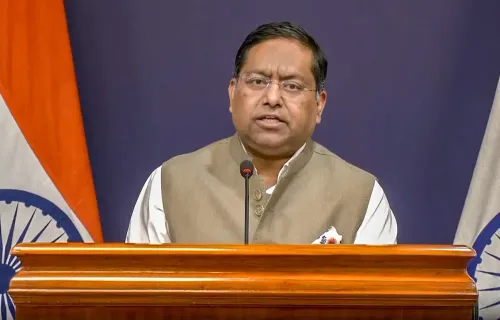
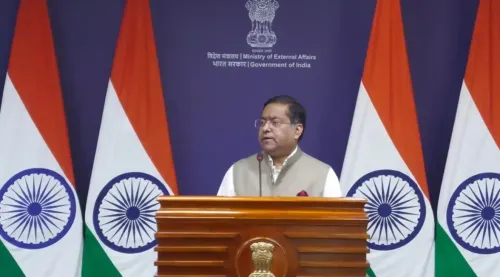
MEA spokesperson Randhir Jaiswal stated China has been in illegal occupation of Indian territories in Jammu and Kashmir and Ladakh since 1963 .
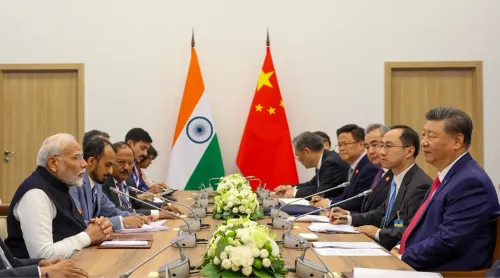
Jaishankar met Chinese Foreign Minister Wang Yi in Manila and called border peace a 'pre-requisite' for normal ties.
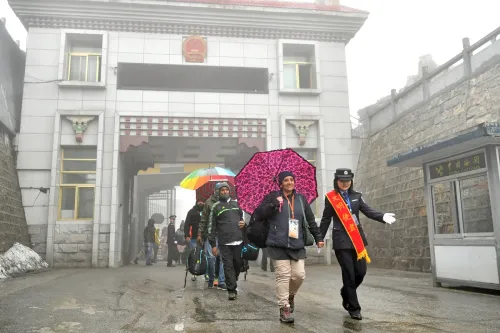
Both sides have engaged on border management since October 2024 , with steps including resumed direct flights , Kailash Manasarovar Yatra , and border trade .
India objected to Chinese infrastructure projects on territories in J&K it considers its own.
The Ministry of External Affairs (MEA) on Friday, 25 July pushed back sharply against Beijing's characterisation of bilateral ties, asserting that it is China — not India — that stands in violation of sovereignty norms, having illegally occupied Indian territories in Jammu and Kashmir and Ladakh since 1963. The rebuttal came a day after the Chinese Foreign Ministry claimed that India 'respects China's sovereignty' following a meeting between the two nations' top diplomats in Manila.
India's Rebuttal at the MEA Briefing
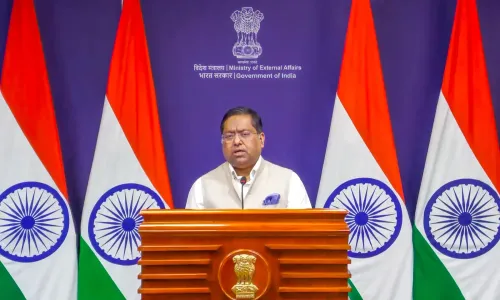
MEA spokesperson Randhir Jaiswal, addressing reporters in New Delhi, stated: 'The External Affairs Minister said that, when it comes to sovereignty issues, it is actually India that should be, and is, raising them. India does not violate China's sovereignty in any manner and has been consistent. But China is in illegal occupation of Indian territories in Jammu and Kashmir and Ladakh since 1963, where India's rights is officially acknowledged even by China. Also, there are Chinese projects on territories in Jammu and Kashmir that belong to India, and we object to that.'
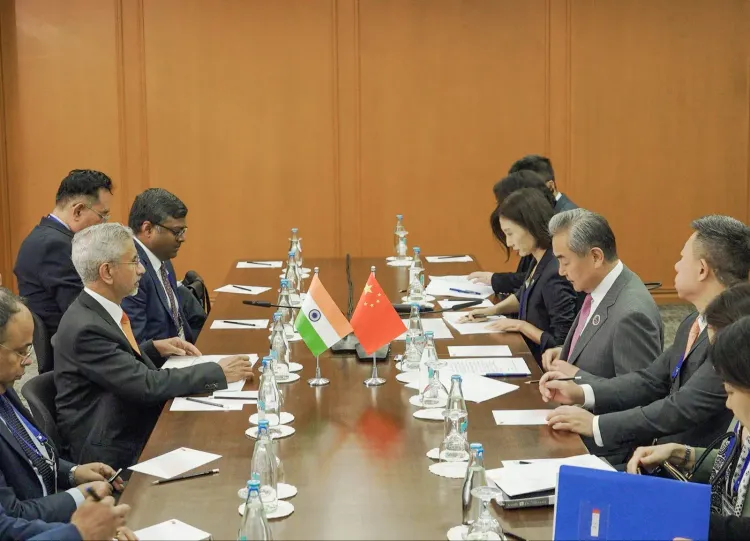
Jaiswal's remarks were a direct counter to a statement issued by the Chinese Foreign Ministry following the meeting between External Affairs Minister (EAM) S. Jaishankar and Chinese Foreign Minister Wang Yi in Manila. Beijing had framed the encounter as evidence of India's cooperative posture — a framing New Delhi wasted no time rejecting.
Jaishankar's Manila Meeting With Wang Yi
In his opening remarks during the Manila meeting on Wednesday, EAM Jaishankar described peace and tranquility along the border as a 'pre-requisite' for normal ties between the two countries. 'Peace and tranquility in the border areas is obviously the prerequisite for normal ties. Since October 2024, both sides have engaged to ensure that important objective. This will continue to need our constant attention. Relevant mechanisms in this domain must be given full support and strong encouragement,' he said.
Jaishankar also acknowledged the broader diplomatic reality of managing two large neighbouring powers: 'It is natural that as two large and important nations, and that too proximate neighbours, India and China would have their own particular interests. That is why our leaders agreed that differences should not become disputes. It is the responsibility of diplomacy to properly manage them.'
Steps Toward Normalisation
Despite the friction over sovereignty, EAM Jaishankar acknowledged and welcomed a set of confidence-building measures that have been gradually reinstated between the two countries. These include the resumption of direct flights, updated visa arrangements, the restarting of the Kailash Manasarovar Yatra, and the recommencement of border trade. He also expressed appreciation for China's support for BRICS activities and initiatives under India's presidency.
Context and Background
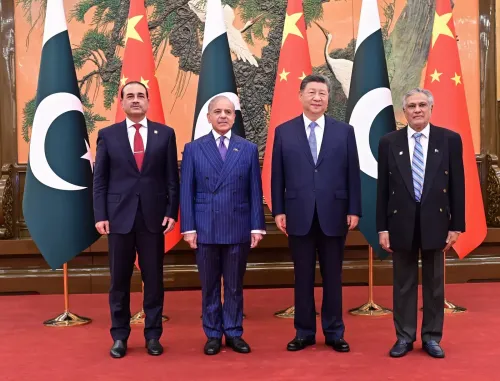
The territorial dispute over Aksai Chin — the portion of Ladakh under Chinese control — dates to the 1962 Sino-Indian War and the subsequent 1963 Sino-Pakistan boundary agreement, through which China received territory India considers its own. India has consistently refused to recognise the agreement as legitimate. The broader border standoff intensified following the Galwan Valley clash in June 2020, prompting a years-long diplomatic freeze that has only partially thawed since October 2024. This is the latest in a series of public rebuttals from the MEA pushing back against Chinese characterisations of the bilateral relationship.
With both sides cautiously reopening people-to-people and trade channels, the sovereignty dispute remains the central fault line that New Delhi insists must be addressed before ties can be fully normalised.
Frequently Asked Questions
What did India's MEA say about China's sovereignty claims?
The MEA rejected China's assertion that India 'respects China's sovereignty,' stating that it is China that has been in illegal occupation of Indian territories in Jammu and Kashmir and Ladakh since 1963. Spokesperson Randhir Jaiswal added that even China officially acknowledges India's rights in those territories.
What was the context for the MEA's rebuttal?
The rebuttal followed a Chinese Foreign Ministry statement issued after the Manila meeting between EAM S. Jaishankar and Chinese Foreign Minister Wang Yi, in which Beijing claimed India pursues a 'positive and cooperative bilateral relationship.' New Delhi publicly disputed that characterisation.
What did EAM Jaishankar say at his meeting with Wang Yi in Manila?
Jaishankar described border peace and tranquility as a 'pre-requisite' for normal India-China ties, noting that both sides have engaged on that objective since October 2024. He also welcomed recent normalisation steps including resumed direct flights, updated visa arrangements, the Kailash Manasarovar Yatra, and border trade.
Which territories does India say China illegally occupies?
India maintains that China has illegally occupied parts of Jammu and Kashmir and Ladakh since 1963, a position rooted in the 1962 Sino-Indian War and the subsequent Sino-Pakistan boundary agreement that India has never recognised. India also objects to Chinese infrastructure projects on what it considers its own territory in J&K.
What steps have India and China taken toward normalisation?
Since October 2024, both sides have resumed direct flights, updated visa arrangements, restarted the Kailash Manasarovar Yatra, and recommenced border trade. However, India has made clear that full normalisation requires resolution of the underlying sovereignty and border disputes.