India rejects OIC Contact Group's J&K statement, tells bloc to counsel Pakistan
Synopsis
India didn't just reject the OIC's latest Jammu and Kashmir communique — it flipped the script entirely. The MEA told the bloc it would be 'better advised' to counsel Pakistan on its 'well-documented' terrorism record than to offer it a platform for propaganda, in one of New Delhi's sharpest multilateral rebukes yet.
Key Takeaways
India's MEA on 23 September 2026 rejected the OIC Contact Group's Joint Communique on Jammu and Kashmir as 'unwarranted and factually incorrect.' The MEA asserted Jammu and Kashmir and Ladakh are 'integral and inalienable' parts of India, stating no propaganda can alter this reality.
India told the OIC it has no locus standi to comment on matters internal to India.
The MEA advised the OIC to counsel Pakistan — described as having a 'well-documented record of supporting and sponsoring terrorism' — to address terrorism from its own territories.
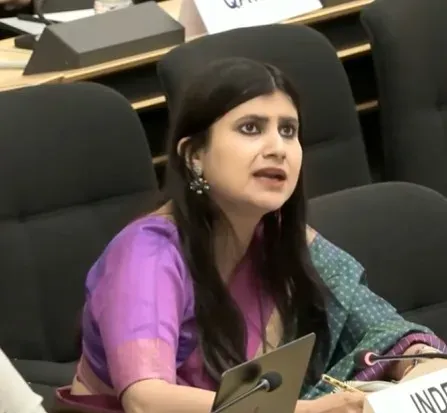
In June 2026 , First Secretary Anupama Singh made a similar rejection at the 62nd session of the Human Rights Council , accusing Pakistan of pursuing terrorism as state policy.
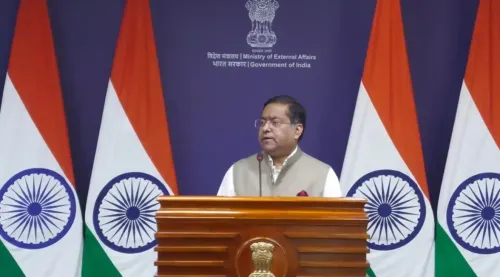
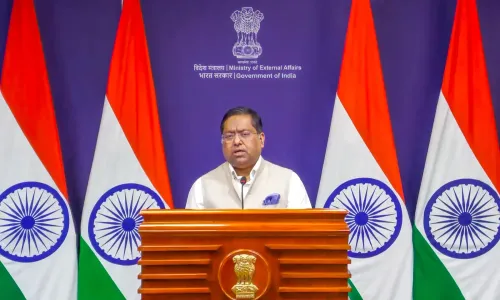
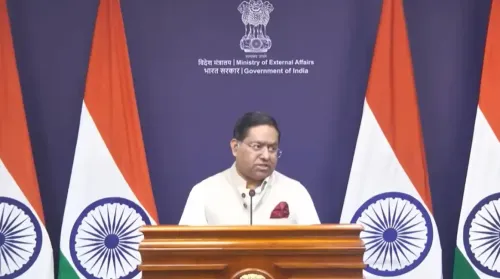
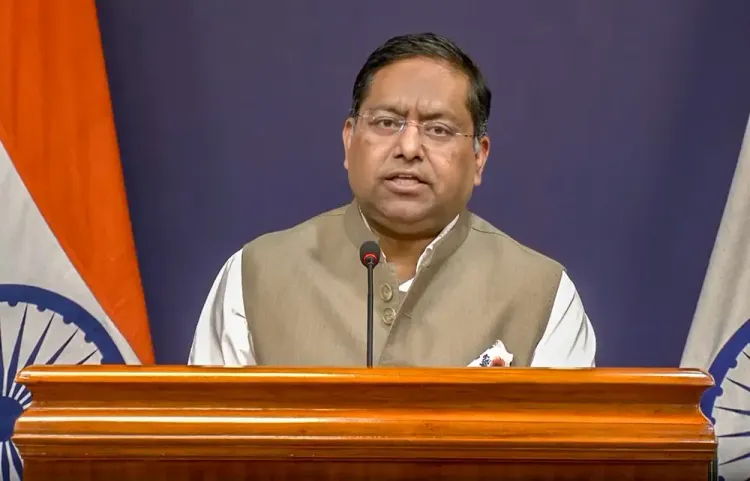
India on Wednesday, 23 September 2026, categorically rejected the references made to the country in the Joint Communique of the Organisation of Islamic Cooperation (OIC)'s so-called Contact Group on Jammu and Kashmir, calling them 'unwarranted and factually incorrect' and asserting that the grouping has no locus standi to pronounce on matters strictly internal to India.
India's Official Position
The Ministry of External Affairs (MEA) reaffirmed that the entire Union Territories of Jammu and Kashmir and Ladakh are an 'integral and inalienable' part of India. In a pointed statement, the MEA said: 'No amount of repetition of politically motivated propaganda can change this reality.'
The MEA further warned that the OIC's repeated endorsement of what it called 'motivated narratives' only raises serious questions about the bloc's own credibility. The rejection marks the latest in a sustained pattern of India pushing back against OIC pronouncements on Jammu and Kashmir.
India Turns the Spotlight on Pakistan
Going beyond a straightforward rebuttal, the MEA advised the OIC to redirect its attention toward Pakistan, which it described as having a 'well-documented record of supporting and sponsoring terrorism.'
The statement read: 'Instead of offering a platform to Pakistan to peddle its fabricated and motivated propaganda, OIC will be better advised to counsel Pakistan… to look inwards and address the continuing threat of terrorism emanating from territories under its control.' This framing — casting Pakistan as the party that requires scrutiny rather than India — reflects New Delhi's consistent diplomatic counter-strategy at multilateral forums.
Background: India's Rejection at the UN Human Rights Council
This is not the first time India has rejected OIC references to Jammu and Kashmir this year. In June, at the 62nd session of the Human Rights Council, Anupama Singh, First Secretary at India's Permanent Mission to the United Nations, exercised the right of reply against both Pakistan and the OIC.
Singh stated: 'Jammu and Kashmir was, is, and will always remain an integral and inalienable part of India. The only unresolved issue is Pakistan's illegal occupation of Indian territories and their return.'
She also accused Pakistan of pursuing terrorism as an instrument of state policy while simultaneously claiming victimhood. 'This is the country where the sitting Defence Minister boasts of hosting, training, and deploying terrorists as state policy, and yet Pakistan calls itself a victim of terrorism,' she said, describing it as a 'Frankenstein state which is shocked when its own monster bites back.'
What This Signals Diplomatically
India's latest rejection follows a well-established playbook: deny legitimacy to any external body's involvement in what New Delhi insists is a bilateral or purely internal matter, while simultaneously shifting focus to Pakistan's conduct on terrorism. Notably, India's language has grown sharper with each iteration — from 'baseless' in June to 'fabricated' and 'politically motivated' in the latest statement.
This comes amid broader India-Pakistan tensions and continued unrest in Pakistan-occupied Jammu and Kashmir (PoJK), which Singh attributed to 'decades of repression, military control, and the denial of fundamental rights.'
With India and Pakistan's diplomatic postures showing no signs of convergence, the OIC Contact Group's statements are likely to continue generating pointed rebuttals from New Delhi.
Point of View
And so far, India's sharper tone has not cost it any diplomatic capital worth noting.
NationPress
23 Sept 2026
Frequently Asked Questions
Why did India reject the OIC Contact Group's statement on Jammu and Kashmir?
India rejected the statement on 23 September 2026, calling its references 'unwarranted and factually incorrect' and asserting the OIC has no locus standi to comment on matters it considers strictly internal. The MEA reiterated that Jammu and Kashmir and Ladakh are integral and inalienable parts of India.
What did India's MEA say about Pakistan in its response to the OIC?
The MEA advised the OIC to counsel Pakistan, which it described as having a 'well-documented record of supporting and sponsoring terrorism', to look inward and address terrorism emanating from territories under its control, rather than providing Pakistan a platform for propaganda.
Has India rejected similar OIC statements before?
Yes. In June 2026, at the 62nd session of the UN Human Rights Council, India's First Secretary Anupama Singh rejected both Pakistan's allegations and OIC references to Jammu and Kashmir, calling Pakistan's propaganda an attempt to 'mask its domestic failures and support for terrorism.'
What is the OIC Contact Group on Jammu and Kashmir?
It is a grouping within the Organisation of Islamic Cooperation that periodically issues statements on the status of Jammu and Kashmir, typically reflecting Pakistan's position. India has consistently rejected its relevance, denying it any standing to comment on what New Delhi regards as a bilateral or internal matter.
What did India say about the situation in Pakistan-occupied Kashmir?
India's First Secretary Anupama Singh stated that unrest in Pakistan-occupied Jammu and Kashmir was the result of 'decades of repression, military control, and the denial of fundamental rights', arguing that an 'illegal and illegitimate occupation' could only be sustained through force.