India at UNHRC rejects Pakistan, OIC remarks on J&K, calls region integral part
Synopsis
At the UNHRC in Geneva, India did not just rebut Pakistan — it went on the offensive. Citing civilian killings in Rawalakot, accusing Pakistan's Defence Minister of boasting about state-sponsored terrorism, and declaring the 1960 Indus Waters Treaty outdated, New Delhi used a human rights forum to mount its most pointed multilateral challenge to Islamabad's Kashmir narrative in recent memory.
Key Takeaways
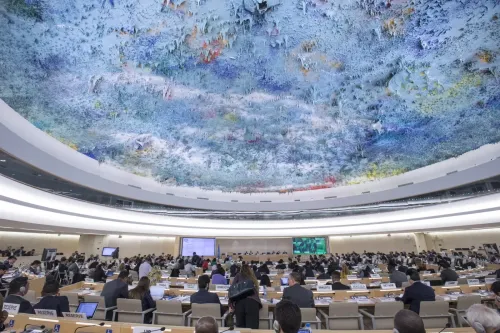
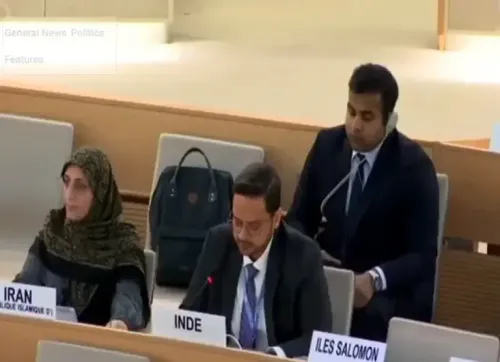
India rejected Pakistan and OIC remarks on Jammu and Kashmir at the UNHRC 62nd session in Geneva on 19 June .
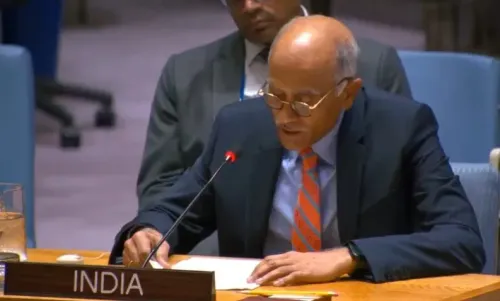
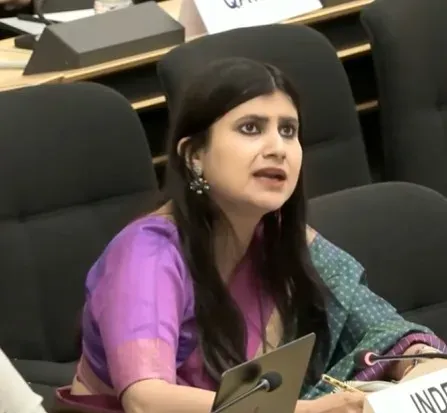
Anupama Singh , First Secretary at India's Permanent Mission to the UN, delivered the right of reply.
Singh cited the 'killing of hundreds of civilians' and a brutal crackdown in Pakistan-occupied Jammu and Kashmir (PoK) , including unrest in Rawalakot .
India accused Pakistan's sitting Defence Minister of publicly boasting about hosting and deploying terrorists as state policy.
India declared the Indus Waters Treaty of 1960 'outdated' and said a terror-exporting state cannot demand cooperation privileges.
India reiterated that J&K 'was, is, and will always remain an integral and inalienable part of India.'
India on 19 June firmly rejected what it termed 'baseless and malicious allegations' by Pakistan and dismissed references to Jammu and Kashmir made by the Organisation of Islamic Cooperation (OIC) at the 62nd session of the United Nations Human Rights Council (UNHRC) in Geneva, reiterating that the Union Territory remains an 'integral and inalienable' part of the country. The sharp rebuttal was delivered by Anupama Singh, First Secretary at India's Permanent Mission to the United Nations.
India's Right of Reply
Exercising India's right of reply, Anupama Singh categorically rejected both Pakistan's allegations and the OIC's references to J&K. 'We categorically reject the baseless and malicious allegations made by Pakistan. We also categorically reject the references to J&K made by the OIC. Pakistan's propaganda is designed to mask its domestic failures and support for terrorism. Its misuse of the OIC coordinator's role only reinforces deception,' she stated.
Singh further asserted that Jammu and Kashmir 'was, is, and will always remain an integral and inalienable part of India,' adding that the only unresolved territorial matter is Pakistan's illegal occupation of Indian territories and their return.
India Spotlights Unrest in Pakistan-Occupied J&K
Singh drew attention to what she described as the 'ongoing tragedy in Rawalakot' — citing the killing of hundreds of civilians and a brutal crackdown across Pakistan-occupied Jammu and Kashmir (PoK). She attributed the unrest to decades of military land grabs, demographic engineering, and the systematic denial of basic freedoms.
'Decades of military land grabs, demographic engineering, and the denial of basic freedoms have brought matters to a point where even demand for bread, electricity, rights, and dignity are met with bullets and brutality. An illegal and illegitimate occupation can be sustained only through force,' she said. This comes amid sustained civil unrest in PoK that has drawn international attention in recent months.
Pakistan Accused of State-Sponsored Terrorism
Singh also accused Pakistan of pursuing terrorism as an instrument of state policy while simultaneously projecting itself as a victim of terrorism. She cited Pakistan's sitting Defence Minister as having publicly boasted of 'hosting, training, and deploying terrorists as state policy.'
'This is the country where the sitting Defence Minister boasts of hosting, training, and deploying terrorists as state policy, and yet Pakistan calls itself a victim of terrorism. Indeed, a paradox which only Pakistan could sustain. It is a living example of a Frankenstein state which is shocked when its own monster bites back,' Singh said. Notably, the remarks represent one of India's most pointed public accusations against Pakistan at a multilateral human rights forum.
India Signals Shift on Indus Waters Treaty
In a significant signal, Singh addressed the Indus Waters Treaty of 1960, arguing that it has become outdated and cannot remain insulated from present-day realities. She said it 'defies logic' that a state exporting terror continues to demand the privileges of cooperation premised on goodwill.
'A treaty negotiated in 1960 cannot be treated as a perpetual entitlement, which is insulated from accountability, detached from present-day realities, and untouched by the profound changes of the past six decades,' she stressed. India had earlier put the treaty in abeyance following the Pahalgam terror attack, making this statement a reiteration of a hardened official position at an international platform.
India's remarks at Geneva signal that New Delhi intends to keep multilateral forums as a key arena for pushing back against Pakistan's narrative on Kashmir, while simultaneously internationalising the situation in PoK.
Point of View
New Delhi effectively turned a human rights forum into a counter-narrative platform. The signal on the Indus Waters Treaty is equally significant: framing a bilateral water compact as a 'perpetual entitlement' that Pakistan has forfeited through terror is a legal and diplomatic escalation, not just rhetoric. The question is whether India can sustain this multilateral pressure campaign with enough allied support to shift the UNHRC's habitually Pakistan-sympathetic bloc.
NationPress
24 Sept 2026
Frequently Asked Questions
What did India say at the UNHRC about Jammu and Kashmir?
India rejected all references to Jammu and Kashmir made by Pakistan and the OIC at the 62nd UNHRC session in Geneva on 19 June, reiterating that J&K 'was, is, and will always remain an integral and inalienable part of India.' First Secretary Anupama Singh delivered the right of reply, calling Pakistan's allegations 'baseless and malicious.'
What did India say about Pakistan-occupied Kashmir at the UNHRC?
India's representative cited the 'killing of hundreds of civilians' and a brutal crackdown in Pakistan-occupied Jammu and Kashmir, including ongoing unrest in Rawalakot. She attributed the situation to decades of military land grabs, demographic engineering, and denial of basic rights, arguing that an 'illegal and illegitimate occupation can be sustained only through force.'
Why did India raise the Indus Waters Treaty at the UNHRC?
India argued that a state which exports terrorism as state policy cannot simultaneously demand the cooperation privileges embedded in the 1960 Indus Waters Treaty. Singh declared the treaty 'outdated,' saying no technical arrangement can remain frozen while the world around it is transformed — a signal of India's hardened position on the compact.
What accusation did India make about Pakistan's Defence Minister?
India's representative stated that Pakistan's sitting Defence Minister had publicly boasted of 'hosting, training, and deploying terrorists as state policy,' while Pakistan simultaneously portrays itself as a victim of terrorism. India called this a paradox and described Pakistan as a 'Frankenstein state.'
What is the OIC's role in the J&K dispute at the UN?
The Organisation of Islamic Cooperation (OIC) has periodically raised the J&K issue at UN forums, often in coordination with Pakistan. India at the 62nd UNHRC session rejected OIC's references to J&K and accused Pakistan of misusing its role as OIC coordinator to spread what India called deception and propaganda.