India slams UN for ignoring Pakistan's repression in PoK, cites 34 killed
Synopsis
At the UN Security Council, India's envoy named 34 Kashmiris killed by Pakistani forces since June and accused Islamabad of a constitutional coup via the 27th Amendment — deploying an unusually evidence-heavy rebuttal to Pakistan's Kashmir narrative on a global stage.
Key Takeaways
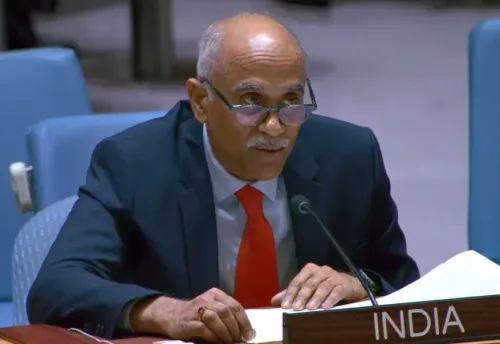
India's Permanent Representative P.
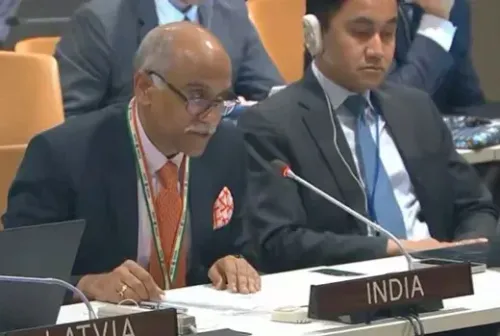
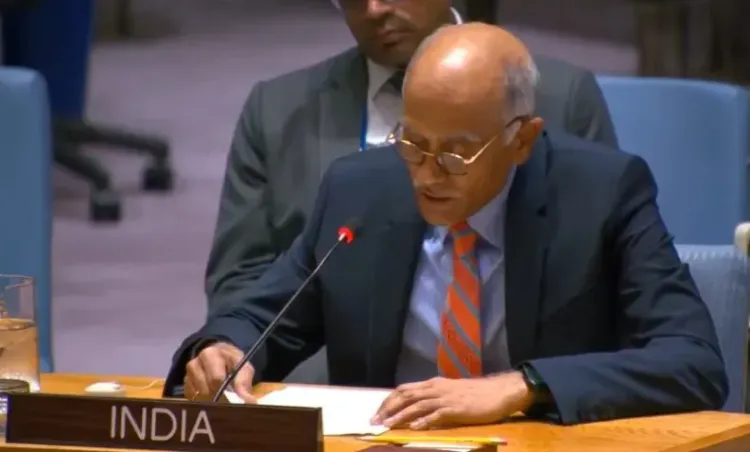
Harish spoke at the UN Security Council Open Debate on 24 July , countering Pakistan's Kashmir narrative.
At least 34 Kashmiris have been killed by Pakistani security forces in PoJK since June 2025 , according to India's account.
Six Kashmiris were killed in Tararkhal on 14 July in the most recent incident cited.
Harish alleged Pakistan's 27th Constitutional Amendment grants lifelong immunity to top military leaders and reinforces army power, calling it a 'constitutional coup.' Former PM Imran Khan remains imprisoned; his party PTI has been effectively barred from elections.
India reiterated that Jammu and Kashmir is an 'integral and inalienable' part of India and called Pakistan's presence there 'illegal occupation.'
India on Thursday, 24 July voiced sharp disappointment at the United Nations Security Council over what it described as the world body's selective silence on Pakistan's systematic repression in Pakistan Occupied Jammu and Kashmir (PoJK) and across Pakistan, even as the UN readily condemns comparable conduct by other nations. The remarks came during an Open Debate on 'Strengthening the Mechanisms for Peaceful Settlement of Disputes'.
What India Said at the Security Council
India's Permanent Representative P. Harish took direct aim at Islamabad after Pakistan raised the Kashmir issue during the debate. 'The world is witness to the continued suppression of basic rights, freedom of expression and association and stifling of fundamental freedoms of Kashmiris in Pakistan Occupied Kashmir,' Harish said.
He stressed that such conduct is not incidental. 'These are not isolated instances, but part of a larger design by the Pakistani establishment in Pakistan Occupied Kashmir for close to eight decades,' he added. Harish argued that while similar developments in other countries draw sharp censure from the UN, repression in Pakistan 'does not receive the attention it deserves.'
Casualties and Recent Incidents
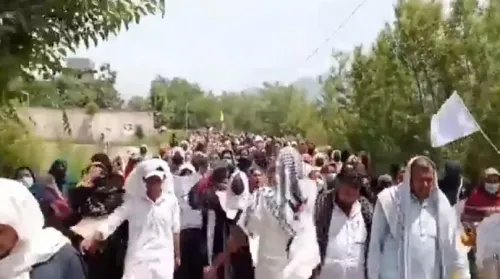
Harish placed specific figures on record. At least 34 Kashmiris have been killed by Pakistani security forces since June 2025, according to India's account. The most recent incident cited involved six Kashmiris killed by Pakistani forces in Tararkhal on 14 July. India contends these killings reflect a deliberate and ongoing crackdown on residents agitating for their rights in the region.
Pakistan's Internal Democratic Deficit
Beyond PoJK, Harish catalogued what he called a broader collapse of democratic norms inside Pakistan. He pointed to the imprisonment of political leaders — including a former prime minister — and the effective outlawing of a major opposition party as evidence of systemic repression.
Former Prime Minister Imran Khan remains in prison following convictions that he and his supporters describe as politically motivated charges engineered after the military establishment turned against him. His party, Pakistan Tehreek-e-Insaf (PTI), has been barred from electoral participation and faces the threat of a formal ban.
Harish further alleged that Pakistan's military — which he noted has governed the country directly or indirectly throughout its history — has effectively carried out a constitutional coup through the 27th Amendment to Pakistan's Constitution. The amendment reportedly reinforces the authority of the army chief and grants lifelong immunity from criminal prosecution to senior military leaders. Such 'actions have decimated any semblance of democracy,' Harish said.
India's Position on Kashmir
Responding to Pakistan's attempt to internationalise the Kashmir dispute at the Security Council, Harish reiterated India's firm stance. 'The Union Territory of Jammu and Kashmir has always been, is, and will remain an integral and inalienable part of India,' he said, adding that the only outstanding issue is Pakistan's 'naked aggression and illegal occupation of India's sovereign territory.'
He also called out what he described as Islamabad's use of 'fabricated narrative construction with religious imagery' to score domestic political points and mislead the broader UN membership, urging Pakistan to 'look inward and address the real issues in the country.'
Significance of the Timing
The intervention comes against the backdrop of sustained unrest in PoJK and mounting international attention on Pakistan's internal political crisis. Notably, this is not the first time India has used a UN platform to counter Pakistan's Kashmir narrative — but the specificity of casualty figures and constitutional allegations marks a sharper evidentiary approach. With the Security Council debate focused on peaceful dispute resolution, India's delegation used the occasion to reframe the Kashmir question as one of illegal occupation rather than a bilateral territorial dispute.
Point of View
Which limits the practical impact of even the most well-documented Indian intervention.
NationPress
22 Oct 2026
Frequently Asked Questions
What did India say at the UN Security Council on 24 July?
India's Permanent Representative P. Harish accused Pakistan of systematic repression in Pakistan Occupied Jammu and Kashmir and across Pakistan, citing at least 34 Kashmiris killed since June 2025. He also alleged that the UN applies a double standard by condemning similar conduct elsewhere while ignoring Pakistan's actions.
How many Kashmiris have been killed in PoJK recently?
According to India's statement at the Security Council, at least 34 Kashmiris have been killed by Pakistani security forces in Pakistan Occupied Jammu and Kashmir since June 2025. The most recent incident cited involved six people killed in Tararkhal on 14 July.
What is the Pakistan 27th Amendment that India criticised?
India alleges that Pakistan's 27th Constitutional Amendment reinforces the powers of the army chief and grants lifelong immunity from criminal prosecution to senior military leaders. Harish described it as a 'constitutional coup' that has 'decimated any semblance of democracy' in Pakistan.
Why was Imran Khan mentioned in India's UN statement?
India cited the imprisonment of former Prime Minister Imran Khan and the effective banning of his party PTI as examples of Pakistan's broader suppression of democratic rights and political freedoms, presented as part of a pattern of repression extending from Pakistan's interior to PoJK.
What is India's official position on Jammu and Kashmir?
India maintains that the Union Territory of Jammu and Kashmir is an integral and inalienable part of India. At the Security Council, Harish stated that the only outstanding issue is Pakistan's 'naked aggression and illegal occupation' of Indian sovereign territory.