India at UN Security Council warns Pakistan: end terror or face consequences
Synopsis
India used a UN Security Council debate on Charter principles to deliver its sharpest public warning to Pakistan in recent months — demanding an irrevocable end to terror sponsorship and rebutting Islamabad's Kashmir claims by pointing to Pakistan's own defiance of Resolution 47. The exchange lays bare how frozen the bilateral dynamic has become and how aggressively India is now pressing its case at multilateral forums.
Key Takeaways
India's Permanent Representative P Harish warned Pakistan at the UN Security Council on 27 May that sponsoring cross-border terrorism will carry consequences.
Harish demanded Pakistan 'credibly and irrevocably' end all forms of terrorism support.
India reaffirmed that Jammu and Kashmir's accession is complete, legal, and irrevocable .
Security Council Resolution 47 (21 April 1948) required Pakistan to withdraw its forces and nationals from Kashmir — a demand India says Pakistan has never fulfilled.
Pakistan exercised its right of reply with a prepared statement targeting 'Hindutva' ; India declined to respond.
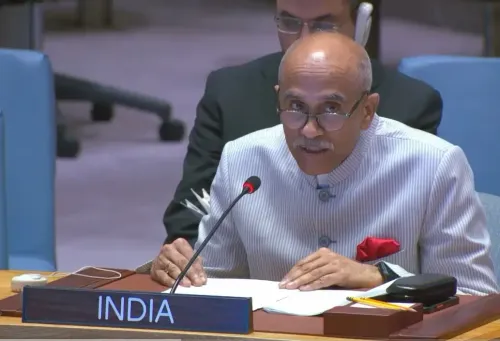
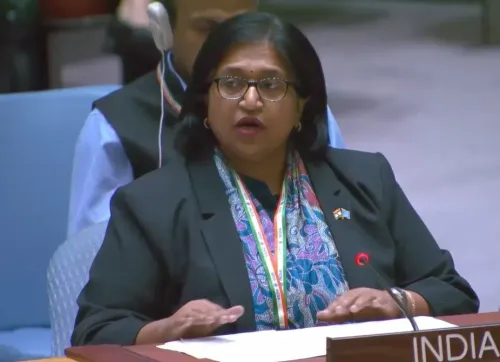
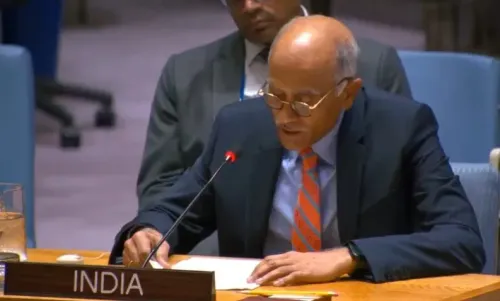
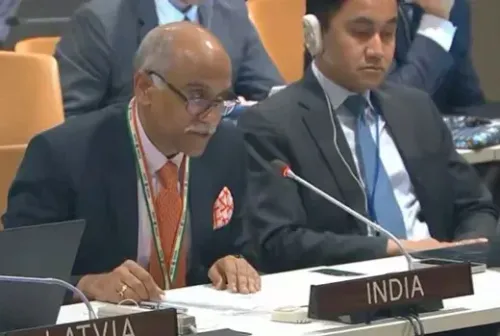
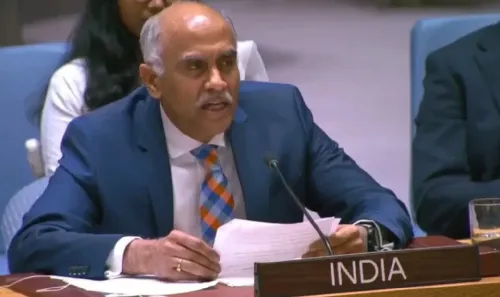
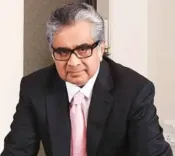
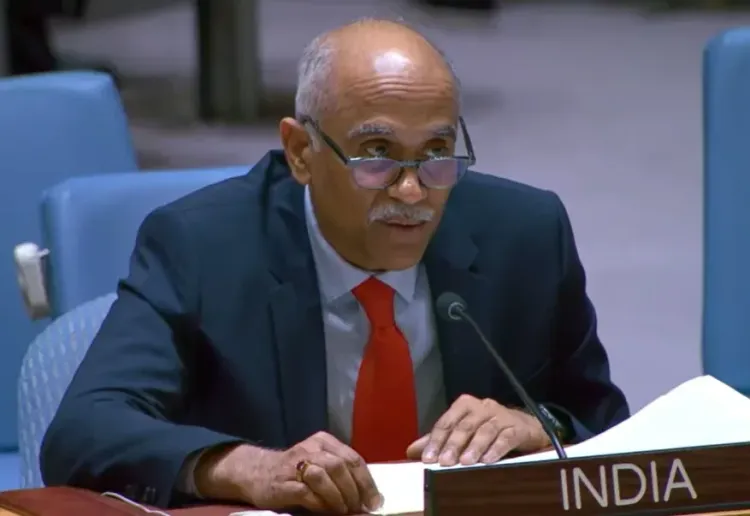
India's Permanent Representative P Harish on Tuesday, 27 May issued a pointed warning to Pakistan at the United Nations Security Council, demanding that Islamabad credibly end its support for cross-border terrorism or face repercussions. The statement came during a Council debate on 'Upholding the Purposes and Principles of the UN Charter and Strengthening the UN-Centred International System'.
India's Core Demands
Harish was unequivocal in his address. 'Pakistan must credibly and irrevocably end its support for all forms of terrorism,' he declared. He added that 'Pakistan will have to accept that there are consequences to its sponsorship of cross-border terrorism' and affirmed that 'India has every right to defend itself from such cross-border terrorism.'
Harish's remarks were a direct response to Pakistan's Permanent Representative Asim Iftikhar Ahmad, who had used the debate — nominally about UN Charter principles — to launch what India characterised as an off-topic attack on New Delhi. Harish dismissed Pakistan's invocation of the UN Charter as hollow, saying the 'use of cross-border terrorism by Pakistan and its doctrine of bleeding India by 1,000 cuts exposes its hollow rhetoric and the rhetoric of commitment to the UN Charter.'
Pakistan's Kashmir Claims and India's Rebuttal
Ahmad asserted that Security Council resolutions on Kashmir had failed to deliver self-determination to the Kashmiri people over nearly eight decades, implying Indian intransigence. India rejected this framing outright.
Harish pointed to Security Council Resolution 47, adopted on 21 April 1948, which required Pakistan to withdraw its 'tribesmen' — soldiers operating in disguise — and nationals from Kashmir and to cease aiding combatants there. According to India's position, Pakistan has complied with neither condition, effectively rendering any Council role in Kashmir moot by its own defiance.
Harish stated that Kashmir 'had become a part of India as a result of their complete, legal and irrevocable accession' and that Pakistan, by 'waging several wars and inflicting unprovoked aggression against India and through its continued sponsorship of cross-border terrorism, has violated the principles of sovereignty and territorial integrity and peaceful coexistence.'
Pakistan's Right of Reply — and India's Silence
As the Council session was nearing suspension, Pakistan exercised its right of reply with a prepared statement that included attacks on what it termed 'Hindutva.' India chose not to respond, declining to treat the statement as worthy of engagement. The move was widely read as a deliberate display of diplomatic restraint.
Broader Context
The exchange at the Security Council comes amid heightened tensions between the two nuclear-armed neighbours. India has consistently maintained that cross-border terrorism originating from Pakistani soil is a direct threat to its sovereignty, a position it has pressed at multilateral forums including the UN, the Financial Action Task Force (FATF), and the G20. Harish noted that 'Pakistan's harnessing of the malevolent forces of terrorism, religious extremism, violent radicalism, and anti-India rhetoric has continued unabated since its creation.'
The latest confrontation signals that India will continue to use international platforms to hold Pakistan accountable, even as bilateral diplomatic channels remain largely frozen. The international community's response to India's demands at the Council will be closely watched in the weeks ahead.
Point of View
Because it turns Pakistan's Kashmir narrative against itself: the Council's foundational demand was Pakistan's withdrawal, not India's. What mainstream coverage often misses is that this is not just bilateral posturing — it is India methodically constructing a legal and diplomatic case for its right to self-defence under Article 51 of the UN Charter. The unanswered question is whether India's multilateral pressure translates into any concrete international cost for Pakistan, or whether the Council's structural paralysis — given China's veto — renders these exchanges largely performative.
NationPress
12 Oct 2026
Frequently Asked Questions
What did India say at the UN Security Council on 27 May?
India's Permanent Representative P Harish warned Pakistan that it must credibly and irrevocably end all support for terrorism or face consequences. He also reaffirmed that Jammu and Kashmir's accession to India is complete, legal, and irrevocable.
Why did India raise the issue of cross-border terrorism at a UN Charter debate?
India was responding to Pakistan's Permanent Representative Asim Iftikhar Ahmad, who used the Charter debate to raise the Kashmir issue and criticise India. Harish argued that Pakistan's use of cross-border terrorism and its 'doctrine of bleeding India by 1,000 cuts' exposed its hollow commitment to UN Charter principles.
What is UN Security Council Resolution 47 and why does India cite it?
Resolution 47, adopted on 21 April 1948, required Pakistan to withdraw its 'tribesmen' — soldiers in disguise — and nationals from Kashmir and to stop aiding combatants there. India cites it to argue that Pakistan has never complied with the Council's foundational demand on Kashmir, undermining Islamabad's claim to UN support on the issue.
How did India respond to Pakistan's right of reply?
India chose not to respond to Pakistan's right-of-reply statement, which included attacks on 'Hindutva.' India's silence was a deliberate diplomatic signal, declining to treat the statement as worthy of serious engagement.
What is India's official position on Jammu and Kashmir at the UN?
India maintains that Jammu and Kashmir became an integral part of India through a complete, legal, and irrevocable accession. India rejects any UN or third-party role in the matter and holds that Pakistan's wars and cross-border terrorism violate principles of sovereignty and territorial integrity.