India slams Pakistan for politicising UN Security Council forum on Kashmir
Synopsis
India's UN envoy P Harish publicly called out Pakistan for abusing its co-chair role at a Security Council informal meeting to raise Kashmir — while noting that Pakistan itself has defied UN Resolution 47 of 1948, which demanded its withdrawal from occupied Kashmiri territory. The confrontation signals India's sharpening multilateral pushback as the UN80 reform process opens a window to challenge outdated mandates.
Key Takeaways
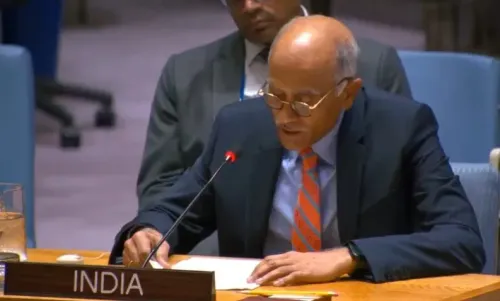
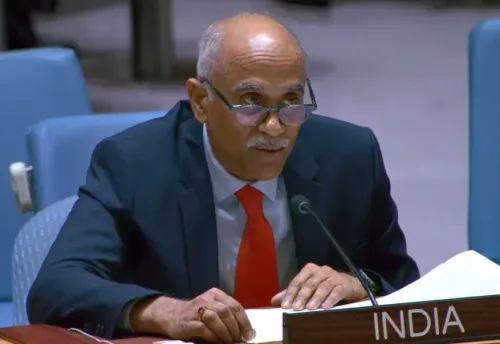
India's Permanent Representative P Harish rebuked Pakistan on 24 June at a UN Security Council Arria Formula meeting for politicising the forum as co-chair.
Pakistan's Permanent Representative Asim Iftikhar Ahmad raised the Kashmir issue at the meeting, co-convened by China and Pakistan .
India noted that Pakistan has defied UN Security Council Resolution 47 (April 1948) , which required its withdrawal from occupied Kashmiri territory.
Reportedly, 20 people in Pakistani-occupied Kashmir were killed this month by Islamabad's security forces amid local unrest.
Harish called for Security Council mandates to be brought within the UN80 reform review framework, challenging the 'perpetual applicability' of outdated Chapter VI interventions.
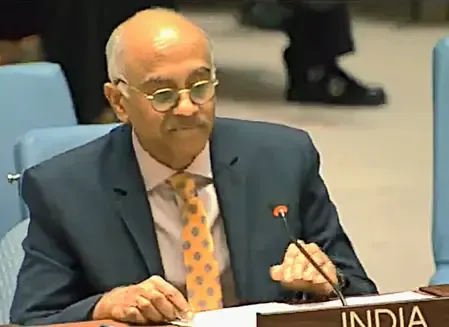
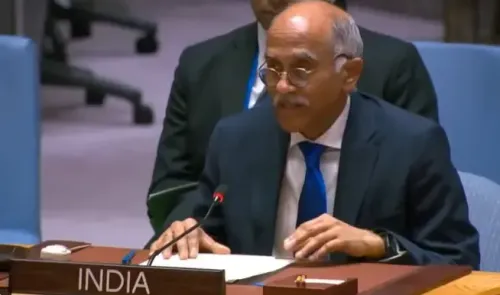
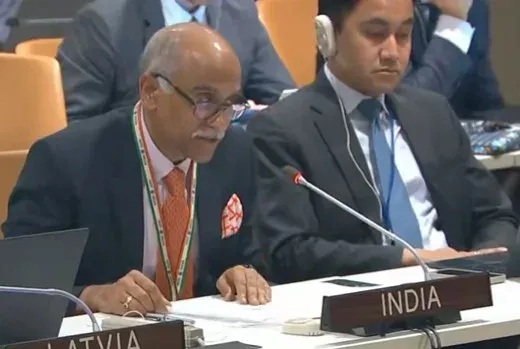
India's Permanent Representative P Harish on Tuesday, 24 June sharply rebuked Pakistan for exploiting its co-chair role at a United Nations Security Council informal meeting to raise the Kashmir issue, calling the conduct an abuse of a position that demands neutrality. The rebuke came at an Arria Formula meeting convened jointly by China and Pakistan, with their respective ambassadors presiding.
India's Position at the UN Forum
Harish was unequivocal in his response to Pakistan's Permanent Representative Asim Iftikhar Ahmad, who raised the Kashmir question as Islamabad routinely does at multilateral platforms. 'The Union Territory of Jammu and Kashmir is a matter strictly internal to India. It always has been, is, and will remain so,' Harish declared. He went further, stating: 'It is incredible that a co-Chair expected to be balanced and unbiased in conduct, has chosen to politicize this forum.'
Pakistan's Own Record on UN Resolutions
India pointedly turned the tables on Islamabad's invocation of UN mandates. Pakistan itself has defied UN Security Council Resolution 47 of April 1948, which demanded that Pakistan withdraw its armed forces, security personnel, and civilians from the areas of Kashmir it had entered. Decades later, those territories remain under Pakistani occupation in violation of that very resolution. According to reports, Kashmiri residents in Pakistani-occupied areas have risen in protest, and Islamabad's security forces have reportedly killed 20 people in the region this month alone in efforts to suppress the unrest.
What the Arria Formula Meeting Was About
The forum in question was titled 'Bridging the Implementation Gap: Security Council Resolutions and Maintenance of International Peace and Security.' Arria Formula meetings are informal gatherings of the Security Council, open to member states, officials, and civil society representatives. The format, named after Venezuelan diplomat Diego Arria, was designed to allow candid discussion outside the Council's formal procedural constraints. Critics argue the format can be — and on Tuesday allegedly was — used to advance bilateral agendas under the cover of a multilateral discussion.
India's Call for a Mandate Review
Harish used the occasion to press for a broader review of the Security Council's mandates, linking the push to the ongoing UN80 process — a reform exercise marking the world body's 80th year. 'India would like to emphasise that at a time when member states are undertaking mandate implementation review under the UN80 framework for all UN General Assembly mandates in order to achieve efficiencies, there is no reason why UN Security Council mandates should be outside the purview of such UN80 frameworks,' he said. He also advocated revisiting the UN Charter's Chapter VI provisions on mediation and negotiation, arguing that interventions framed decades ago 'do not have perpetual validity' and 'warrant a review in accordance with changing circumstances and contexts.'
The Palestine Parallel
Harish cited the unresolved Palestine conflict as evidence that perpetually recycled mediation frameworks can fail to produce outcomes. 'There exists an undeniable case for reviewing outdated mediation frameworks,' he said, adding that 'any assumption of the perpetual applicability of a Chapter VI mediation intervention is erroneous to say the least.' The reference was a broader argument for institutional reform, not a conflation of the two disputes, but it signalled India's intent to challenge the selective application of UN resolutions — a long-standing Pakistani diplomatic strategy. India's pushback is expected to continue as the UN80 reform process advances through the second half of 2025.
Point of View
But India's response on Tuesday was sharper than usual: it named the conduct, challenged the procedural legitimacy of the forum itself, and linked the episode to a broader push for UN mandate reform. The invocation of UN80 is strategically significant — India is attempting to use an institutional reform process to neutralise the very resolutions Pakistan cites. Whether that gambit gains traction among the P5 remains to be seen, but the framing is deliberate. Notably, India's counter-reference to Pakistan's own defiance of Resolution 47 of 1948 is the kind of factual inversion that tends to get lost in the diplomatic noise — it deserves more scrutiny than it typically receives in international coverage.
NationPress
22 Sept 2026
Frequently Asked Questions
Why did India slam Pakistan at the UN Security Council meeting on 24 June?
India's Permanent Representative P Harish accused Pakistan of misusing its co-chair position at an informal Security Council forum to raise the Kashmir issue, calling it an abuse of a role that demands neutrality. India maintains that Jammu and Kashmir is strictly an internal matter.
What is an Arria Formula meeting at the UN?
An Arria Formula meeting is an informal gathering of UN Security Council members, open to other nations, officials, and civil society. Named after Venezuelan diplomat Diego Arria, it bypasses the Council's formal procedures to allow freer discussion — but critics say it can be exploited to advance bilateral agendas.
What is UN Security Council Resolution 47, and why did India cite it?
Resolution 47, passed in April 1948, demanded that Pakistan withdraw its armed forces, security personnel, and civilians from the areas of Kashmir it had entered. India cited it to highlight that Pakistan — which routinely invokes UN resolutions on Kashmir — has itself defied a binding Council mandate for over seven decades.
What is the UN80 process that India's envoy referenced?
The UN80 process is an ongoing review of the United Nations' functioning in its 80th year, covering mandates across the General Assembly and related bodies. India's envoy argued that Security Council mandates should also fall within this review, potentially challenging resolutions it considers outdated.
What is the current situation in Pakistani-occupied Kashmir according to India?
According to India's statement at the UN, residents of Pakistani-occupied Kashmir have risen in revolt against Islamabad's administration, and Pakistani security forces have reportedly killed 20 people in the region in June 2025 alone while attempting to suppress the unrest.