India says 'entrenched interests' blocking UN Security Council reforms
Synopsis
India's UN envoy called out the 'Uniting for Consensus' bloc — led by Italy and including Pakistan — for using procedural tactics to freeze UNSC reform, while UN Secretary-General Guterres separately warned the Council's 1945 architecture is failing the world. With the UN turning 80, the gap between the Council's mandate and its capacity has never been more visible.
Key Takeaways
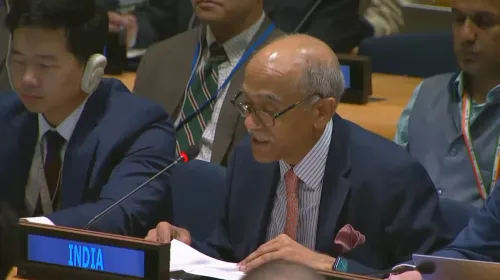
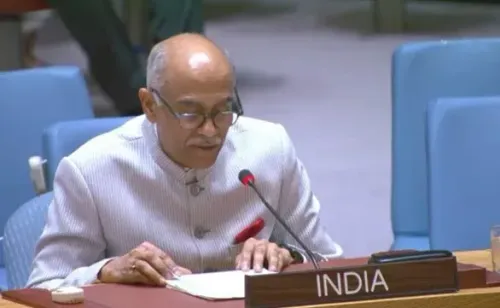
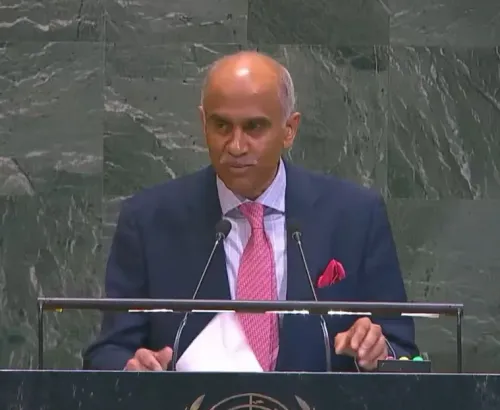
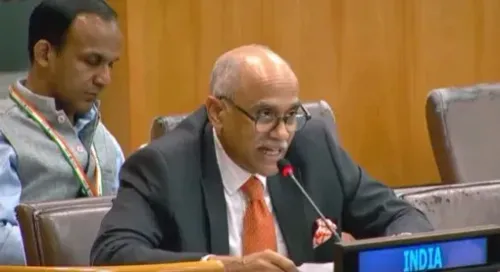
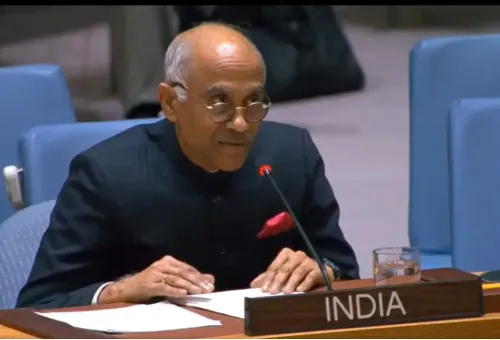
India's Permanent Representative P Harish told the UNSC on 27 May that 'entrenched interests' are blocking Council reforms.
The Uniting for Consensus (UfC) group — headed by Italy , including Pakistan — uses procedural tactics to stall Inter-Governmental Negotiations (IGN) .
India cited over 2.5 million Indian soldiers who fought in World War II and 87,000 who died, as the basis for its permanent membership claim.
UN Secretary-General António Guterres warned the Council 'cannot fully deliver' without reflecting today's geopolitical realities, flagging Africa's exclusion from permanent membership.
Harish compared the outdated UNSC structure to 'running advanced AI on the 1945 ENIAC computer.'
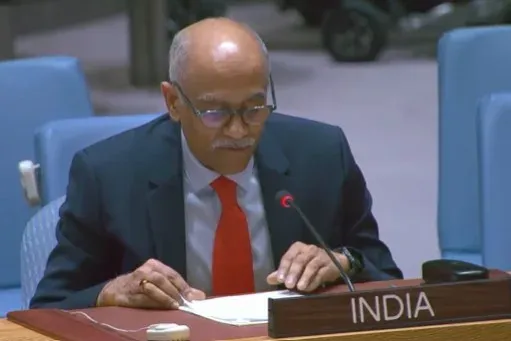
India's Permanent Representative P Harish on Tuesday, 27 May told the United Nations Security Council that 'entrenched interests' among member states are blocking long-overdue reforms to the UNSC, warning that failure to adapt would further erode the Council's credibility, authority, and legitimacy. The remarks came during a Council debate on 'Upholding the Purposes and Principles of the UN Charter and Strengthening the UN-Centred International System'.
The Reform Blockade
Harish identified a small bloc of UN members operating under the banner of Uniting for Consensus (UfC) — headed by Italy and including Pakistan — as the primary obstacle. The group, he said, uses procedural manoeuvres to prevent the Inter-Governmental Negotiations (IGN) on Council reforms from advancing.
'Lack of progress in the IGN on Council reforms is indicative of entrenched interests of several member states to maintain the status quo and retain the eight-decade-old UNSC architecture,' Harish said.
India's Case for Permanent Membership
Central to India's reform agenda is expanding the Council's permanent membership category. 'We must address and expand the permanent category of membership, which alone will change the decision-making process of this Council,' Harish stated.
He grounded India's claim in its wartime sacrifices, noting that over 2.5 million Indian soldiers fought alongside the Allied Powers in World War II and more than 87,000 made the supreme sacrifice — contributions comparable to those of the current five permanent members. 'This was not our war, but we paid dearly for it. Therefore, it was natural for us to become a founding member of the UN,' he said.
India's post-independence record was also cited, including foundational contributions to UN peacekeeping operations in Korea, Indochina, Congo, and Gaza.
Guterres Echoes the Credibility Warning
UN Secretary-General António Guterres reinforced India's concerns, stating that 'a Security Council that does not reflect the geopolitical realities of today's world cannot fully deliver on its responsibilities.' He specifically highlighted the injustice to Africa, the only continent with no permanent seat.
'Global institutions must reflect today's realities — not those of 1945. Nowhere is this more urgent than in this Council,' Guterres said, framing reform as a matter of restoring credibility rather than a procedural adjustment.
The ENIAC Analogy and the Urgency of Change
Harish deployed a striking technological analogy to underscore the absurdity of the status quo: 'It is akin to running advanced AI technologies on the 1945 version of the computer called the Electronic Numerical Integrator and Computer (ENIAC).' He argued that the UN, like all evolving systems, must be 'flexible and adaptable' to remain relevant.
Both Harish and Guterres noted the growing dysfunction caused by divisions among the P5 — the five permanent veto-wielding members — whose cross-purposes have repeatedly paralysed Council action. 'When the Security Council is divided, the consequences are felt far beyond this Chamber,' Guterres warned.
What Comes Next
The IGN process remains the only formal multilateral track for UNSC reform, but it has seen little substantive progress for years. With the UN marking its 80th anniversary this year, pressure for structural change is reportedly mounting. Whether that pressure translates into procedural breakthroughs — or is again deflected by the UfC bloc — remains to be seen.
Point of View
But the framing at this debate is sharper — and the Secretary-General's alignment with the reform camp is notable. The real obstacle is structural: the P5 have no incentive to dilute their veto privilege, and the UfC bloc provides them procedural cover. What India's argument still lacks is a coalition large enough to force a vote. Until the G4 nations — India, Brazil, Germany, Japan — convert rhetorical momentum into a binding resolution demand, the ENIAC analogy will remain accurate: the architecture stays frozen while the world moves on.
NationPress
10 Oct 2026
Frequently Asked Questions
Why is India pushing for UN Security Council reform?
India argues the UNSC's permanent membership structure, unchanged since 1945, no longer reflects today's geopolitical realities. India cites its wartime contributions — over 2.5 million soldiers and 87,000 dead in World War II — as well as decades of UN peacekeeping service, as grounds for a permanent seat.
What is the Uniting for Consensus (UfC) group?
The UfC is a bloc of UN member states, headed by Italy and including Pakistan, that opposes expanding the permanent membership of the Security Council. It uses procedural manoeuvres within the Inter-Governmental Negotiations process to prevent reform proposals from advancing.
What did UN Secretary-General Guterres say about UNSC reform?
Guterres stated that a Security Council not reflecting today's geopolitical realities 'cannot fully deliver on its responsibilities.' He specifically flagged Africa's exclusion from permanent membership and described reform as essential to restoring the Council's credibility.
What is the IGN process for UNSC reform?
The Inter-Governmental Negotiations (IGN) is the formal UN process through which member states discuss Security Council reform, including questions of membership expansion and veto rights. Critics, including India, say the process has made little substantive progress due to blocking tactics by the UfC bloc.
How does UNSC reform affect India's global standing?
A permanent UNSC seat would give India formal veto power in global security decisions, commensurate with its size, economic weight, and peacekeeping record. Without reform, India remains outside the Council's most powerful decision-making tier despite being the world's most populous country.