Why Did India Reject the Proposal for a Third Category of UNSC Membership?
Synopsis
In a decisive move, India has firmly rejected proposals for a third category of United Nations Security Council membership, deeming it a mere tactic to delay necessary reforms. This article delves into India's arguments, the implications of this rejection, and the ongoing struggle for reform among UN member states.
Key Takeaways
India firmly rejects the proposal for a third category of UNSC membership.
The suggestion is viewed as a tactic to postpone crucial reforms.
The G4 advocates for expanding permanent membership.
The L.69 group supports genuine reform efforts.
Legitimacy and representation in the UN remain critical issues.
United Nations, Feb 21 (NationPress) India has dismissed proposals for a third category of membership in the Security Council, which would feature extended terms and eligibility for re-election, labeling it a tactic to postpone essential reforms.
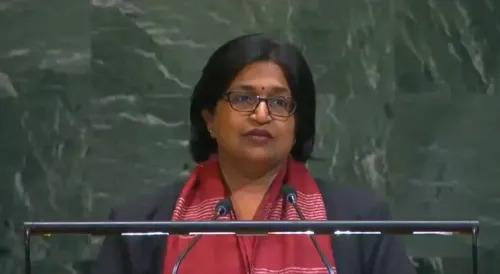
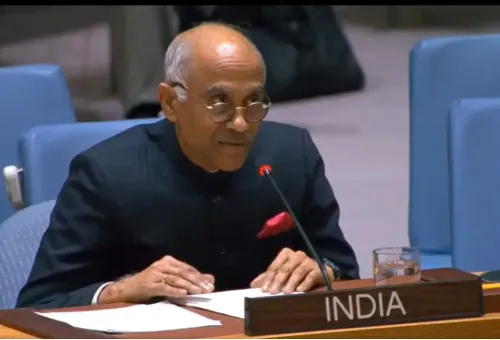
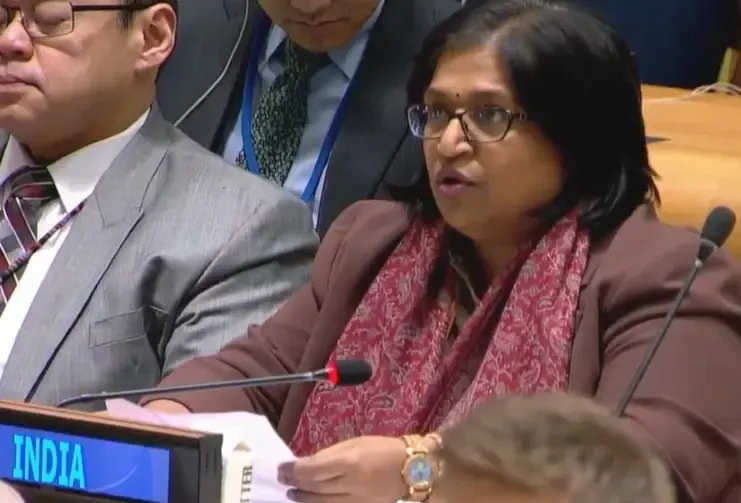
India’s Deputy Permanent Representative Yojna Patel stated on Friday that this suggestion would perpetuate the UN's legitimacy crisis for decades.
“The idea of a third category is a red herring designed to derail the reform process and potentially lead to a sub-optimal solution that could delay genuine reform by many years, thereby undermining the legitimacy, credibility, and relevance of the UN,” she remarked at a meeting of the Intergovernmental Negotiations (IGN) focused on membership categories.
The proposal for this third category, known as Fixed Regional Seats, primarily originates from a small coalition opposing the expansion of permanent membership, which refers to itself as the Uniting for Consensus (UfC) group, spearheaded by Italy and including Pakistan.
This group suggested the category as a replacement for permanent membership expansion, which they oppose.
The UfC has consistently obstructed progress in negotiations, utilizing procedural tactics to hinder the adoption of necessary texts for advancement.
In a pointed remark towards the group, Patel asserted, “Apart from a few member states with vested interests, the broader membership agrees that the time for reforming the Security Council was long overdue.”
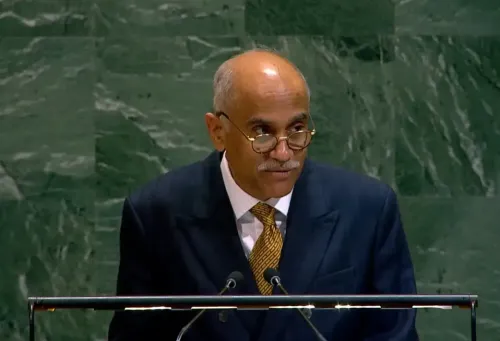
Japan’s Permanent Representative Yamazaki Kazuyuki, speaking on behalf of the Group of 4 which includes India, emphasized that “The proposed category of seats is fundamentally no different from the existing non-permanent seats.”
Since continuity of membership is not guaranteed for this proposed category, “it cannot replace permanent seats and fails to address the structural imbalances currently present within the Council,” he added.
The G4, which also consists of Germany and Brazil, advocates jointly for reform that includes an expansion of permanent membership, with its members supporting one another for permanent seats.
“The G4 reiterates that this proposal overlooks the majority of voices advocating for expansion in both permanent and non-permanent categories,” Yamazaki stated.
Another reform-oriented group, the L.69, which includes India, also opposed the third category proposal.
Saint Lucia’s Permanent Representative Menissa Rambally, representing the L.69 group, expressed concern over any intermediate or hybrid proposals that replace the expansion of the two categories.
Such proposals would not constitute true reform of the Council, she said, adding, “The Global South did not wait 80 years merely to accept hybrid formulas as a placeholder for real reform.”
The L.69 is a collective of 42 developing nations worldwide advocating for Council reform, deriving its name from a document that initiated the IGN process.
Patel rejected another proposal to grant veto rights to Fixed Regional Seat-holders.
“A veto cannot be assigned to a group without clarity on which nation will wield it and how,” she stated.
“This new idea appears intentionally aimed at complicating an already challenging discussion and indirectly reinforcing resistance to the expansion of the permanent category,” she added.
Patel emphasized that expanding both the permanent and non-permanent categories is central to achieving meaningful reforms, supported by the majority of UN members.
“Any reform that does not lead to the expansion of the permanent category would be incomplete, unjust, and dismissive of the aspirations of a significant number of member states, particularly various reform-centric groups,” she stated.
In response to criticisms that expanding permanent membership would complicate Council operations, Patel remarked, “The working methods and practices of the Security Council could be reassessed and restructured to meet the demands of a reformed Council, with a greater presence of more member states in both categories.”
The lack of representation or under-representation of the Asia-Pacific, Africa, and Latin America-Caribbean groups in the permanent category is crucial to any reform of the Council, she concluded.
Point of View
We must support India's position on the UN Security Council reforms. The rejection of the third category highlights the need for genuine progress towards a more equitable representation in global governance. India's stance resonates with many nations advocating for significant reform and reflects the aspirations of developing countries.
NationPress
30 Sept 2026
Frequently Asked Questions
What is the proposal for a third category of UNSC membership?
The proposal suggests a third category of UNSC membership with longer terms and eligibility for re-election, but India argues it is a delay tactic.
Who opposes the expansion of permanent membership?
The Uniting for Consensus (UfC) group, led by Italy and including Pakistan, is primarily opposed to expanding permanent membership.
What is the G4's stance on UNSC reform?
The G4, comprising India, Japan, Germany, and Brazil, advocates for the expansion of permanent membership to address structural imbalances in the Council.
What is the L.69 group?
The L.69 group is a coalition of 42 developing countries advocating for reform in the UNSC, opposing any proposals that substitute true expansion.
What are the implications of India's rejection of the proposal?
India's rejection signals a demand for serious reform in the UNSC and reflects the aspirations of many member states for equitable representation.