India rejects non-permanent-only UNSC expansion, calls it 'bordering on failure'
Synopsis
India's UN envoy P. Harish has delivered the country's bluntest verdict yet on UNSC reform: expanding only non-permanent seats is 'bordering on failure.' With the UfC bloc — including Pakistan — using procedural manoeuvres to block a negotiating text, India is now pressing IGN co-chairs to force the process forward with defined timelines. The deadlock exposes a fundamental split between nations seeking real power redistribution and those protecting the status quo.
Key Takeaways
India's Permanent Representative P.
Harish told the IGN on 16 June that limiting UNSC expansion to non-permanent seats would be 'grossly inadequate, bordering on failure.' He argued that reform without new permanent members would leave the P5 's decision-making monopoly — comprising Britain, China, France, Russia , and the US — entirely intact.
The Uniting for Consensus (UfC) group, led by Italy and including Pakistan , has blocked progress by insisting on consensus before any negotiating text is adopted.
India urged the IGN co-chairs to formulate a negotiating text with 'clearly-defined milestones and timelines.' India cited Article 23 of the UN Charter to argue that the definition of a permanent seat requires no further clarification, rejecting the IGN 'Elements Paper' framing.
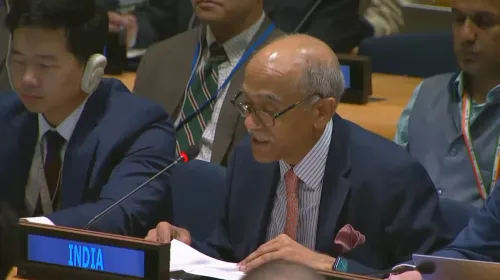
India has firmly rejected proposals to expand only the non-permanent category of the UN Security Council (UNSC), with its top diplomat at the United Nations warning on 16 June that such a reform would be 'bordering on failure.' The statement signals India's sharpest public pushback yet against a reform track that would leave the existing power structure of the five permanent members intact.
What India Said
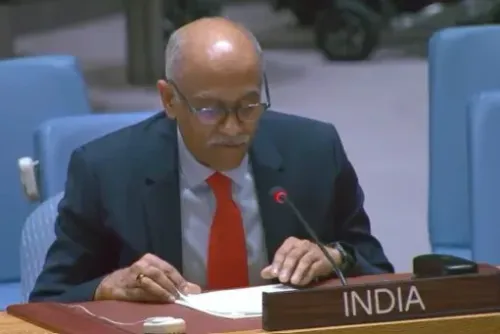
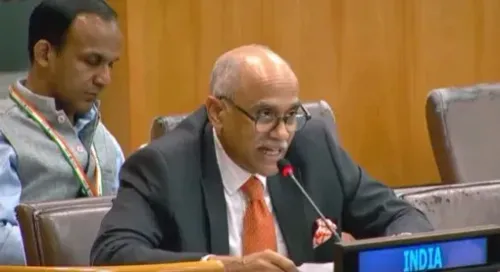
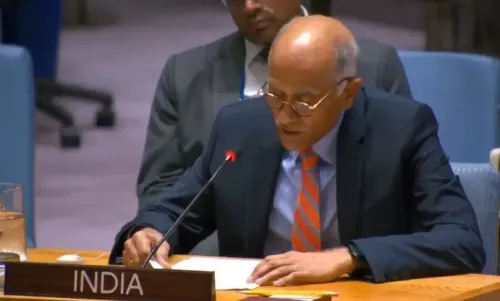
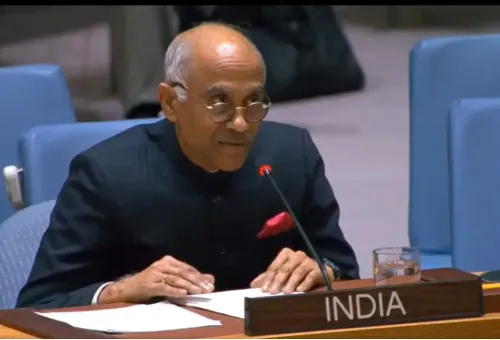
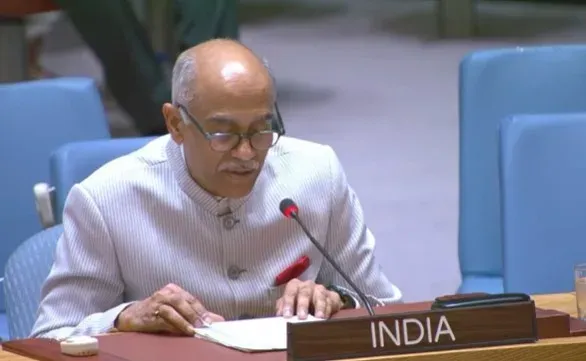
India's Permanent Representative P. Harish told a meeting of the Intergovernmental Negotiations (IGN) for Council reform that expanding membership without adding permanent seats 'would fundamentally not change the decision-making power-structure of the P5' — the five permanent members: Britain, China, France, Russia, and the United States.
'Groups and member states have waited this long for real and meaningful reform,' Harish said, adding that 'UNSC reform would be grossly inadequate, bordering on failure, if expansion is limited only to the non-permanent category.'
The Blocking Bloc
India's remarks were directed, without naming them, at the Uniting for Consensus (UfC) group — a 12-member bloc led by Italy that includes Pakistan. The UfC has consistently opposed the addition of new permanent members and has deployed procedural tactics to stall progress, chiefly by insisting that a consensus must be reached before any negotiating text can be adopted.
Harish called out this approach directly: 'A nothing is agreed until everything is agreed approach must not become a tool to block progress.' He described such actors as 'status-quoists' who seek to 'entrench the existing inequities in the Security Council.'
The Procedural Deadlock
At the heart of the standoff is the question of a negotiating text. India and reform-minded nations argue that negotiations must proceed on the basis of a draft document — consistent with standard UN practice. The UfC's insistence on prior consensus before any text is adopted effectively inverts this logic, making progress structurally impossible.
Harish pressed the IGN co-chairs to take the initiative: 'IGN cannot be fundamentally different from other UN processes, wherein negotiations are held on the basis of a text. Therefore, we urge the co-Chairs to take the lead on formulating a text, with clearly-defined milestones and timelines.'
India's Constitutional Argument
Harish also pushed back against the IGN's so-called 'Elements Paper,' which reportedly calls for 'further discussion and clarification on the concept of permanency.' India rejected the framing as unnecessary, pointing to Article 23 of the UN Charter, which it says unambiguously divides UNSC membership into two categories — permanent and non-permanent — leaving no room for reinterpretation.
'The definition of a permanent seat needs no further elaboration,' Harish said, arguing that reopening the definitional question is itself a dilatory tactic.
The Broader Stakes
India's push for a permanent UNSC seat is part of a decades-long diplomatic campaign backed by the G4 grouping — India, Brazil, Germany, and Japan. The Council's current structure, frozen since 1945, reflects a post-World War II world that reformers argue no longer represents global realities. Harish noted that while the UN General Assembly embodies democratic principles through sovereign equality, the Security Council 'is fundamentally different by its very design' — a gap that India argues must be corrected through genuine expansion of the permanent membership.
With the IGN process at an apparent impasse, the pressure is now on the co-chairs to determine whether a negotiating text can be advanced — a step India has made clear it considers non-negotiable for any credible reform outcome.
Point of View
Whose 'nothing is agreed until everything is agreed' doctrine has effectively paralysed the IGN for years. What mainstream coverage underplays is the constitutional sleight of hand embedded in the Elements Paper: by calling for 'further clarification on permanency,' it opens the door to hybrid or semi-permanent seats — a compromise that would give reform-seekers the optics of change without the substance. India's invocation of Article 23 is a pre-emptive move to close that door. The real question is whether the IGN co-chairs have the political will to produce a negotiating text against UfC resistance — and whether the G4's unified front holds long enough to force the issue.
NationPress
15 Sept 2026
Frequently Asked Questions
Why did India reject the proposal to expand only non-permanent UNSC seats?
India argued that adding only non-permanent members would leave the P5's veto-backed decision-making monopoly completely unchanged, making such reform 'grossly inadequate, bordering on failure.' India's position is that genuine reform requires expanding the permanent membership to reflect today's geopolitical realities.
What is the Uniting for Consensus group and why is it significant?
The Uniting for Consensus (UfC) is a 12-member bloc led by Italy that includes Pakistan. It opposes the creation of new permanent UNSC seats and has used procedural tactics — chiefly blocking the adoption of a negotiating text — to stall reform discussions at the IGN.
What did India's envoy P. Harish say about the negotiating process?
Harish urged the IGN co-chairs to draft a negotiating text with clearly defined milestones and timelines, arguing that the IGN cannot operate differently from other UN processes that negotiate on the basis of a text. He warned that the 'nothing is agreed until everything is agreed' approach was being misused to block progress.
What is the significance of Article 23 of the UN Charter in this debate?
Article 23 divides UNSC membership into two clear categories — permanent and non-permanent. India cited this provision to reject the IGN's Elements Paper, which called for further discussion on the concept of 'permanency,' arguing the Charter leaves no room for ambiguity or hybrid seat arrangements.
What is India's broader goal in UNSC reform?
India seeks a permanent seat on the UN Security Council as part of a long-standing campaign backed by the G4 grouping — India, Brazil, Germany, and Japan. It argues the Council's post-1945 structure no longer reflects global power realities and that expanding permanent membership is essential to restoring balance and equity.