CM Bhupendra Patel pledges Gujarat's full push on FTA opportunities

Synopsis
Gujarat CM Bhupendra Patel has committed his state to maximising gains from India's Free Trade Agreements following a Gandhinagar workshop praised by Union Minister Piyush Goyal, framing the effort as Gujarat's contribution to PM Modi's Viksit Bharat vision.
Key Takeaways
Gujarat CM Bhupendra Patel pledged on 22 October 2026 to help MSMEs, exporters and young entrepreneurs fully utilise India's FTAs.
A state-level workshop on leveraging FTAs was held in Gandhinagar and received appreciation from Union Minister Piyush Goyal .
India's key FTAs include the UAE CEPA (February 2022) and the Australia ECTA (April 2022) , covering tariff cuts relevant to Gujarat's industries.
The RoDTEP scheme (2021) complements these agreements by refunding embedded taxes on exports.
Gujarat's chemical, pharma, textile and engineering clusters make it one of India's top exporting states.
The effort is framed within the Viksit Bharat 2047 vision of export-led national development.
Gujarat is sharpening its export ambitions — and it is leaning hard on India's growing web of Free Trade Agreements to do it. Gujarat Chief Minister Bhupendra Patel on Thursday, 22 October 2026, publicly committed the state to helping its MSMEs, exporters and young entrepreneurs extract maximum value from the trade pacts that New Delhi has been building since 2014.
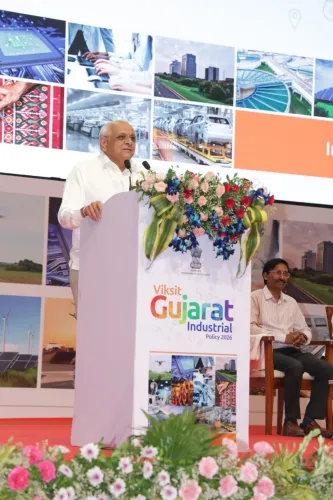
Expressing gratitude to Union Minister of Commerce and Industry Piyush Goyal for his remarks on the event, CM Patel described a state-level workshop held in Gandhinagar focused on 'leveraging Free Trade Agreements.' 'Team Gujarat is committed to ensuring that our MSMEs, exporters and young entrepreneurs make the fullest use of these opportunities,' he wrote, tying the effort explicitly to Prime Minister Narendra Modi's Viksit Bharat (Developed India) vision.
Why Gujarat at the centre of India's FTA push
Gujatat is not a passive player in this story — it is one of India's highest-volume exporting states. Its chemical, pharmaceutical, textile and engineering clusters feed global supply chains through major ports along its coastline. When New Delhi signs a trade agreement, Gujarat arguably has more to gain — and more to lose if businesses fail to use it — than almost any other state. That makes workshops of the kind held in Gandhinagar more than ceremonial. They are the last-mile link between a tariff schedule negotiated in a ministry and a small manufacturer in Surat or Rajkot who needs to know which product lines now attract zero duty in Dubai or Sydney.The FTA architecture CM Patel's team is working with
India's bilateral trade architecture has expanded significantly under the Modi government. The Comprehensive Economic Partnership Agreement (CEPA) with the UAE, signed in February 2022, and the Economic Cooperation and Trade Agreement (ECTA) with Australia, concluded in April 2022, are two headline pacts that cut tariffs on goods ranging from textiles to engineering products — precisely the categories where Gujarat exporters are competitive. The RoDTEP scheme, launched in 2021 to refund embedded taxes on exports, layered additional relief on top of these agreements. Together they form a toolkit — but only if exporters know how to use it. The Gandhinagar workshop sits squarely in that capacity-building gap.Gujarat's commitment to Viksit Bharat export targets
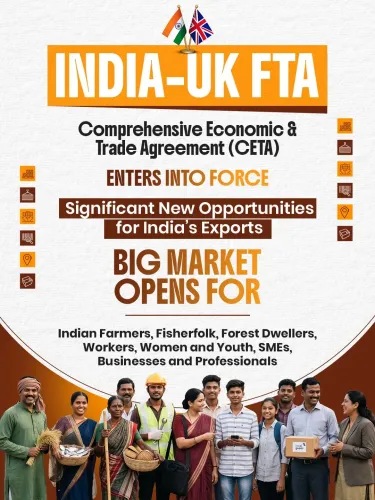
Patel's post frames the state's action within Modi's Viksit Bharat framework, which anchors India's development ambitions to 2047 and treats export-led growth as a central engine. The signal from Gandhinagar is that Gujarat intends to be among the first states to translate national FTA gains into verifiable local export growth — and that the political leadership, not just bureaucrats, is invested in making that happen. With India's FTA talks with the United Kingdom and European Union still in progress, more market-access windows are expected to open. Gujarat's early investment in grassroots FTA literacy could give its exporters a meaningful head-start when those deals land.Point of View
Aligning the exercise publicly with Piyush Goyal's praise and PM Modi's Viksit Bharat brand is also a calculated political move: it positions Gujarat as the model state for translating Centre-led trade diplomacy into ground-level economic outcomes. With UK and EU FTA negotiations still open, states that build MSME literacy now will hold a structural advantage when the next round of market-access windows arrives. The Gandhinagar workshop is a small event with a large strategic shadow.
NationPress
22 Oct 2026
Frequently Asked Questions
What was the FTA workshop in Gandhinagar about?
The state-level workshop in Gandhinagar focused on helping Gujarat's MSMEs, exporters and entrepreneurs understand and utilise India's Free Trade Agreements to access new global markets.
Which FTAs is India currently using to boost exports?
India's active FTAs include the Comprehensive Economic Partnership Agreement with the UAE signed in February 2022 and the Economic Cooperation and Trade Agreement with Australia signed in April 2022, both of which reduce tariffs on goods where Gujarat is competitive.
What is Viksit Bharat and how does it relate to exports?
Viksit Bharat is Prime Minister Narendra Modi's vision for India to become a developed nation by 2047, with export-led growth identified as a key driver of that transformation.
What is the RoDTEP scheme?
RoDTEP, launched in 2021, refunds embedded state and central taxes and levies on exported goods, providing additional cost relief to Indian exporters on top of FTA tariff benefits.
Why is Gujarat important for India's export strategy?
Gujarat ranks among India's top exporting states due to its chemical, pharmaceutical, textile and engineering industries and its access to major ports, making it central to any national export push.