India rejects 'unwarranted' J&K references in China-Pakistan joint statement
Synopsis
India fired a sharp diplomatic salvo after China and Pakistan's Beijing summit referenced Jammu and Kashmir in their joint statement. The MEA's point-blank rejection — covering J&K, CPEC, and a disputed 'trans-boundary water' reference — signals New Delhi's zero-tolerance posture on any third-party commentary on its territories, even as the China-Pakistan strategic axis visibly deepens.
Key Takeaways
India on 26 May categorically rejected 'unwarranted references' to Jammu and Kashmir in the China-Pakistan joint statement issued after Beijing talks.
MEA spokesperson Randhir Jaiswal stated no country has the 'locus standi' to comment on Indian Union Territories .
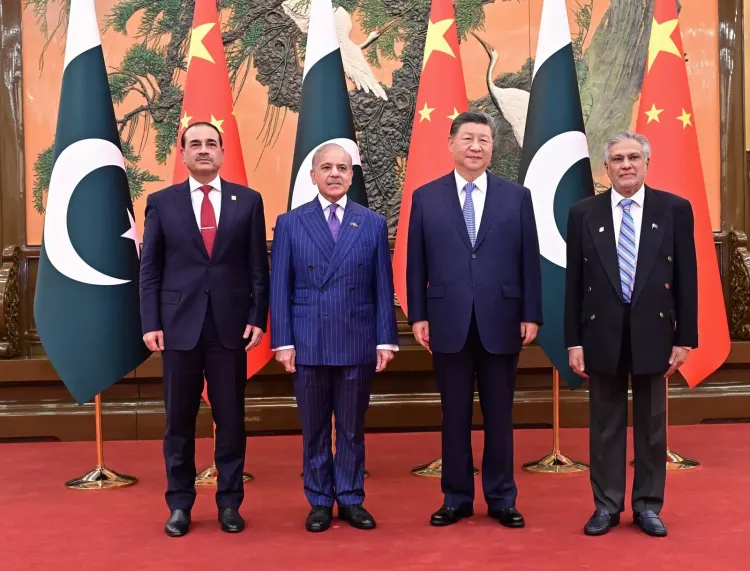
Pakistani PM Shehbaz Sharif met Chinese President Xi Jinping in Beijing on Monday; Army Chief Asim Munir also met Foreign Minister Wang Yi .
India reiterated opposition to CPEC , calling it a violation of sovereignty as it passes through territory India considers its own.
New Delhi rejected the joint statement's reference to 'trans-boundary water cooperation', saying China and Pakistan share no recognised boundary under Indian law.
India has never recognised the 1963 boundary agreement between China and Pakistan.
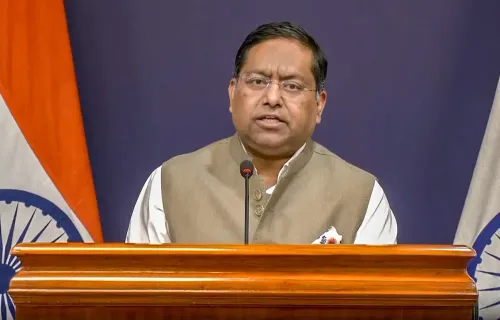
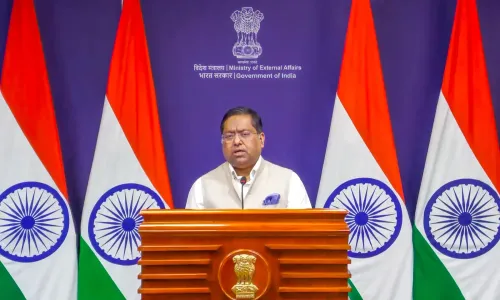
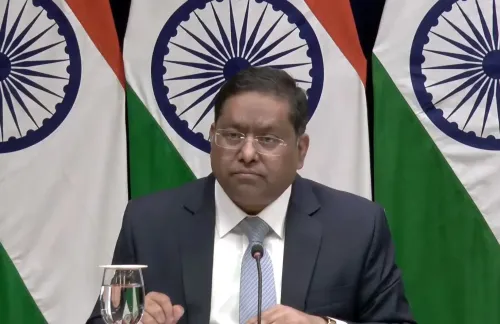
India on Tuesday, 26 May categorically rejected what it called 'unwarranted references' to the Union Territory of Jammu and Kashmir in the joint statement issued by China and Pakistan following a high-level meeting in Beijing, asserting that no third country holds the standing to comment on Indian territory. The sharp rebuke came through Ministry of External Affairs (MEA) spokesperson Randhir Jaiswal, responding to media queries on the matter.
India's Categorical Rejection
MEA spokesperson Randhir Jaiswal stated: 'India categorically rejects unwarranted references to the Union Territory of Jammu and Kashmir in the Joint Statement between China and Pakistan.' He further reiterated New Delhi's long-standing position: 'The Union Territories of Jammu and Kashmir and Ladakh have been, are and will always remain integral and inalienable parts of India. No other country has the locus standi to comment on the same.'
What Triggered the Response
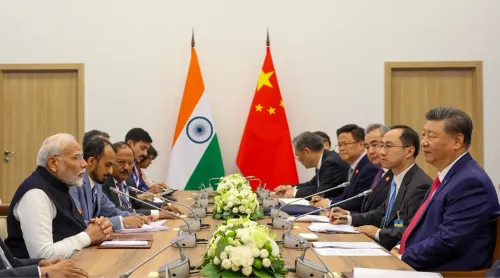
The joint statement followed a meeting in Beijing between Chinese President Xi Jinping and visiting Pakistani Prime Minister Shehbaz Sharif on Monday. During the talks, President Xi spoke of accelerating a closer China-Pakistan community with a 'shared future' in the new era. Separately, Pakistan Army Chief General Asim Munir met Chinese Foreign Minister Wang Yi and assured him that the Pakistani military would continue to 'fully promote' the building of the China-Pakistan Economic Corridor (CPEC) and the broader bilateral community framework.
India's Stand on CPEC
New Delhi has consistently maintained that CPEC — a flagship project under China's One Belt One Road (OBOR/BRI) initiative — directly violates India's sovereignty and territorial integrity, as portions of the corridor pass through territory India considers its own. Jaiswal reiterated on Tuesday: 'We resolutely oppose and reject any moves by other countries to reinforce or legitimise Pakistan's illegal and forcible occupation of these territories, impinging on India's sovereignty and territorial integrity. This has been clearly conveyed to Pakistani and Chinese authorities several times.'
India Disputes 'Trans-Boundary Water' Reference Too
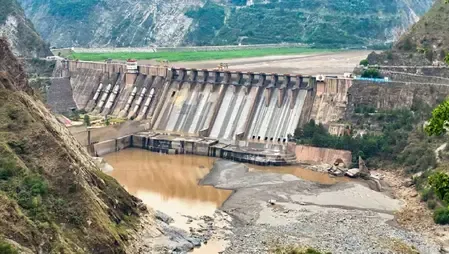
The MEA also pushed back on references to so-called 'trans-boundary water resources cooperation' between China and Pakistan, arguing the premise itself is flawed. 'As the two countries do not share any boundary, the question of so-called trans-boundary water resources cooperation does not arise,' Jaiswal said. He added that India has never recognised the 1963 boundary agreement between Pakistan and China, which New Delhi regards as illegitimate.
Context and Broader Implications
This is not the first time India has objected to joint China-Pakistan references on Jammu and Kashmir or CPEC — New Delhi has issued similar rejections repeatedly over the years. The latest statement comes at a particularly sensitive moment, with India-Pakistan tensions elevated following recent military confrontations and ongoing diplomatic strain. The Beijing meeting between Sharif and Xi signals continued deepening of the China-Pakistan strategic partnership, a dynamic that New Delhi watches closely. India's firm public rebuttal underscores that any internationalisation of the Kashmir issue — however indirect — will be met with an immediate and unequivocal response.
Point of View
CPEC, and trans-boundary water — is a calibrated signal, not a routine démarche. It comes as the China-Pakistan axis consolidates at a moment of peak India-Pakistan tension, and the Beijing summit's optics matter as much as its text. What mainstream coverage underplays is the 'trans-boundary water' objection: by rejecting even the framing of shared water cooperation, India is pre-empting a potential diplomatic lever that China and Pakistan could use on the Indus and its tributaries. The 1963 boundary agreement reference is equally pointed — New Delhi is reminding both capitals that the legal architecture underpinning CPEC is, in India's view, built on an illegitimate foundation.
NationPress
11 Oct 2026
Frequently Asked Questions
Why did India reject the China-Pakistan joint statement on Jammu and Kashmir?
India rejected the statement because it contained references to the Union Territory of Jammu and Kashmir, which New Delhi considers an integral and inalienable part of India. The MEA stated that no other country has the legal standing — or 'locus standi' — to comment on Indian territory.
What was the China-Pakistan meeting in Beijing about?
Pakistani Prime Minister Shehbaz Sharif visited Beijing and met Chinese President Xi Jinping, where the two sides discussed deepening bilateral ties, including the China-Pakistan Economic Corridor (CPEC) and a 'shared future' partnership. Pakistan's Army Chief Asim Munir also met Chinese Foreign Minister Wang Yi during the visit.
Why does India oppose CPEC?
India opposes CPEC because parts of the corridor pass through territory — specifically in Pakistan-administered Kashmir — that India regards as its own sovereign land. New Delhi views any international project in that territory as legitimising what it calls Pakistan's 'illegal and forcible occupation'.
What is India's objection to the 'trans-boundary water' reference?
India argues that since it does not recognise the 1963 boundary agreement between China and Pakistan, the two countries do not share a legally valid common boundary from India's perspective, making any 'trans-boundary water cooperation' between them a non-issue under international norms as far as India is concerned.
Has India raised these objections before?
Yes. India has repeatedly and consistently rejected joint China-Pakistan statements on Jammu and Kashmir and CPEC over the years. Tuesday's statement reiterates a long-standing position that has been formally conveyed to both Beijing and Islamabad on multiple occasions.