India rejects Pakistan President Zardari's remarks on religious site demolitions
Synopsis
India's MEA didn't just reject Pakistan President Zardari's remarks on religious site demolitions — it turned the tables, calling his comments 'particularly absurd' given Pakistan's own minority rights record. Backed by a simultaneous right-of-reply at the UN Human Rights Council, New Delhi sent a clear signal: Pakistan's attempts to internationalise India's domestic affairs will be met with coordinated, unsparing pushback.
Key Takeaways
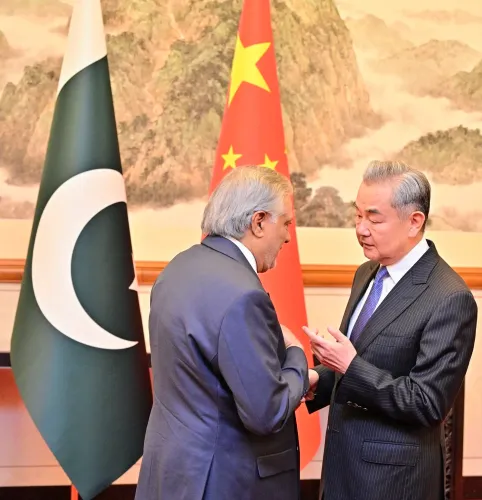
The MEA on 20 June rejected Pakistan President Asif Ali Zardari 's comments on the demolition of religious sites in India, saying he has 'no locus standi' on India's internal matters.
MEA spokesperson Randhir Jaiswal called the remarks 'unwarranted' and flagged Pakistan's own 'abysmal record on human rights.' India described the comments as 'a deliberate political attack, driven by Pakistan's national policies of bigotry and hatred.' At the 62nd session of the UN Human Rights Council , First Secretary Anupama Singh rejected both Pakistan's allegations and OIC references to Jammu and Kashmir .
Singh accused Pakistan's sitting Defence Minister of openly boasting about 'hosting, training, and deploying terrorists as state policy.' India reiterated that Jammu and Kashmir is an 'integral and inalienable' part of the country.
The Ministry of External Affairs (MEA) on Saturday, 20 June issued a sharp rebuttal to Pakistan President Asif Ali Zardari's comments on the demolition of religious sites in India, asserting that he holds no standing to weigh in on matters that are internal to the country.
India's Official Response
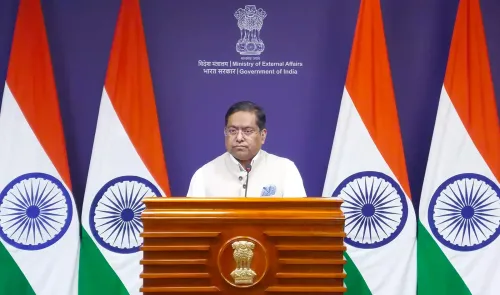
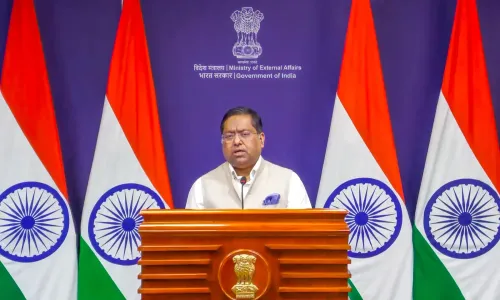
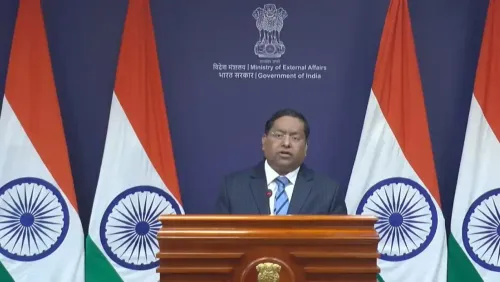
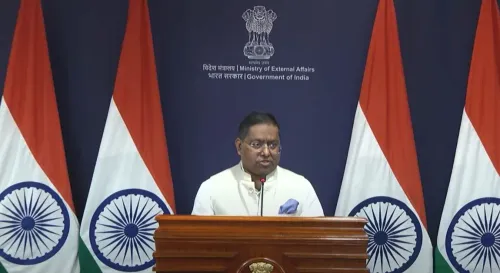
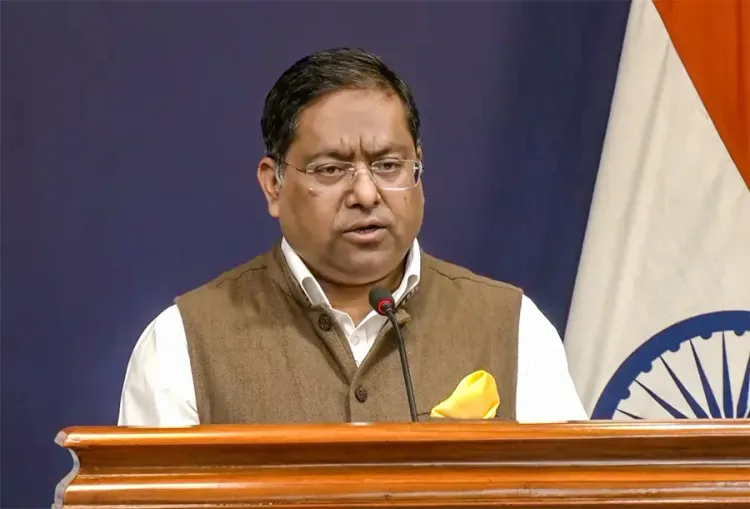
MEA spokesperson Randhir Jaiswal, responding to media queries, stated: 'India categorically rejects the unwarranted comments made by the President of Pakistan. He has, in any case, no locus standi to comment on matters that are internal to India.'
The MEA went further, calling Zardari's remarks 'particularly absurd given Pakistan's own abysmal record on human rights, which is a matter of global commentary.' It added that 'Pakistan's long history of systematically targeting and victimising minorities across various faiths is notorious.'
India Calls It a Deliberate Political Attack
New Delhi characterised the Pakistan President's intervention not as a humanitarian concern but as a calculated provocation. The MEA said the remarks 'can only be read as a deliberate political attack, driven by Pakistan's national policies of bigotry and hatred.'
This is not the first time India has had to rebuff Pakistani commentary on its domestic affairs. The pattern of such statements — often timed around multilateral forums — has drawn consistent, firm rejections from New Delhi.
India at the UN Human Rights Council
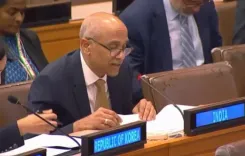
The MEA's response came a day after India pushed back at the 62nd session of the Human Rights Council. Anupama Singh, First Secretary at India's Permanent Mission to the United Nations, exercised India's right of reply against references made by both Pakistan and the Organisation of Islamic Cooperation (OIC).
'We categorically reject the baseless and malicious allegations made by Pakistan. We also categorically reject the references to Jammu and Kashmir made by the OIC. Pakistan's propaganda is designed to mask its domestic failures and support for terrorism. Its misuse of the OIC coordinator's role only reinforces deception. We have no desire to dignify such propaganda,' Singh said.
India Accuses Pakistan of State-Sponsored Terrorism
Singh levelled pointed accusations at Islamabad, alleging that Pakistan pursues terrorism as an instrument of state policy while simultaneously projecting itself as a victim. 'This is the country where the sitting Defence Minister boasts of hosting, training, and deploying terrorists as state policy, and yet Pakistan calls itself a victim of terrorism. Indeed, a paradox which only Pakistan could sustain. It is a living example of a Frankenstein state, which is shocked when its own monster bites back,' she said.
India also reiterated that Jammu and Kashmir remains an 'integral and inalienable' part of the country, firmly dismissing OIC's references to the Union Territory as unacceptable interference.
What Comes Next
India's dual-front rebuttal — at the MEA briefing and at the UN Human Rights Council — signals a coordinated diplomatic posture ahead of further international engagements. New Delhi is unlikely to soften its stance as long as Islamabad continues to raise India's internal matters on global platforms.
Point of View
Suggesting a coordinated diplomatic offensive rather than a spontaneous humanitarian concern. India's response, calibrated to deflect by pointing to Pakistan's own minority rights record, is tactically sound but does not address the underlying international optics challenge around religious site demolitions. What is notable is India's willingness to name Pakistan's Defence Minister explicitly at a UN forum — an escalation in rhetorical sharpness that reflects growing confidence in direct counter-messaging. The real test is whether this posture translates into durable diplomatic insulation or merely generates a cycle of claim and counter-claim that keeps the issue alive on global platforms.
NationPress
19 Sept 2026
Frequently Asked Questions
Why did India reject Pakistan President Zardari's comments on religious site demolitions?
India's MEA rejected the remarks on 20 June, asserting that Zardari has 'no locus standi' to comment on matters internal to India. The MEA also called his comments 'particularly absurd' given Pakistan's own record of targeting religious minorities.
What did MEA spokesperson Randhir Jaiswal say about Pakistan's remarks?
Jaiswal said India 'categorically rejects the unwarranted comments' by the Pakistan President, adding that the remarks amount to 'a deliberate political attack, driven by Pakistan's national policies of bigotry and hatred.'
What happened at the UN Human Rights Council session related to this?
At the 62nd session of the UN Human Rights Council, First Secretary Anupama Singh exercised India's right of reply, rejecting both Pakistan's allegations and OIC references to Jammu and Kashmir. She accused Pakistan of pursuing terrorism as state policy while projecting itself as a victim.
What is India's position on Jammu and Kashmir at international forums?
India consistently reiterates that Jammu and Kashmir is an 'integral and inalienable' part of the country and categorically rejects any references to it by Pakistan or the OIC at multilateral platforms.
What did India's UN representative say about Pakistan and terrorism?
First Secretary Anupama Singh stated that Pakistan's sitting Defence Minister openly boasts of 'hosting, training, and deploying terrorists as state policy,' calling it a paradox that Pakistan simultaneously claims to be a victim of terrorism. She described Pakistan as 'a living example of a Frankenstein state.'