India rejects Pakistan-China Boundary Joint Commission, calls J&K cooperation 'completely unacceptable'
Synopsis
India's MEA did not mince words on Wednesday: the newly 'operationalised' Pakistan-China Boundary Joint Commission is legally void, and any territorial arrangement between Islamabad and Beijing over Indian land is 'completely unacceptable.' The statement is the sharpest public rebuttal yet to a mechanism both neighbours are framing as a bilateral milestone.
Key Takeaways
India on 16 September 2026 rejected the Pakistan-China Boundary Joint Commission , calling it without any legal basis.
MEA spokesperson Randhir Jaiswal reaffirmed that the Union Territories of Jammu & Kashmir and Ladakh are 'integral and inalienable parts of India.' India has never recognised the 1963 China-Pakistan Boundary Agreement , consistently maintaining it is illegal and invalid.
Pakistan's Ministry of Foreign Affairs earlier described the commission's operationalisation as a 'significant milestone' in Pakistan-China relations.
India demanded that Pakistan 'immediately vacate' areas under its 'illegal and forcible occupation.' The Indian Embassy in the US had on 29 July already objected to The New York Times misrepresenting the legal status of Pakistan-occupied Jammu and Kashmir .
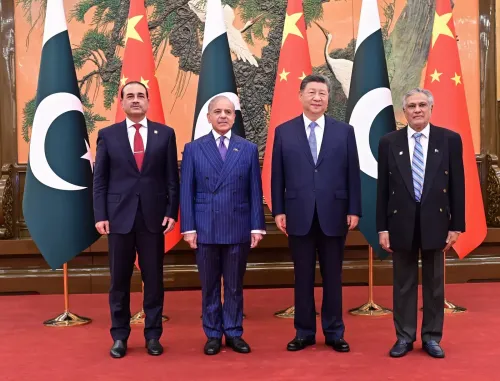
India on Wednesday, 16 September 2026 firmly rejected the so-called Pakistan-China Boundary Joint Commission, declaring that any boundary cooperation between China and Pakistan over Indian territories is 'completely unacceptable' and carries no legal standing. The Ministry of External Affairs (MEA) reiterated that the 1963 China-Pakistan Boundary Agreement has never been recognised by India and remains illegal and invalid.
India's Position in Full
MEA spokesperson Randhir Jaiswal, responding to media queries on the commission, was unequivocal: 'There is no boundary between Pakistan and China. We reject the so-called Joint Commission, which is without any legal basis.' He stressed that the Union Territories of Jammu & Kashmir and Ladakh 'have been, are and will always remain integral and inalienable parts of India.'
Jaiswal further stated that Pakistan has 'no locus standi to enter into arrangements concerning Indian territory under its illegal and forcible occupation,' demanding that Islamabad immediately vacate areas it occupies by force. 'Instead of engaging in such theatrics, we call on Pakistan to immediately vacate from areas under its illegal and forcible occupation,' he added.
What Pakistan and China Claimed
Earlier on Wednesday, Pakistan's Ministry of Foreign Affairs described the 'operationalisation' of the Pakistan-China Boundary Joint Commission as a 'significant milestone' in bilateral relations. Islamabad said the two sides had 'set the stage for enhanced cooperation in border management, joint border surveys, trade flows and people-to-people connectivity.' New Delhi's swift and categorical rebuttal made clear that India views these claims as having no bearing whatsoever on its sovereignty.
Context: A Consistent Indian Stand
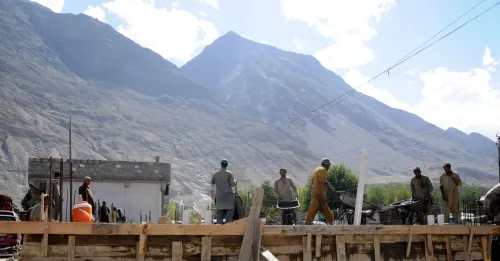
India's rejection is not new — New Delhi has consistently opposed the 1963 agreement since its signing, maintaining that Pakistan ceded territories belonging to India to China without any legal authority. The latest diplomatic flashpoint comes amid heightened sensitivity around the status of Pakistan-occupied Jammu and Kashmir (PoJK).
Last month, India had urged its international partners and stakeholders to use the 'correct nomenclature' — Pakistan-occupied Jammu and Kashmir — while reporting on the region. The MEA noted that 'these areas were part of India, are part of India, and will continue to be part of India.'
Indian Embassy's Earlier Objection to NYT
The episode follows a series of Indian diplomatic pushbacks on global misrepresentation of the region's status. On 29 July, the Indian Embassy in the United States formally objected to a headline used by The New York Times in a report about PoJK, calling it 'misleading and incorrect.' The embassy posted on X: 'There is no Pakistani Kashmir, only Pakistan-occupied Kashmir. The Union Territories of Jammu and Kashmir and Ladakh have been, are and will always remain an integral and inalienable part of India. Pakistan has illegally occupied parts of these territories and is now using violence against the occupied people.'
What This Means Going Forward
The latest exchange underscores the persistent three-way tension between India, Pakistan, and China over the region's legal status. Analysts note that Beijing and Islamabad's move to formalise a joint boundary mechanism could be read as an attempt to incrementally consolidate their respective claims — a reading New Delhi appears determined to pre-empt through sustained diplomatic messaging. India is expected to continue pressing its partners to reject any institutional framing that legitimises Pakistan's or China's hold over these territories.
Point of View
Urging partners on 'correct' terminology — is a recognition that legal standing is also won and lost in media framing. The harder question is whether diplomatic statements alone are sufficient, or whether India needs a more proactive multilateral strategy to challenge these institutional moves before they acquire momentum.
NationPress
16 Sept 2026
Frequently Asked Questions
What is the Pakistan-China Boundary Joint Commission that India rejected?
It is a joint mechanism between Pakistan and China described by Islamabad as aimed at enhanced cooperation in border management, joint surveys, trade flows, and people-to-people connectivity. India rejected it on 16 September 2026, saying it has no legal basis and that Pakistan has no authority to enter into any arrangements concerning territories India regards as its own.
Why does India consider the 1963 China-Pakistan Boundary Agreement illegal?
India's position is that the 1963 agreement involved Pakistan ceding territories in Jammu & Kashmir and Ladakh — which India regards as its own — to China, without any legal authority to do so. New Delhi has consistently refused to recognise the agreement since its signing, calling it illegal and invalid.
What exactly did MEA spokesperson Randhir Jaiswal say?
Jaiswal stated that 'there is no boundary between Pakistan and China' from India's perspective, rejected the Joint Commission as being 'without any legal basis,' and demanded that Pakistan 'immediately vacate from areas under its illegal and forcible occupation.' He also said any boundary cooperation between China and Pakistan concerning Indian territories would be 'completely unacceptable.'
Who is affected by this dispute?
The primary parties are India, Pakistan, and China, but the dispute has implications for regional stability and international law on territorial sovereignty. Citizens of the Union Territories of Jammu & Kashmir and Ladakh, as well as residents of Pakistan-occupied Jammu and Kashmir, are most directly affected by the unresolved status of these territories.
How does this relate to India's earlier pushback on media coverage of PoJK?
India has been running a coordinated diplomatic campaign to correct international misrepresentation of the region's status. On 29 July, the Indian Embassy in the US objected to The New York Times using terminology that implied Pakistani sovereignty, insisting on the phrase 'Pakistan-occupied Kashmir.' The rejection of the Joint Commission is part of the same broader effort to resist any framing that legitimises Pakistan's or China's claims.