Pilot flags maternal deaths in Rajasthan govt hospitals
Synopsis
Congress general secretary Sachin Pilot on 11 July 2026 flagged a pattern of maternal deaths from post-delivery infections across Rajasthan districts including Banswara, Bhilwara, Kota, and Bikaner, demanding a high-level independent inquiry and firm preventive action from the state government.
Key Takeaways
Sachin Pilot raised the alarm on 11 July 2026 over recurring maternal deaths in Rajasthan government hospitals.
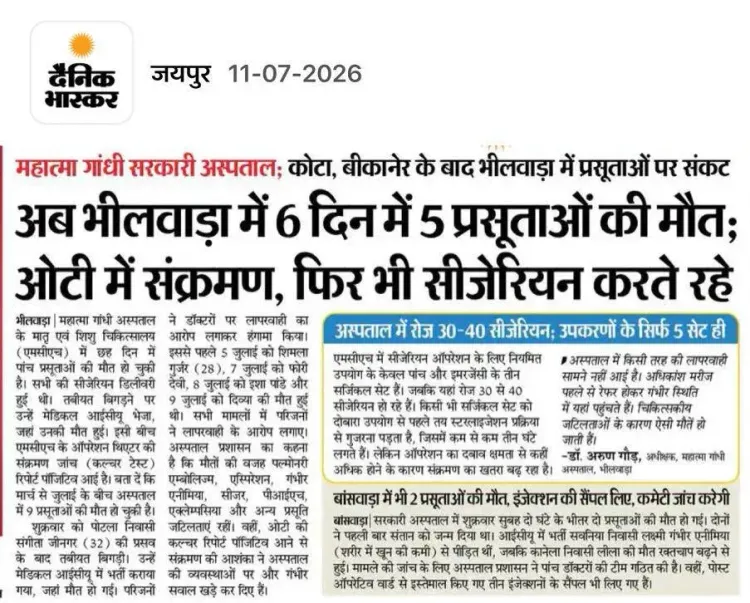
Recent cases of post-delivery infections and deaths have been reported from Banswara and Bhilwara districts.
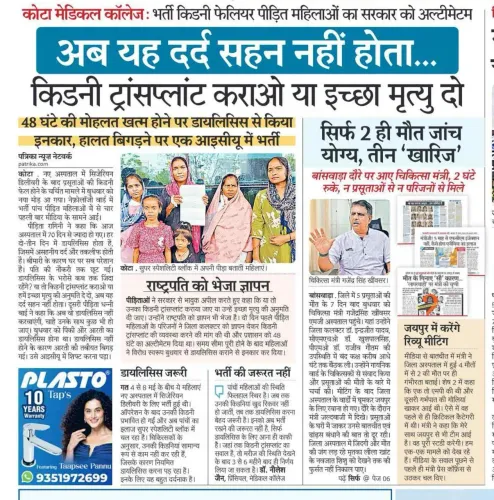
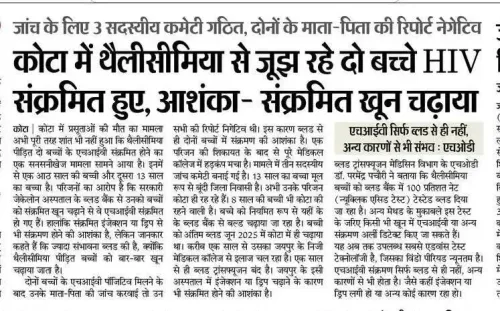
Earlier incidents of post-partum complications and deaths were also reported from Kota and Bikaner .
Pilot described the pattern as a state-wide failure of health infrastructure, management, and quality of care — not an isolated district-level problem.
He demanded a high-level, impartial inquiry covering all reported cases and accountability for those responsible.
He called for concrete, effective preventive steps to stop recurrence, describing this as 'the most critical need.'
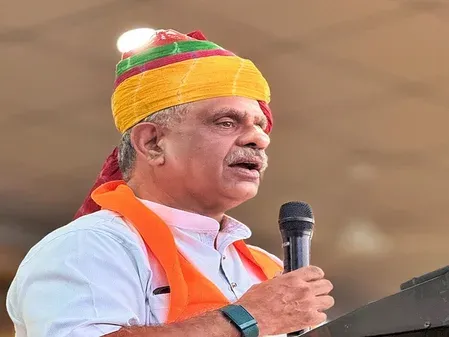
Congress leader and party general secretary Sachin Pilot on Saturday, 11 July 2026 raised serious concerns over recurring maternal deaths in government hospitals across Rajasthan, calling for a high-level independent inquiry and accountability for those responsible.
Context
In his post, Pilot flagged deaths and severe post-delivery infections reported from Banswara and Bhilwara districts, noting that similar cases had earlier surfaced in Kota and Bikaner. He wrote, 'Prasutaon ki lagatar ho rahi mauton ke mamle kisi ek zile tak seemit nahin hain' — meaning, 'The recurring deaths of mothers are not confined to a single district.' The observation points to what he described as a state-wide systemic failure rather than isolated local incidents.
Pilot argued that these cases collectively expose 'crumbling health infrastructure, management failures, and serious deficiencies' in the state's public hospital network. He stressed that the absence of effective corrective steps after each incident is itself a pattern that demands urgent attention.
Policy Backdrop
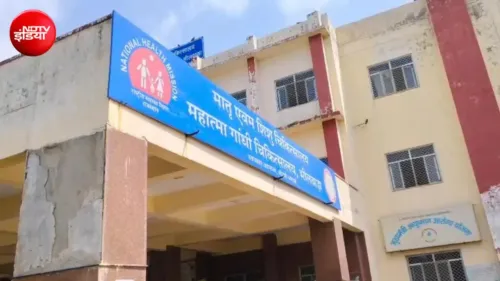
Maternal health in public facilities has been a long-standing concern in Rajasthan, a state with a significant rural population dependent on government hospitals for childbirth. The National Rural Health Mission (NRHM), launched in 2005, was designed specifically to strengthen obstetric care and reduce preventable maternal deaths in states such as Rajasthan by improving infrastructure, staffing, and infection control at district-level facilities.
Despite successive national and state-level programmes, infection control in post-partum care and emergency obstetric readiness at district hospitals have remained weak links. Opposition parties have periodically cited clusters of maternal deaths to question whether scheme funding translates into quality care on the ground.
Stakeholders and Impact
The most immediate stakeholders are pregnant women and new mothers who depend on government hospitals — particularly in semi-urban and rural districts such as Banswara, Bhilwara, Kota, and Bikaner — where private healthcare is either unavailable or unaffordable. Families of deceased mothers, frontline health workers, and district hospital administrations are also directly implicated in any accountability process.
Pilot's demand for a 'high-level, impartial inquiry report' and action against those responsible puts the Rajasthan government's health department under political and public scrutiny. If the state government does not respond with visible steps, the issue is likely to be raised in the state assembly and in public forums by the Congress opposition.
What's Next
Pilot specifically called for two outcomes: first, a comprehensive independent inquiry covering all the reported cases across districts; and second, concrete preventive measures to ensure such deaths are not repeated. The Rajasthan health department's response — whether through hospital audits, infection-control reviews, or administrative action — will be closely watched.
With maternal mortality figures forming a key indicator under national health missions, sustained political pressure of this kind can compel state governments to commission formal reviews. Whether the current government in Rajasthan acts on these demands or dismisses them as opposition politics will be a test of its stated commitment to public health accountability.
Point of View
He shifts the narrative from local negligence to a state-wide policy failure, making it harder for the ruling government to dismiss individual incidents as administrative lapses. The demand for a 'high-level independent inquiry' is also politically calculated: if refused, it becomes evidence of cover-up; if granted, the findings carry political risk for the government. This pattern of using maternal mortality data as a governance accountability tool has precedent across Indian states and tends to gain traction when cases are geographically spread and temporally clustered.
NationPress
9 Oct 2026
Frequently Asked Questions
What did Sachin Pilot say about Rajasthan maternal deaths?
Sachin Pilot said that recurring maternal deaths from post-delivery infections in Rajasthan government hospitals — reported across Banswara, Bhilwara, Kota, and Bikaner — expose a state-wide collapse of public health infrastructure and demanded a high-level independent inquiry with accountability for those responsible.
Which districts in Rajasthan have reported maternal deaths in government hospitals?
Banswara and Bhilwara are the most recently cited districts, while Kota and Bikaner had earlier reported cases of post-partum complications, serious infections, and deaths in government hospitals.
What action has Sachin Pilot demanded from the Rajasthan government?
Pilot has demanded a high-level, impartial inquiry report covering all the reported maternal death cases, action against those found responsible, and effective preventive measures to stop such deaths from recurring.
What is the National Rural Health Mission and how does it relate to maternal deaths in Rajasthan?
The National Rural Health Mission, launched in 2005, was designed to strengthen maternal and child health services in states like Rajasthan by improving district hospital infrastructure and infection control. Recurring maternal deaths in government facilities raise questions about how effectively the mission's goals have been implemented at the ground level.
Is the maternal death problem in Rajasthan limited to one district?
No. Sachin Pilot specifically noted that the cases are not confined to a single district, with incidents reported across at least four districts — Banswara, Bhilwara, Kota, and Bikaner — indicating a broader systemic issue in the state's public health network.