Giriraj Singh Hails PM Modi's New Zealand Visit, FTA Push
Synopsis
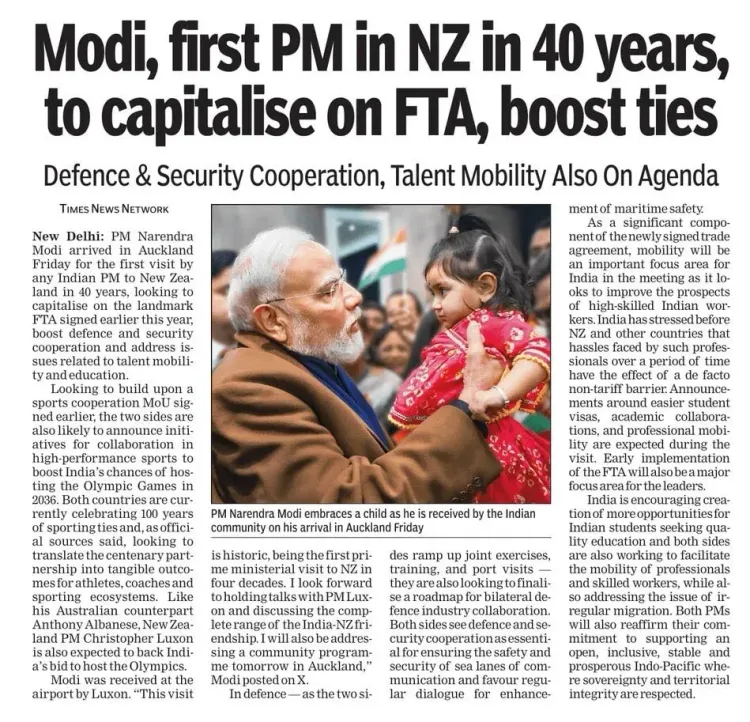
Union Textiles Minister Giriraj Singh has welcomed PM Narendra Modi's visit to New Zealand — the first in 40 years — highlighting FTA-driven trade momentum, defence and education ties, and expanded opportunities for Indian exporters, students and skilled professionals under the Viksit Bharat 2047 vision.
Key Takeaways
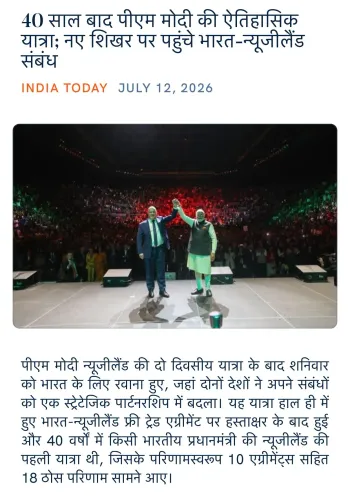
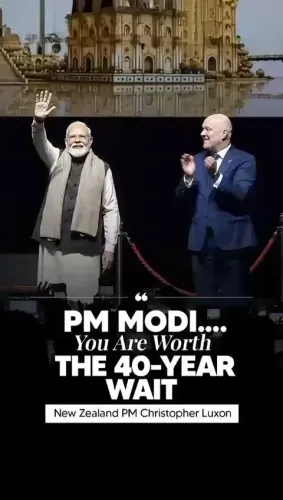
PM Narendra Modi 's visit to New Zealand is the first by an Indian Prime Minister in 40 years .
Union Textiles Minister Giriraj Singh welcomed the visit on July 11, 2026 , calling it a new chapter in bilateral ties.
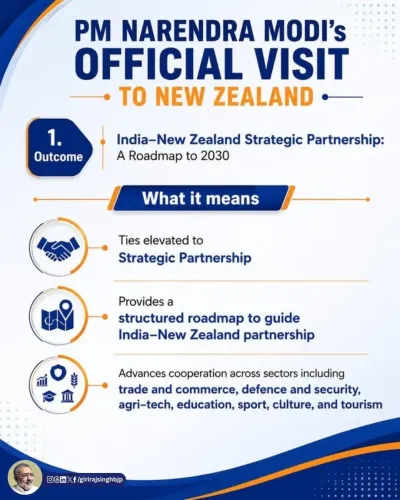
Discussions are underway on advancing a Free Trade Agreement (FTA) to boost trade and investment between the two countries.
Key areas of engagement include defence, education and mobility for skilled Indian professionals .
Indian exporters, students and industries are identified as primary beneficiaries of the bilateral push.
The visit is being framed within the government's #ViksitBharat2047 long-term development vision.
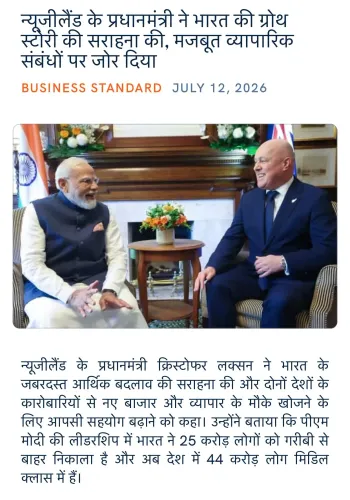
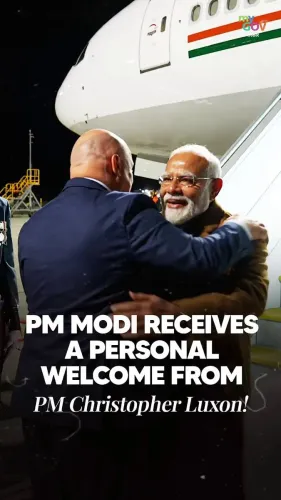
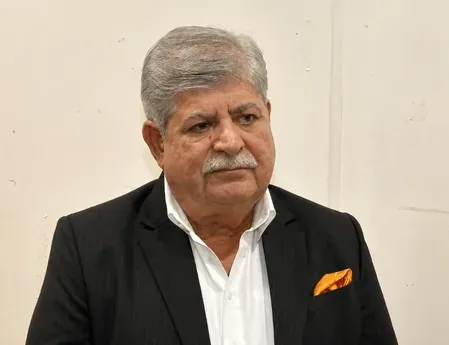
Union Textiles Minister Giriraj Singh on Saturday, July 11, 2026, welcomed Prime Minister Narendra Modi's visit to New Zealand — the first by an Indian Prime Minister in 40 years — calling it a landmark moment that opens a new chapter in bilateral relations, with discussions underway on trade, defence, education and mobility for skilled Indian professionals.
Context
Singh's post, written in Hindi, states: '40 वर्षों बाद भारतीय प्रधानमंत्री का न्यूज़ीलैंड दौरा भारत-न्यूज़ीलैंड संबंधों में एक नया अध्याय जोड़ रहा है' ('After 40 years, an Indian Prime Minister's visit to New Zealand is adding a new chapter to India-New Zealand relations'). The minister highlighted that the visit is generating 'important discussions' on advancing trade and investment through a recently concluded Free Trade Agreement (FTA), as well as creating new opportunities in defence, education and skilled-professional mobility.
The last Indian Prime Minister to visit New Zealand was Rajiv Gandhi in the 1980s, making the current visit a rare and diplomatically significant event in the bilateral calendar.
Policy Backdrop
India and New Zealand formally launched FTA negotiations in 2010, but talks moved slowly through successive rounds over the following decade and a half. The two countries share a broad partnership spanning trade, education, agriculture, and people-to-people ties within the Indo-Pacific framework.
Singh's post references the FTA as a vehicle for giving 'new momentum to trade and investment,' signalling that the agreement — or progress toward it — is being treated as a centrepiece of the visit. The minister also invoked the government's long-term vision, tagging the post with #ViksitBharat2047, linking bilateral engagement to India's development ambitions for its centenary of independence.
Stakeholders and Impact
Singh specifically identified Indian exporters and industries as potential beneficiaries of expanded market access under the FTA framework. Students and skilled professionals were also highlighted, with the post noting that the visit aims to widen opportunities for Indian talent in New Zealand.
The textile sector, which Singh oversees, stands among India's key export industries and could benefit from preferential access to the New Zealand market if tariff concessions are secured under a final FTA text. Broader sectors including pharmaceuticals, IT services and agriculture are similarly seen as having a stake in the outcome of negotiations.
What's Next
The immediate focus will be on any formal agreements, Memoranda of Understanding (MoUs), or joint statements issued during PM Modi's visit, particularly covering defence cooperation and education mobility frameworks. Parliamentary consideration of any concluded FTA text would follow as a necessary next step before provisions take effect.
For India's broader trade strategy, a concluded deal with New Zealand would add to a growing list of Indo-Pacific FTAs, reinforcing New Delhi's effort to diversify export markets and deepen strategic partnerships beyond traditional partners. Singh's vocal endorsement reflects the ruling party's framing of the visit as a milestone in PM Modi's foreign policy record.
Point of View
The first in four decades, is a deliberate signal that India is serious about deepening Indo-Pacific partnerships beyond its immediate neighbourhood. By framing the trip around the FTA and professional mobility, the BJP is tying foreign policy wins directly to domestic economic aspirations — jobs, exports, and the Viksit Bharat 2047 narrative. Giriraj Singh's endorsement, from a senior minister whose textile constituency has a direct stake in new export markets, is not incidental: it reflects a coordinated effort to build political salience around trade diplomacy. The real test will be whether the FTA produces binding, enforceable commitments or remains aspirational, as the negotiations have been intermittently active since 2010.
NationPress
11 Oct 2026
Frequently Asked Questions
When did an Indian Prime Minister last visit New Zealand before Modi?
The last Indian Prime Minister to visit New Zealand before PM Narendra Modi's 2026 trip was Rajiv Gandhi in the 1980s, making the current visit the first in approximately 40 years.
What is the India-New Zealand FTA and when did talks begin?
The India-New Zealand Free Trade Agreement is a proposed deal to expand market access for goods, services and investment between the two countries. Negotiations were formally launched in 2010 and have continued through multiple rounds since then.
What did Giriraj Singh say about PM Modi's New Zealand visit?
Union Textiles Minister Giriraj Singh said the visit is 'adding a new chapter' to India-New Zealand relations, highlighting FTA-driven trade momentum, defence and education cooperation, and new opportunities for Indian exporters, students and skilled professionals.
How will Indian students and professionals benefit from the India-New Zealand talks?
The bilateral discussions include creating new pathways for skilled Indian professionals and students in New Zealand, potentially through mobility agreements and education MoUs expected to be part of the visit's outcomes.
What is Viksit Bharat 2047 and why is it linked to this visit?
Viksit Bharat 2047 is the Indian government's vision to make India a developed nation by the centenary of its independence. Giriraj Singh tagged the visit with this hashtag to connect bilateral trade and diplomatic gains to India's long-term development goals.