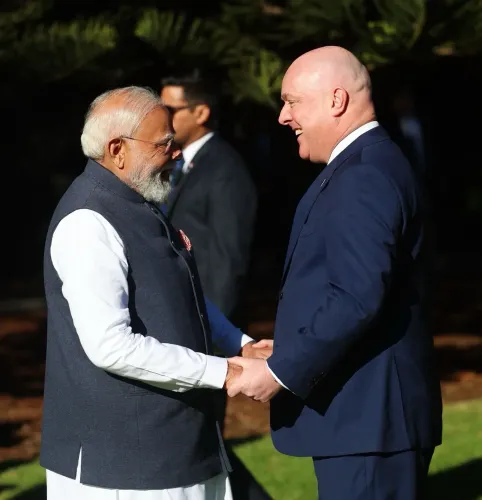
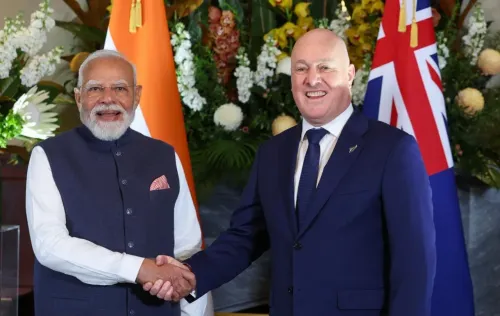
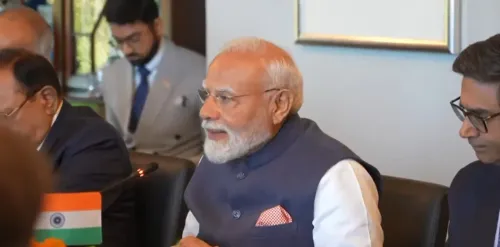
Modi-Luxon talks: India-New Zealand ties elevated to Strategic Partnership
Synopsis
For the first time in four decades, an Indian Prime Minister landed in New Zealand — and left with a Strategic Partnership in hand. Modi and Luxon's Auckland talks covered trade, defence, agriculture, and people-to-people ties, formalising what both sides called deepening strategic trust in the Indo-Pacific.
Key Takeaways
PM Narendra Modi and NZ PM Christopher Luxon elevated India-New Zealand ties to a Strategic Partnership on 11 July in Auckland .
Modi's visit is the first by an Indian Prime Minister to New Zealand in four decades .
Agreements were signed across defence , disaster management , tourism , sports , and animal husbandry .
Key cooperation areas include trade , technology , agriculture , dairy , healthcare , and education .
Both leaders emphasised people-to-people ties as the foundation of the bilateral relationship.
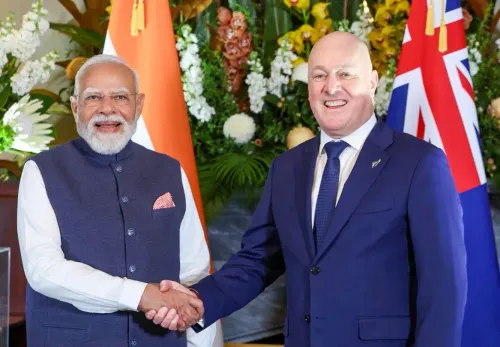
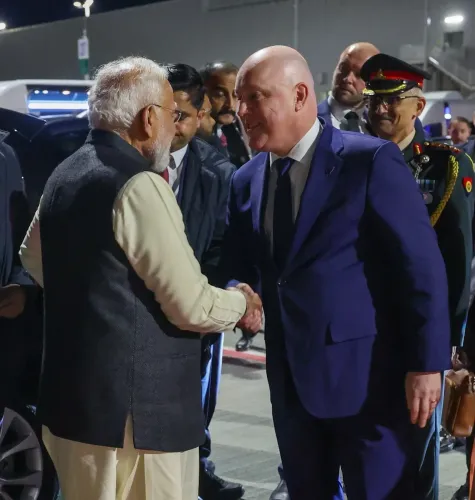
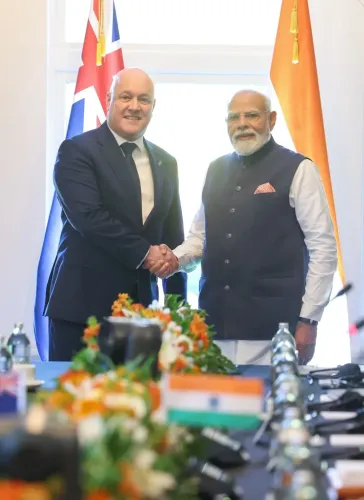
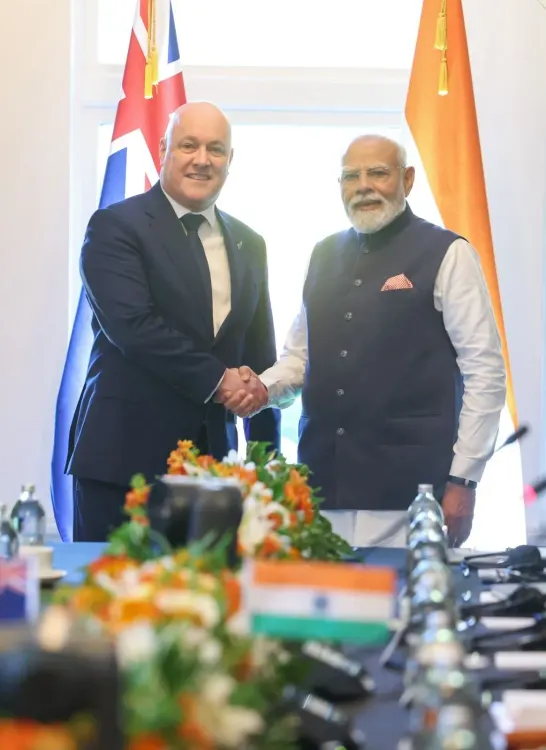
Prime Minister Narendra Modi on Saturday, 11 July announced that India and New Zealand have decided to elevate their bilateral relationship to a Strategic Partnership, following extensive talks with New Zealand Prime Minister Christopher Luxon in Auckland. The visit marks the first trip by an Indian Prime Minister to New Zealand in four decades, and both leaders described the discussions as a turning point for the two nations.
Key Developments from Auckland
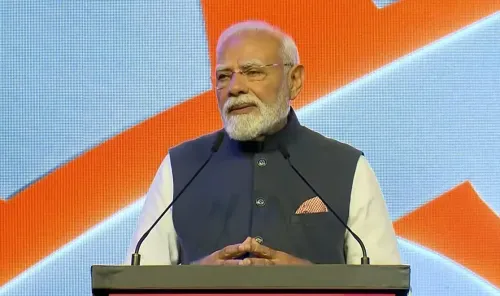
Modi described the talks as 'extensive and fruitful' in a post on X, noting that Luxon's own visit to India last year had already given fresh energy to the bilateral partnership. The elevation to a Strategic Partnership formalises what both sides characterised as deepening strategic trust, particularly in defence and security.
The two leaders also witnessed the exchange of several agreements and cooperation arrangements spanning defence, disaster management, tourism, sports, and animal husbandry.
What the Talks Covered
According to Modi, the discussions prioritised trade, technology, and investment linkages as the core economic pillars. A framework for cooperation in agriculture, dairy, and food processing was also developed — an area of particular relevance given New Zealand's global standing in agri-exports and India's large domestic dairy sector.
Healthcare and traditional medicine featured prominently, as did education, sports, culture, heritage, and creative industries. Both leaders underlined people-to-people ties as the foundation of the relationship, signalling an intent to expand pathways for students, professionals, and cultural exchange.
Strategic and Defence Significance
The inclusion of defence and security cooperation in the Strategic Partnership framework is notable. India has been steadily expanding its strategic footprint in the Indo-Pacific, and New Zealand — a member of the Five Eyes intelligence alliance — represents a meaningful partner in that geography. This is the first time the two countries have formally structured their ties at this level.
Notably, the last Indian Prime Minister to visit New Zealand was over 40 years ago, making the symbolic weight of Modi's Auckland trip significant beyond the agreements signed.
What Comes Next
Both governments are expected to operationalise the Strategic Partnership framework through sectoral working groups. The agreements signed in Auckland are likely to serve as the baseline for near-term action across defence, agriculture, and education. The visit is expected to accelerate trade negotiations that have moved slowly in recent years, with both sides signalling intent to expand economic engagement under the new framework.
Point of View
But the real measure will be in execution — particularly on trade, where India-New Zealand engagement has historically underperformed relative to the warmth of political rhetoric. Defence cooperation with a Five Eyes member carries genuine Indo-Pacific weight, yet the absence of specific timelines or targets in the public announcements leaves the framework open-ended. Modi's Auckland visit corrects a four-decade diplomatic gap, but the agreements signed will need institutional follow-through to translate into tangible outcomes for businesses, students, and strategic planners on both sides.
NationPress
9 Oct 2026
Frequently Asked Questions
What is the India-New Zealand Strategic Partnership announced in Auckland?
India and New Zealand have formally elevated their bilateral relationship to a Strategic Partnership, agreed upon during PM Modi's talks with NZ PM Christopher Luxon in Auckland on 11 July. The framework covers trade, defence, agriculture, technology, healthcare, and people-to-people ties.
Why is PM Modi's New Zealand visit historically significant?
Modi's visit to Auckland is the first by an Indian Prime Minister to New Zealand in over four decades, making it a landmark diplomatic event. The last such visit occurred more than 40 years ago, and this trip has now resulted in a formal Strategic Partnership between the two countries.
What agreements were signed during the India-New Zealand talks?
The two leaders witnessed the exchange of several cooperation arrangements covering defence, disaster management, tourism, sports, and animal husbandry. A framework for agriculture, dairy, and food processing cooperation was also developed.
How does the Strategic Partnership affect India-New Zealand defence ties?
The partnership formalises defence and security cooperation between the two countries for the first time at this level. Both sides described the move as reflecting 'deep strategic trust,' with New Zealand's Indo-Pacific positioning making it a meaningful partner for India's expanding regional engagement.
What are the next steps after the Modi-Luxon summit?
Both governments are expected to set up sectoral working groups to operationalise the Strategic Partnership. Trade negotiations and education and cultural exchange programmes are likely to receive early attention, with the signed agreements serving as the baseline for near-term action.