Giriraj Singh flags NZ PM Luxon's backing for India FTA
Synopsis
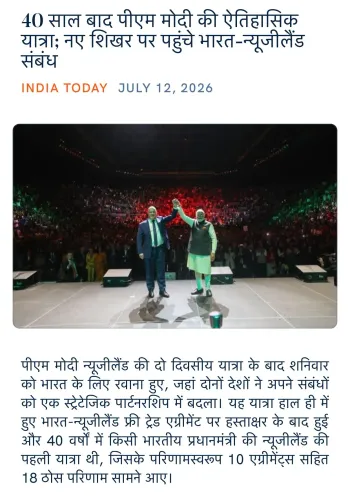
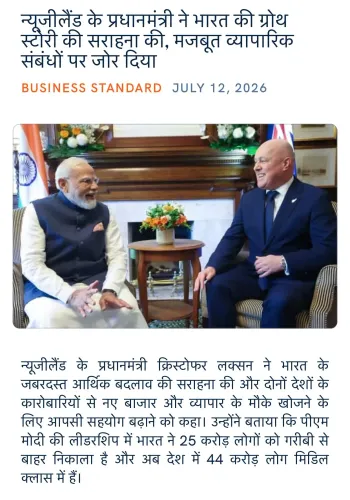
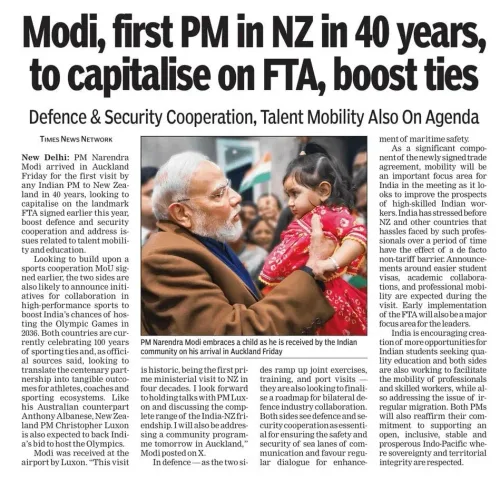
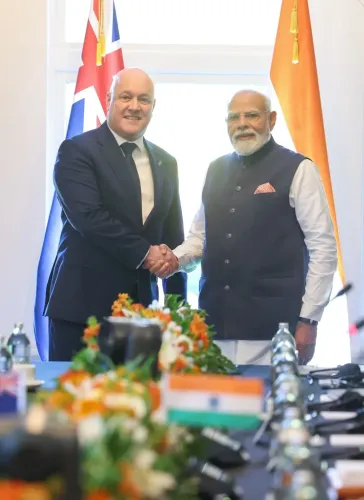
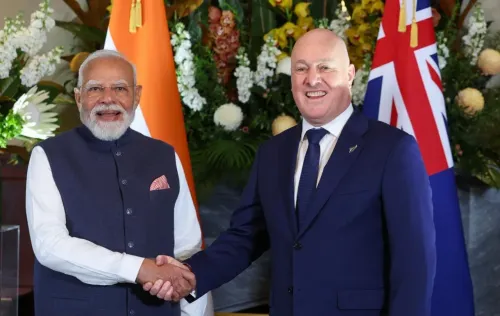
Union Textiles Minister Giriraj Singh amplified New Zealand PM Christopher Luxon's reported endorsement of a bilateral India-New Zealand FTA and his praise for PM Modi on 7 July 2026, reviving attention on stalled trade talks that date back to 2010.
Key Takeaways
Giriraj Singh , Union Textiles Minister, shared the report on 7 July 2026 via the NaMo App, amplifying NZ PM Luxon's backing for an India FTA.
New Zealand PM Christopher Luxon has been in office since November 2023 and has prioritised trade diversification.
India and New Zealand first launched FTA negotiations in 2010 ; talks stalled around 2015 over sensitive sectors including dairy.
India signed economic partnership agreements with the UAE and Australia in 2022 , building momentum for similar deals.
Indian textile exporters are among the key beneficiaries if preferential tariffs are agreed with Wellington.
A formal resumption of negotiations by the Ministry of Commerce and Industry remains the critical next step to watch.
Union Textiles Minister Giriraj Singh on Tuesday, 7 July 2026, shared a report highlighting New Zealand Prime Minister Christopher Luxon's public endorsement of a bilateral free trade agreement with India and his praise for Prime Minister Narendra Modi, amplifying the development on social media via the NaMo App.
Context
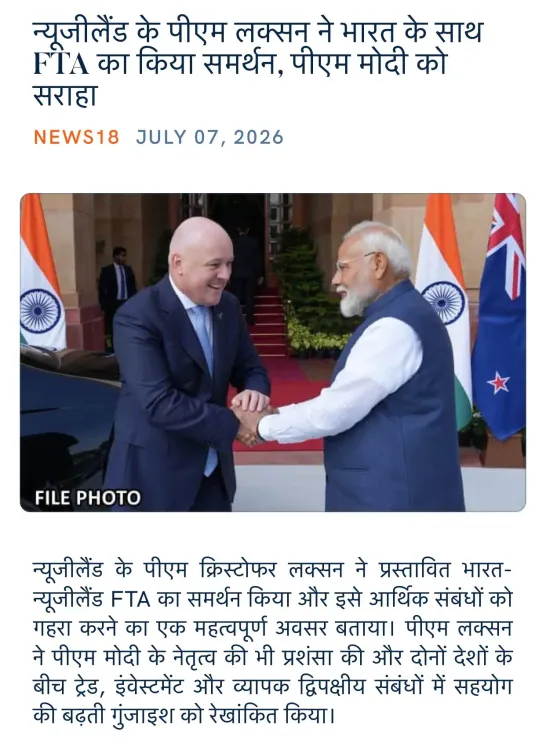
Singh shared the report with a Hindi headline that translates to: 'न्यूजीलैंड के पीएम लक्सन ने भारत के साथ FTA का किया समर्थन, पीएम मोदी को सराहा' ('New Zealand PM Luxon backs FTA with India, praises PM Modi'). The post signals the ruling BJP's enthusiasm for advancing trade ties with Wellington at the political level, with a senior Cabinet minister choosing to amplify the statement.
Christopher Luxon has led New Zealand as Prime Minister since November 2023, steering a National Party-led coalition that has prioritised trade diversification and economic recovery. His reported endorsement of an India FTA aligns with that broader economic agenda.
Policy Backdrop
India and New Zealand first launched formal FTA negotiations in 2010, covering market access in goods, services, and investment. Those talks stalled around 2015, with sensitive sectors — particularly dairy on the New Zealand side and certain manufacturing categories on the Indian side — remaining unresolved.
The momentum for resuming such negotiations has been building since India concluded landmark economic partnership agreements with the UAE and Australia, both in 2022. Those deals demonstrated India's willingness to move quickly on bilateral frameworks when political will exists on both sides. Textiles, a flagship Indian export category, stand to benefit significantly from any tariff reduction agreed with Wellington.
Since 2014, the Indian government under PM Modi has pursued an expanded network of bilateral FTAs to diversify export markets and reduce over-reliance on a handful of trading partners. New Zealand has periodically signalled interest in resuming talks, pointing to complementary strengths — New Zealand's agriculture and dairy exports against India's manufacturing, services, and textiles.
Stakeholders and Impact
Indian textile exporters are among the most keenly interested stakeholders in any India-New Zealand FTA. Preferential tariffs on apparel and fabrics could open a high-income market that currently levies duties making Indian goods less competitive against rivals from countries with existing FTA access.
On the New Zealand side, dairy producers have historically been a sensitive constituency, given India's protective stance on its own dairy sector. Any resumed negotiations would need to navigate this long-standing tension before a comprehensive deal can be finalised.
For the BJP government, a visible endorsement from a sitting Western head of government also carries diplomatic signalling value — reinforcing the narrative that India's global trade standing has risen under PM Modi's leadership.
What's Next
The key development to watch is whether PM Luxon's public backing translates into a formal request to the Ministry of Commerce and Industry to resume negotiating rounds. Bilateral meetings between Indian and New Zealand officials, or a potential Modi-Luxon summit on the sidelines of a multilateral forum, could provide the next concrete milestone.
With Giriraj Singh's ministry directly overseeing textiles — one of the sectors with the most to gain from reduced tariffs — his amplification of this development suggests the Cabinet is attentive to the opportunity. A resumption of India-New Zealand FTA talks would mark the most significant progress on this front in over a decade.
Point of View
Even before the Ministry of Commerce makes any formal move. The post fits a wider pattern of the ruling party using social media to generate political momentum around trade diplomacy, framing each foreign leader's positive signal as validation of the Modi government's global economic standing. Whether this translates into substantive negotiating rounds, or remains symbolic amplification, will depend on whether both governments can bridge the longstanding dairy-versus-manufacturing impasse that froze talks over a decade ago.
NationPress
6 Oct 2026
Frequently Asked Questions
What is the India-New Zealand FTA and where do talks stand?
The India-New Zealand free trade agreement is a proposed bilateral deal covering goods, services and investment. Negotiations were launched in 2010 but stalled around 2015 over disagreements on sensitive sectors such as dairy. As of 2026, no formal resumption of negotiating rounds has been announced.
Why did Giriraj Singh share this report about New Zealand?
Giriraj Singh is Union Textiles Minister, and Indian textiles are a key export category that would benefit from reduced tariffs under any India-New Zealand FTA. By sharing the report, he signalled the Cabinet's interest in the trade opportunity.
What has New Zealand PM Christopher Luxon said about India?
According to the report shared by Giriraj Singh, PM Luxon backed a free trade agreement between India and New Zealand and praised Prime Minister Narendra Modi. The specific details of his statements are drawn from the report Singh amplified.
How does an India-New Zealand FTA affect Indian textile exporters?
An FTA could lead to preferential or zero tariffs on Indian apparel and fabrics entering New Zealand, making them more competitive against exports from countries that already have trade agreements with Wellington.
What other FTAs has India signed recently?
India signed comprehensive economic partnership agreements with the UAE and Australia, both in 2022. These deals are seen as templates that could accelerate similar negotiations with partners such as New Zealand.