Giriraj Singh hails Modi's historic New Zealand visit after 40 years
Synopsis
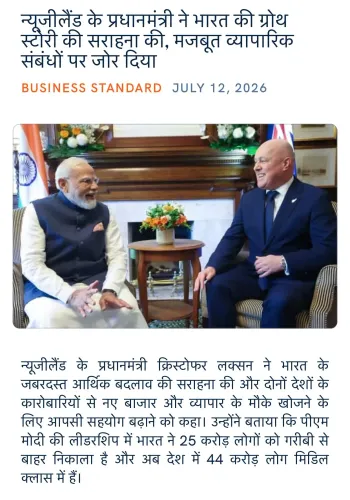
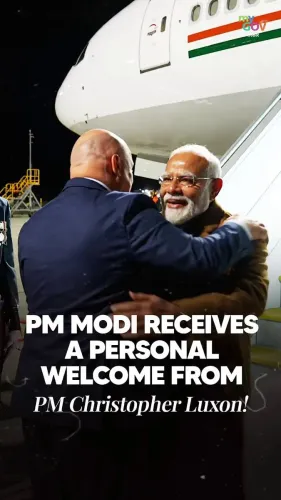
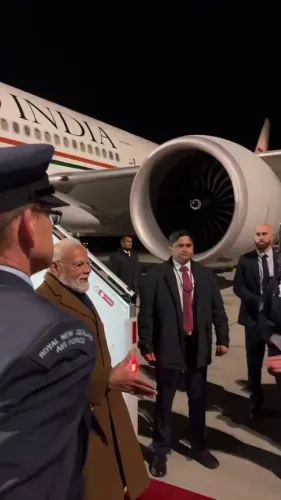
Union Textiles Minister Giriraj Singh on 12 July 2026 hailed PM Modi's visit to New Zealand as a 'historic journey after 40 years,' signalling a diplomatic reset aimed at elevating bilateral ties and potentially reviving long-stalled trade agreement talks between the two nations.
Key Takeaways
Union Textiles Minister Giriraj Singh publicly endorsed PM Modi's New Zealand visit on 12 July 2026 via X, calling it 'historic.' Singh described the visit as occurring 'after 40 years,' framing it as a rare and significant diplomatic moment.
India and New Zealand launched Comprehensive Economic Cooperation Agreement (CECA) negotiations in 2010 , but talks have seen limited progress since.
Key stakeholders include Indian exporters in textiles and services, and the Indian dairy industry , which has historically been a sensitive issue in bilateral trade talks.
The visit fits India's broader Act East Policy and Indo-Pacific engagement strategy, which prioritises middle powers across the Pacific.
Progress on revived trade negotiations and follow-up ministerial meetings will be the primary indicators of the visit's lasting impact.
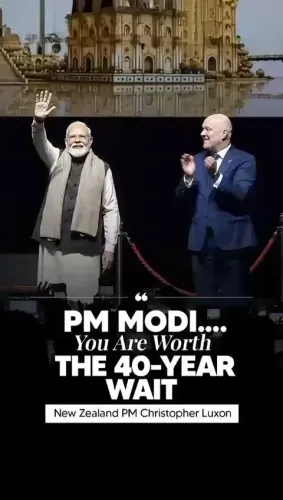
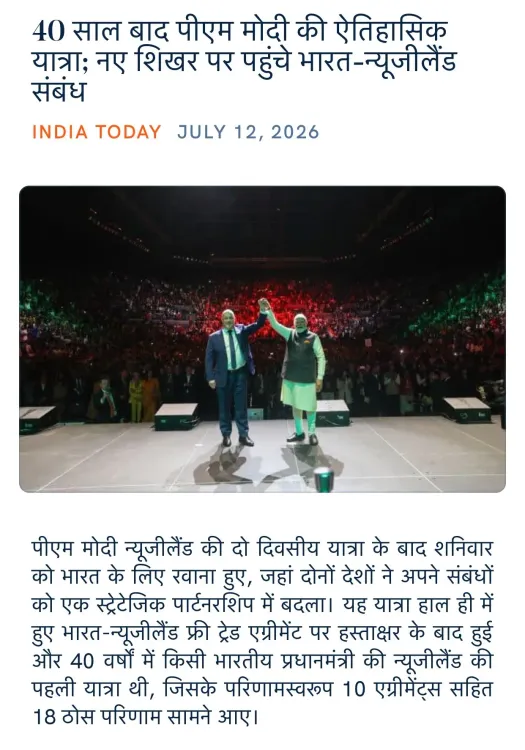
Union Textiles Minister Giriraj Singh on Sunday, 12 July 2026, took to X to describe Prime Minister Narendra Modi's visit to New Zealand as a landmark moment in bilateral ties, calling it a 'historic journey after 40 years' that has elevated India-New Zealand relations to 'new heights.'
Context
Singh shared a link to coverage of the visit via the NaMo App, writing in Hindi: '40 साल बाद पीएम मोदी की ऐतिहासिक यात्रा; नए शिखर पर पहुंचे भारत-न्यूजीलैंड संबंध' — translated as 'PM Modi's historic journey after 40 years; India-New Zealand relations reach a new peak.' The post underscores the significance the ruling Bharatiya Janata Party (BJP) attaches to the visit as a diplomatic milestone.
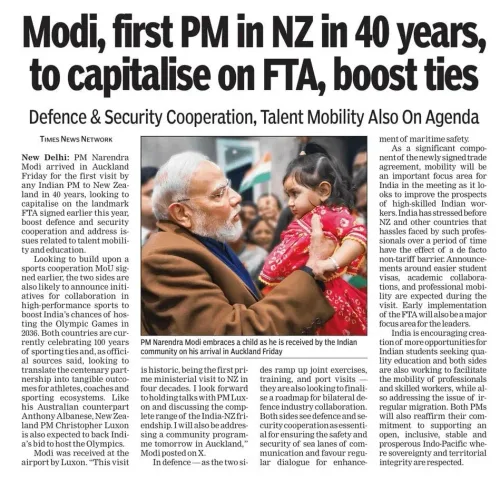
High-level Indian prime ministerial visits to New Zealand have historically been rare, making such a trip — if confirmed at the gap described — a notable reset in the bilateral relationship. Senior ministers amplifying the visit on social media reflects a coordinated effort to build domestic and international visibility around the engagement.
Policy Backdrop
India and New Zealand have maintained longstanding Commonwealth-era diplomatic ties, but the relationship has often been overshadowed by India's more intensive engagements with larger Indo-Pacific partners. Formal negotiations for a Comprehensive Economic Cooperation Agreement (CECA) between the two countries were launched as far back as 2010, though they have seen limited momentum since.
New Delhi's Act East Policy and its broader Indo-Pacific strategy have in recent years prompted a renewed focus on middle powers across the Pacific, including New Zealand. High-level visits after prolonged gaps are typically used to inject fresh energy into stalled trade and security dialogues, and to signal intent on modernising bilateral frameworks beyond their Commonwealth-era foundations.
Key economic interests on both sides include Indian exports in services, pharmaceuticals, and textiles, while New Zealand's primary interests centre on agriculture, dairy market access, and education cooperation with India.
Stakeholders and Impact
Indian exporters — particularly in textiles, IT services, and pharmaceuticals — stand to benefit if the visit revives momentum on a comprehensive trade arrangement. The Indian dairy industry has historically been a sensitive flashpoint in negotiations, given New Zealand's globally competitive dairy sector and domestic concerns around protecting Indian farmers.
The Indian diaspora in New Zealand, one of the fastest-growing migrant communities in that country, also has a direct stake in the outcome of any people-to-people and mobility frameworks that may be discussed. Broader strategic conversations, including on regional security in the Indo-Pacific, are expected to form part of the diplomatic agenda alongside economic deliverables.
What's Next
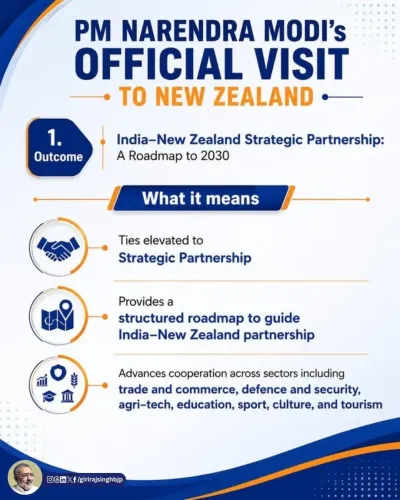
Observers will watch closely for any concrete outcomes from the visit — including whether the long-pending Comprehensive Economic Cooperation Agreement receives a formal push, or whether new bilateral mechanisms such as a strategic partnership declaration or business council upgrades are announced.
Follow-up engagements at the ministerial and business-council level will be the real test of whether this high-profile visit translates into durable policy momentum. India's Indo-Pacific partnerships have increasingly been structured around deliverable-driven summits, and New Zealand will be expected to fit that template going forward.
Point of View
Consistent with the BJP's broader pattern of projecting the Prime Minister as a transformative figure in Indian foreign policy. The 40-year framing is particularly potent domestically, casting Modi as breaking a long diplomatic inertia with a Pacific middle power that previous governments neglected. If the visit does yield concrete trade or strategic deliverables, it will strengthen the government's Indo-Pacific credentials ahead of any domestic political cycle. The real diplomatic test, however, lies in whether the long-stalled CECA negotiations are meaningfully revived — a metric that will outlast the social media moment.
NationPress
11 Oct 2026
Frequently Asked Questions
Why is PM Modi's New Zealand visit considered historic?
The visit is described as historic because it is said to be the first prime ministerial visit to New Zealand in approximately 40 years, making it a rare and significant diplomatic engagement between the two countries.
What did Giriraj Singh say about Modi's New Zealand visit?
Union Textiles Minister Giriraj Singh posted on X on 12 July 2026 calling it a 'historic journey after 40 years' and stating that India-New Zealand relations have reached 'new heights' as a result.
What is the India-New Zealand trade agreement status?
India and New Zealand began formal negotiations for a Comprehensive Economic Cooperation Agreement (CECA) in 2010, but the talks have seen limited progress and remain incomplete as of 2026.
How does Modi's New Zealand visit fit into India's foreign policy?
The visit is part of India's Act East Policy and broader Indo-Pacific engagement strategy, which aims to deepen ties with middle powers in the Pacific region beyond traditional Commonwealth-era frameworks.
What are the key issues in India-New Zealand relations?
The main issues include a stalled trade agreement, market access disputes particularly around dairy, cooperation on services and education, people-to-people ties involving the Indian diaspora in New Zealand, and emerging Indo-Pacific security dialogue.